
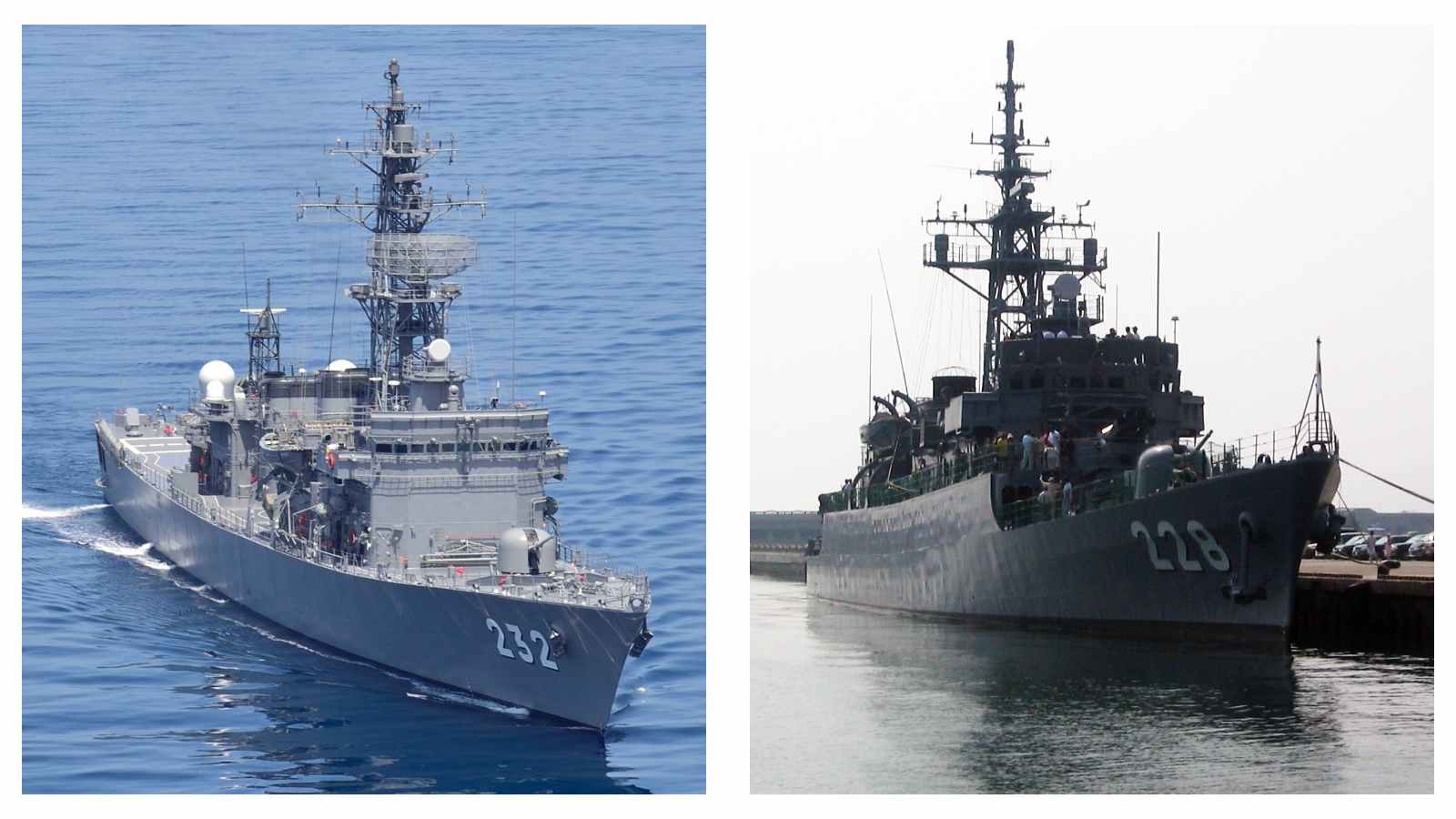
Philippine-Japanese relations have reached a new milestone after the two countries agreed to the transfer of five Abukuma-class destroyers to Manila as a sign of goodwill.
The deal, which is expected to be completed within two to three years of the delivery of the ships, signals a growing closeness between Manila and Tokyo, amid the perceived aggression of China in the Asia-Pacific.
Despite the brutal past of the Philippine islands under Japanese colonial rule during World War 2, Manila has cast its lot with China’s long-time rival to equalise the power imbalance brought by Beijing’s military, economic, and technological advantage over the Philippines.
YOU MAY ALSO LIKE: ASEAN holds historic ministerial talks with Myanmar in Bangkok
Abukuma-class destroyers
Commissioned to serve under the Japan Maritime Self-Defense Force (JMSDF) in the 1980s, the Abukuma-class warships became Tokyo’s primary anti-submarine and anti-surface vessel platforms.
Each of the ships weighs 2,000 tons while fitted with up-to-date weapons and electronic systems.
They are armed with the proven RGM-84 Harpoon anti-ship missiles, as well as Mark 32 triple torpedo tubes to combat hostile units deep in the waters.
The other weapons are the Oto Melara 76 mm rapid-fire gun and the Phalanx Close-In Weapon System. These assets offer a layer of protection for the ships from aerial and missile threats.
Despite their ageing platform after serving Japan for 30 years, compared to Manila’s more recent vessels, these ships still provide the Philippines with reliable surface vessels to help protect the country’s coastline that stretches up to 36,289 kilometres.
A stop-gap solution
While these ships will certainly not deter Beijing should it decide to escalate the maritime situation in the South China Sea, they still contribute to Manila’s goal for capacity building as part of its long-term modernisation plans.
The Philippine Navy currently operates four guided missile frigates with plans to acquire 10 more to strengthen the fleet in the future.
Manila could also be nudging its neighbors like Malaysia and Vietnam to explore a similar route as an alternative option to slowly build their capabilities.
READ NEXT: US launches fresh strikes on Iran, hits 140 military targets
 Ciara Mina
  Rosemarie Zamora
  Jacinth Banite