
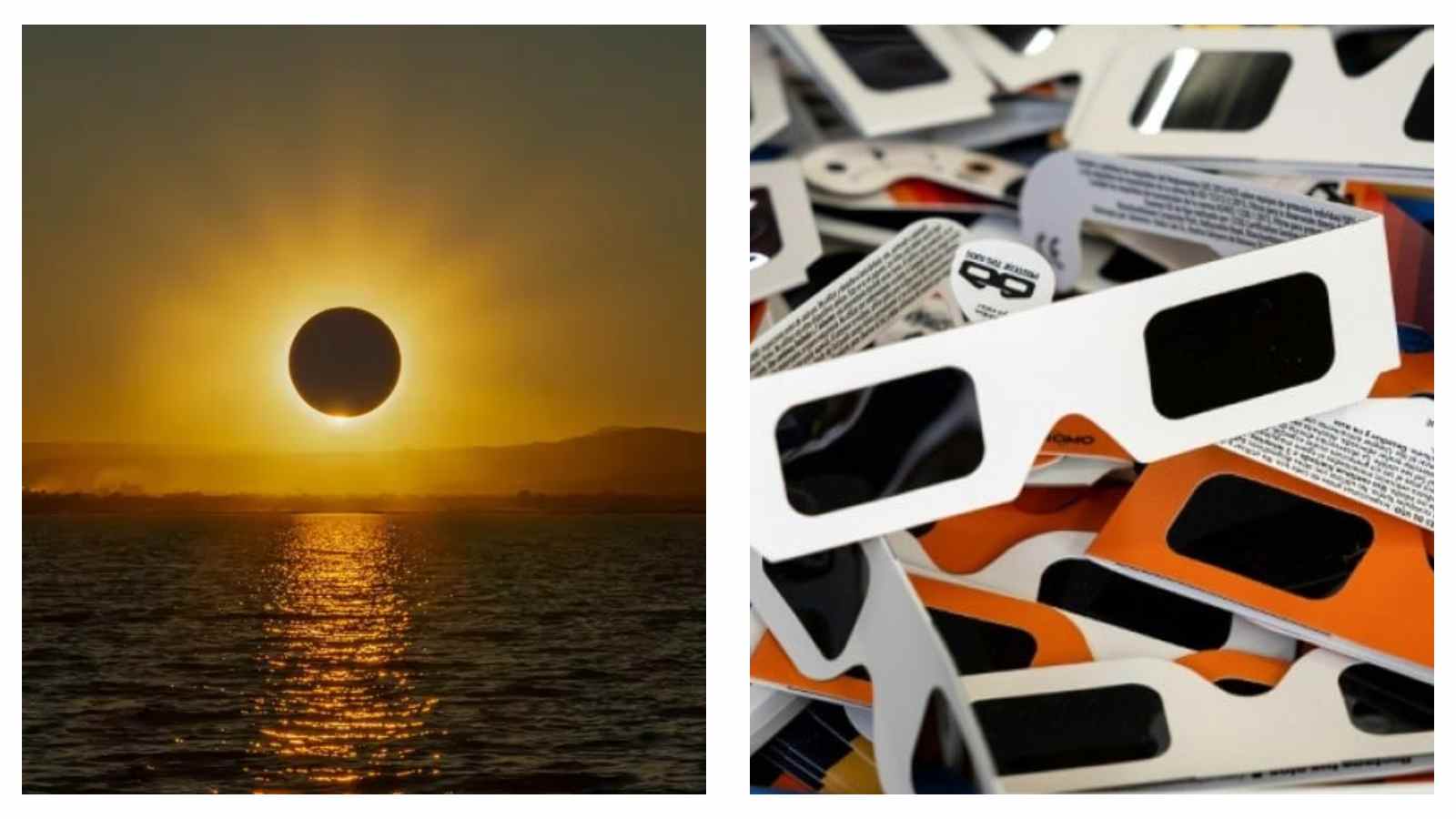
Authorities are warning people against looking directly at the eclipse, the most complete since 1999, without proper eye protection – at the same time, electricity companies are readying for the huge drop in solar energy production.
The moon will totally cover the sun during the phenomenon, which is set to occur Wednesday afternoon or evening, depending on viewing location.
Parts of Iceland and Spain will see 100% coverage, with other parts of Europe, such as the UK, dropping to 88% to 96%.
How to watch the eclipse safely
Do not look at the eclipse directly without eye protection, as the sun can cause permanent eye damage.
Those wanting to watch the eclipse should always wear ISO 12312-2:2015(E) certified eclipse glasses, say authorities.
Although there are reports that certified glasses have sold out in recent days and are hard to get hold of, experts still stress that these are the only safe way to watch the eclipse directly.
Sunglasses do not have enough protection to prevent eye damage.
It is also safer to get a new pair of specialist glasses than rely on an older pair, they add.
For those up for a bit of DIY, pinhole viewers or pinhole projectors are safe alternatives.
The totality – when the moon fully covers the sun – will last for around 2 minutes, depending on location.
READ MORE: Why are young adults Britain’s loneliest generation? And what can be done?

Will the eclipse cause a blackout?
Fears of a power outage, similar to that of the 2025 blackout which occurred across the Iberian Peninsula, have been raised as Europe uses solar and wind energy.
Spain’s dependence on solar energy was one reason speculated to have caused the blackout.
Though this is unlikely to have been the sole reason, according to investigators.
According to French operator RTE, the eclipse is forecasted to cause a continent-wide drop of 9.7GW in energy production.
While solar only accounts for 3.7% of Europe’s electricity supply, the eclipse will put pressure on an already tight system, say analysts.
“Europe’s electricity supply is already tight amid the heatwave, with power plants forced to shut down or reduce production as high temperatures have reduced hydro levels as well as the need to cool nuclear and coal plants,” say analysts at RBC Capital Markets.
In the UK, energy giant Octopus is giving out rewards to consumers who slim down their electricity use during the eclipse.
It hopes to avoid gas-fired power stations coming online to make up the difference.
The UK’s National Energy System Operator adds it has “been planning for over a year” for the event and expects a natural drop in electricity use as millions go outside to watch the eclipse.
In any case, the only blackout is expected to be in the sky from the eclipse itself.
READ NEXT: Solar panels on UK balconies: The energy revolution we have been waiting for?
 Diana Mae Y. Cleto
  KC Maderia
  Newsjustnews writers