
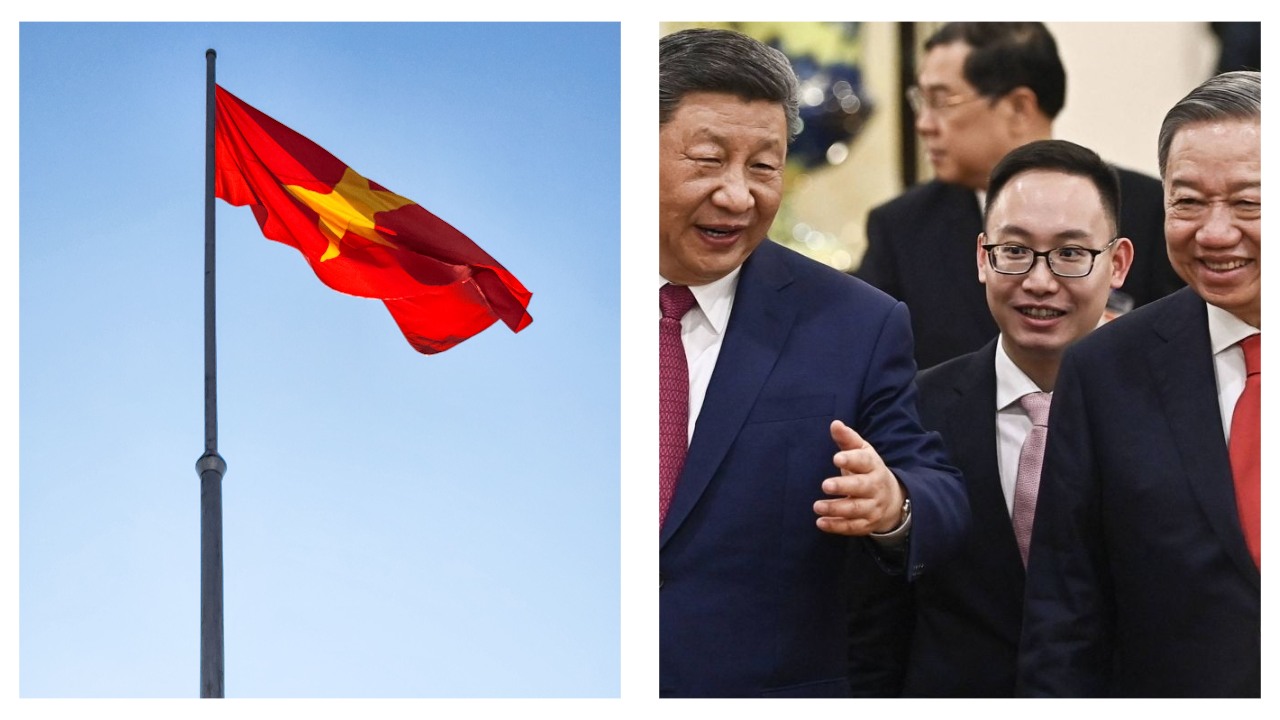
The construction of an advanced anti-submarine frigate for Vietnam has begun as part of the country’s efforts to strengthen its maritime presence amid perceived threats from its northern neighbor, China.
Officials from Vietnam’s Ministry of National Defence and Communist Party attended the steel-cutting ceremony held at the Song Thu Corporation’s shipyard in Da Nang last August 10.
The ship is expected to be armed with homegrown technology, including other advanced suites and features such as an active electronically scanned array (AESA) radar, air-defence missiles, and advanced anti-ship missiles.
Vietnam’s next biggest surface combatant
The development of the ship will mark a new milestone for the Southeast Asian country as it seeks to modernise its armed forces as the arms race grows in Asia.
Through local factories operated by the government, the Viettel Military Industry and Telecoms Group will develop and produce the missiles that will be installed on the ship.
One particular mission that the ship is expected to excel at is anti-submarine operations that will help monitor and guard the country’s maritime domains from serious underwater threats.
The country so far relies on six Kilo-class diesel-electric submarines and a mixture of frigates from Russia, India, and South Korea to protect its maritime interests.
YOU MAY ALSO LIKE: Ukraine, Serbia eye closer bilateral ties amid Russian strikes on Kyiv

Retaining Russian armaments
Despite the planned incorporation of more complex domestic systems into the ship, official vessel designs show that it will still retain several armaments of Russian origin for operational commonality with other existing Vietnamese Navy ships.
The ship will operate a 76.2mm AK-176 main gun, two RBU-6000-style 213mm anti-submarine rocket launchers, two six-cell vertical launch systems, two quad anti-ship missile launchers, and two twin 533mm torpedo tubes, armaments that are also found in Vietnam’s Gepard-class frigates built by Russia.
Disputes with China
Like their Filipino counterparts, Vietnamese fishermen have accused China of aggressive behaviour in the disputed waters in the South China Sea, such as the ramming and sinking of their vessels.
While China has so far built about 4,000 acres of artificial land in the contested waters, Vietnam is not far behind, with 2,000 acres also built by Hanoi to maintain maritime presence in the area.
READ NEXT: Vietnam’s domestic sectors struggle with labor shortages
 Ian Trinidad
  Eugene Nicklaus S. Laqui
  Newsjustnews writers