
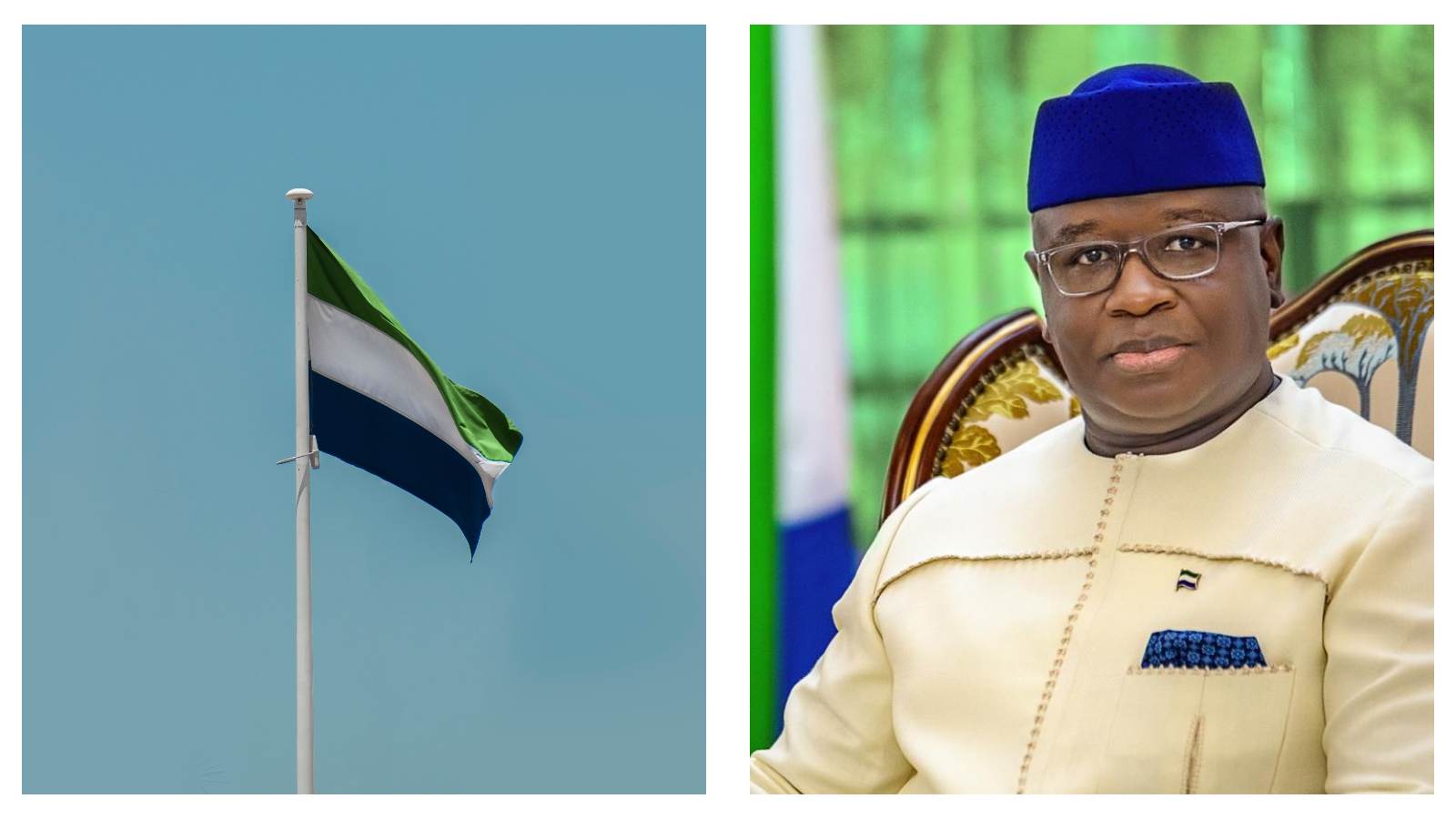
Sierra Leone’s parliament on Monday adopted a constitutional reform bill that will overhaul the country’s electoral regulations in line with President Julius Maada Bio’s wishes despite an opposition walkout.
Parliament Speaker Segepoh Solomon Thomas confirmed that the Constitution of Sierra Leone (Amendment) Bill was passed by a “simple majority of members present,” though he did not provide voting figures, Africa News reported.
Under the reform, the presidential election threshold will be reduced from the current 55 per cent to a simple nationwide majority of 50 per cent and will require a presidential hopeful to secure at least 20 per cent of the votes in two-thirds of Sierra Leone’s districts to avoid a run-off.
It will also introduce proportional representation for legislative elections and establish a 30 per cent quota for women in top political leadership positions.
Additionally, the reforms oblige the president to take the necessary action to account for regional balance, gender equality and minority inclusion when making appointments.
These changes would overhaul the country’s electoral regulations ahead of the pivotal 2028 presidential election, in which Bio is barred from seeking another term under the country’s strict two-term limit.
Opposition stages walk out over voting threshold dispute
The passage of these reforms came after opposition leader Abdul Kargbo led 49 lawmakers from the All People’s Congress (APC) out of the chamber due to a dispute over voting thresholds and procedural rules governing constitutional changes.
APC argued that Section 108 of the Constitution mandates a strict two-thirds majority vote for approving substantive amendments, but Thomas maintained that a simple majority was sufficient for votes on individual clauses and committee-stage decisions during the amendment process.
Kargbo and the opposition viewed the move as a blatant violation of legislative safeguards, prompting APC lawmakers to walk out.
“Mr. Speaker, I respect your office, but we on this side will not be part of an agreement that does not reflect the will of the majority. Posterity will judge us. On that note, I kindly ask my colleagues to leave the Well,” Kargbo said, as quoted by The Sierra Leone Telegraph.
YOU MAY ALSO LIKE: Cameroon defends President Paul Biya’s prolonged absence amid growing concern
APC criticises several provisions in the electoral reforms
Earlier, the APC voiced its strong opposition to certain provisions in the proposed electoral reforms, particularly the proposal to lower the election threshold.
The party stressed that the government must retain the current 55 per cent election threshold, arguing that it encourages candidates to establish broader national support and gives the winner greater legitimacy.
“The APC equally believes that the constitutional threshold for the election of the President should remain at 55 per cent. The 55 per cent threshold is not merely a number. It serves an important national purpose,” it said in a statement.
Nevertheless, the APC clarified that it is not opposed to the bill in its entirety, saying it supports proportional representation and greater inclusion.
Government defends controversial reforms
However, the ruling Sierra Leone People’s Party (SLPP), which backed the contested reforms, defended the changes following sharp criticism from the APC.
The SLPP argued that the reforms will help the government prevent costly second-round run-off elections that could strain public resources, prolong political uncertainty, and reduce opportunities for polarisation and electoral violence.
It noted that eliminating run-off elections would save public funds, which could instead be redirected towards development projects to help drive economic growth and improve quality of life.
The ruling party also emphasised that these significant changes will help the West African country further strengthen democracy, maintain peace and order, and promote inclusivity in the long run.
Bio urges parliament to pass electoral changes
Monday’s vote came a day after Bio urged parliament to immediately approve the disputed electoral reforms following several weeks of deadlock.
“The bill before parliament is the product of years of consultation and engagement. I therefore make a clear and solemn appeal: Let this bill be passed now,” he said in a televised address.
He also urged lawmakers to vote in favour of the reforms for the sake of the national interest and the country’s future instead of making a decision along party lines.
The appeal was made amid concerns from groups such as the Lawyers’ Society Sierra Leone, that the reforms will weaken the balance of power and further entrench supermajority powers in the presidency.
The mixed reactions to the newly passed electoral reforms serve as a challenge to the country’s democracy ahead of the 2028 elections and could reshape Sierra Leone, which is known as one of Africa’s most peaceful and stable nations.
READ NEXT: Global consumers carry burden of blocked key maritime routes, according to report
 Ian Trinidad
  Eugene Nicklaus S. Laqui
  Newsjustnews writers