
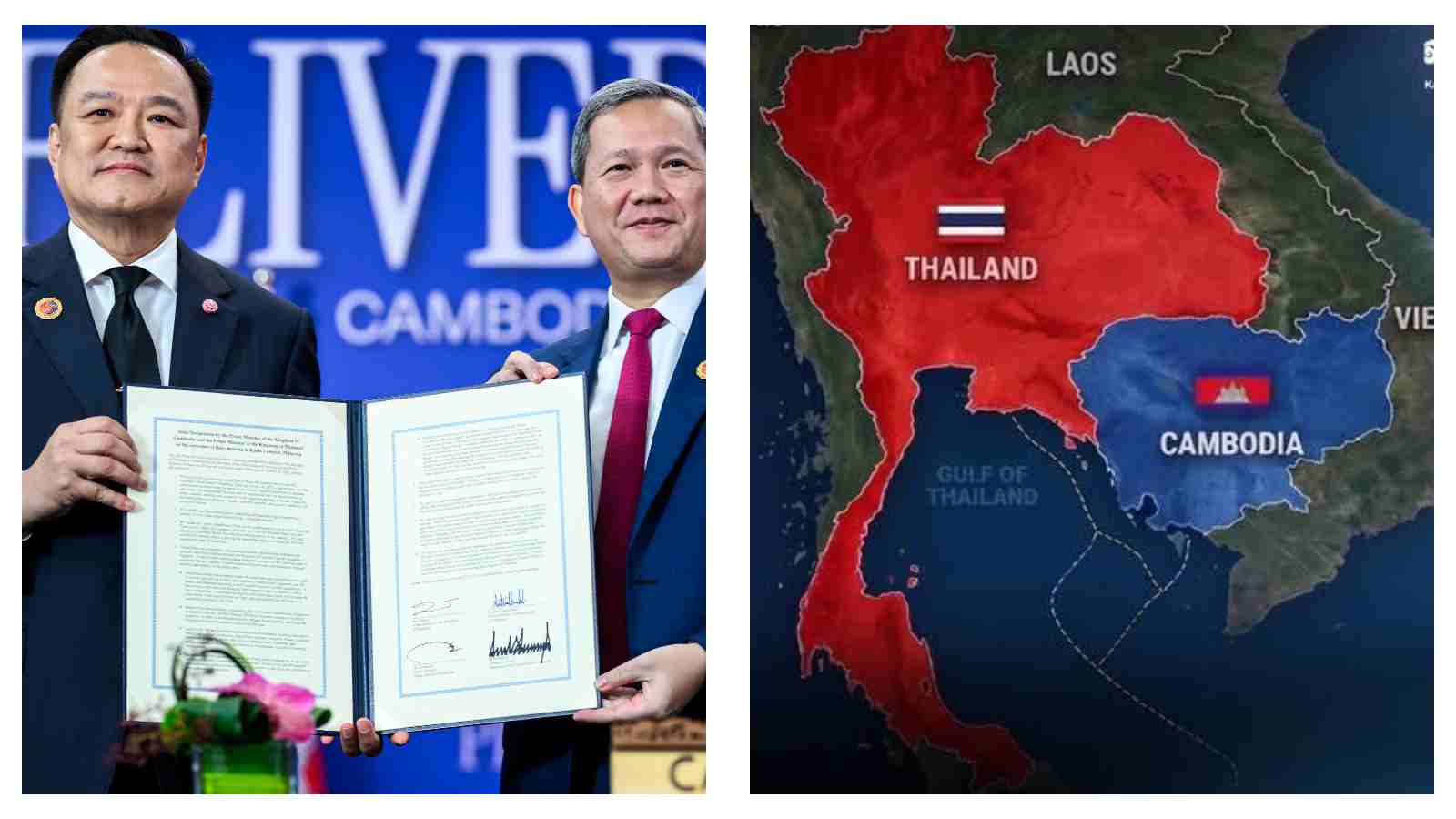
Long-simmering tensions over a vast, resource-rich stretch of the Gulf of Thailand will move to a new stage this week, as Cambodia and Thailand prepare to face international mediators in Singapore.
The two nations aim to resolve competing claims covering roughly 27,000 square kilometres of seabed believed to hold up to $300 billion in oil and natural gas reserves.
The dispute escalated recently when Thailand unilaterally withdrew from a 2001 Memorandum of Understanding (MoU), known as MoU 44, that had guided both nations toward joint offshore energy development.
Following the pullout, Cambodia announced it would take the matter to the Permanent Court of Arbitration (PCA) in The Hague, marking the first time the body’s United Nations-backed conciliation process has been convened in Asia.
Collapse of bilateral talks triggers legal shift
Cambodia’s decision to initiate conciliation came days after it said Thailand had terminated the agreed bilateral framework through which the countries had negotiated overlapping maritime claims for more than two decades.
“The meeting marks another important milestone in the peaceful process initiated by Cambodia to resolve the countries’ maritime differences, Cambodia’s foreign ministry said in a statement, as cited by AFP.
Analysts have described Thailand’s withdrawal in May as politically motivated.
William Jones, an international politics expert at Thailand’s Mahidol University International College, noted that the move was intended to project strength and to signal to voters that the legacy of former Prime Minister Thaksin Shinawatra, under whose administration the 2001 MoU was originally drafted, was officially over.”
Thai Prime Minister Anutin Charnvirakul has denied the pullout was linked to the separate, simmering land border dispute with Cambodia, which erupted into deadly clashes last year that left dozens dead and displaced more than a million people before a truce was reached.
He stated simply that “no progress had been made” in implementing the agreement.
MORE FROM MAYBELENE MARCELINO: Apple reimagines smartphone with groundbreaking iPhone Duo

Sovereignty, resources, and regional politics at stake
Cambodian Prime Minister Hun Manet framed the escalation as a matter of national sovereignty, saying in June that the move was also to protect Cambodia’s sovereignty and maritime rights in accordance with international law.
The area in question is estimated by Thailand’s energy ministry to hold future oil and gas revenues worth around $300 billion, a massive prize for both nations.
Phnom Penh has stated it hopes the process can help the two countries reach a “fair and lasting resolution of their maritime differences” and “open a pathway to explore significant oil and gas resources.”
Thailand’s foreign ministry said it remained “ready to co-operate fully with and support the work of the Conciliation Commission” and remained committed to “safeguarding its national interests.”
READ MORE: Colombo Port targets 1.5m TEU capacity boost as volumes rise
Historic process unfolds in Singapore
Both nations’ representatives will deliver opening statements on Tuesday before a five-member conciliation panel of international law experts at the PCA’s newly established Singapore office.
This is the first time the 135-year-old body has convened such proceedings in Asia.
The PCA, founded in 1899, is the world’s oldest intergovernmental dispute-resolution body, settling disputes between states and private parties through treaties, contracts, and the UN Convention on the Law of the Sea.
A key detail is that the commission’s recommendations are not legally binding, and the full process is expected to take roughly one year to complete.
Jones described Cambodia’s legal turn as a “shrewd political move” on Hun Manet’s part, noting that “having suffered a military defeat on the land border and remaining in an inferior position to its Thai counterpart, Hun Manet was choosing a legal avenue that promised low cost and high potential reward.”
READ NEXT: Who is May el-Toukhy? Meet the director behind Golden Lion winner ‘Woman Unknown’
 Bobbie Matias
  Geoffrey H. Latayan