
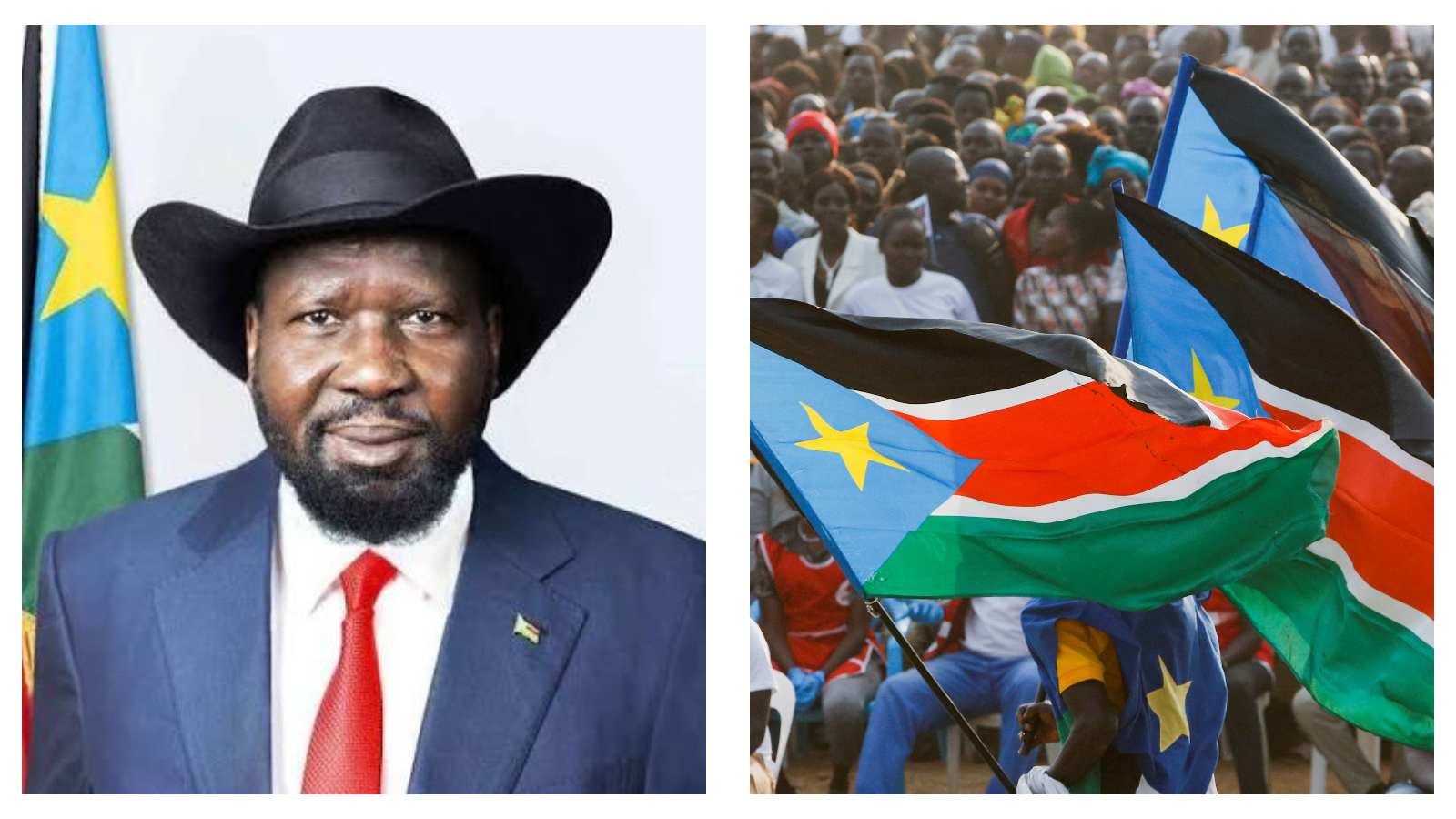
The South Sudanese government pledged to hold long-delayed democratic elections in December amid concerns that credible polls may be impossible due to an opposition boycott and security challenges.
Selma Malika Haddadi, deputy chairperson of the African Union Commission, said Juba expressed its commitment to hold national elections on December 26, 2026, as planned, the Daily Maverick reported.
Haddadi also said the Salva Kiir-led government assured that it would take action to maintain the “necessary momentum” to avoid further delays in the elections, which have already been postponed five times since 2015.
The assurance came a few weeks after Kiir dissolved the country’s transitional unity government and appointed a caretaker administration through a decree as South Sudan prepares for the long-awaited polls.
Power-sharing deal ends as Kiir remain president
The dissolution of the unity government means that a power-sharing deal established under a 2018 peace arrangement that halted years of civil war has ended.
It also means that both the national and state assemblies have been dissolved, while all vice presidents, ministers, local administrators and other relevant officials have been removed from office, Al Jazeera reported.
However, it noted that Kiir will remain in office during the election period until the next elected president is sworn in, while the judiciary and security institutions remain in place.
With these moves, South Sudan can prepare for the elections without completing a permanent constitution or census, two processes that were linked to the transitional government.
Opposition to boycott polls
Following the dissolution, the main opposition, the Sudan People’s Liberation Movement in Opposition (SPLM-IO), announced in a letter that it would not participate in the upcoming polls, which it said were designed to legitimise Kiir.
“We will not participate in, validate, or lend legitimacy to an electoral process held without key constitutional, security and legal reforms,” the letter read, as quoted by BBC.
SPLM-IO chairman Nathaniel Oyet also argued that several parts of the country remained outside the government’s control, making it more difficult for residents in those areas to vote.
With the SPLM-IO boycotting the elections and no prominent opposition figures challenging Kiir, concerns have grown over the level of political competition and the concentration of power.
South Sudan faces attacks, ‘unprecedented’ drought
Beyond the opposition boycott, South Sudan is also plagued by attacks and communal violence, highlighting the country’s ongoing security problems.
In particular, Warrap State faces intercommunal violence reportedly involving revenge killings and cattle raids, although the immediate trigger was unclear.
Additionally, Warrap declared an “unprecedented” drought emergency in early September due to a prolonged dry season that has affected the agriculture and livestock sectors, Agence France-Presse reported.
“The state faces an unprecedented dry spell caused by severe rainfall deficits, causing severe crop failures, also leading to catastrophic loss of livestock and grazing lands,” said state information minister William Deng Wol.
YOU MAY BE INTERESTED IN: Ethiopian-Eritrean ties crumble as Tigray war deepens
Calls to postpone national elections
In response to these challenges, researchers Guyo Chepe Turi and Said Abdullahi from the Institute for Security Studies called on the AU to postpone the elections until the right and favourable conditions have been established.
Turi and Abdullahi argued that it would be impossible to hold “credible” elections in the country as planned and suggested that the government should focus on preserving the 2018 peace deal to avoid any “large-scale violence.”
They also cautioned that holding elections later this year could deepen the country’s political instability as supporters of detained First Vice President Riek Machar had joined hands with other opposition militias.
“If Kiir pushes ahead with polls, the outcome will be an illegitimate political dispensation that deepens instability,” they said.
AU urges South Sudan to press ahead with polls
Despite these calls, the AU has backed South Sudan’s plan to hold its first elections as scheduled, arguing that the country cannot afford another postponement.
Nevertheless, the AU urged the country to take necessary action to address the long-standing challenges facing South Sudan and ensure fair and peaceful elections.
“We urge the government of South Sudan to work with speed to resolve the challenges that remain,” said South African President Cyril Ramaphosa, who is also the chair of the AU’s C5 committee.
The December vote would be South Sudan’s first national election since it gained independence from Sudan in 2011, but questions remain over whether the government can address the political and security challenges surrounding the electoral process.
READ NEXT: Three biggest changes announced by Andy Burnham at the Labour Party conference
 Carmela Calling
  Rosemarie Zamora
  Elan Castanares