
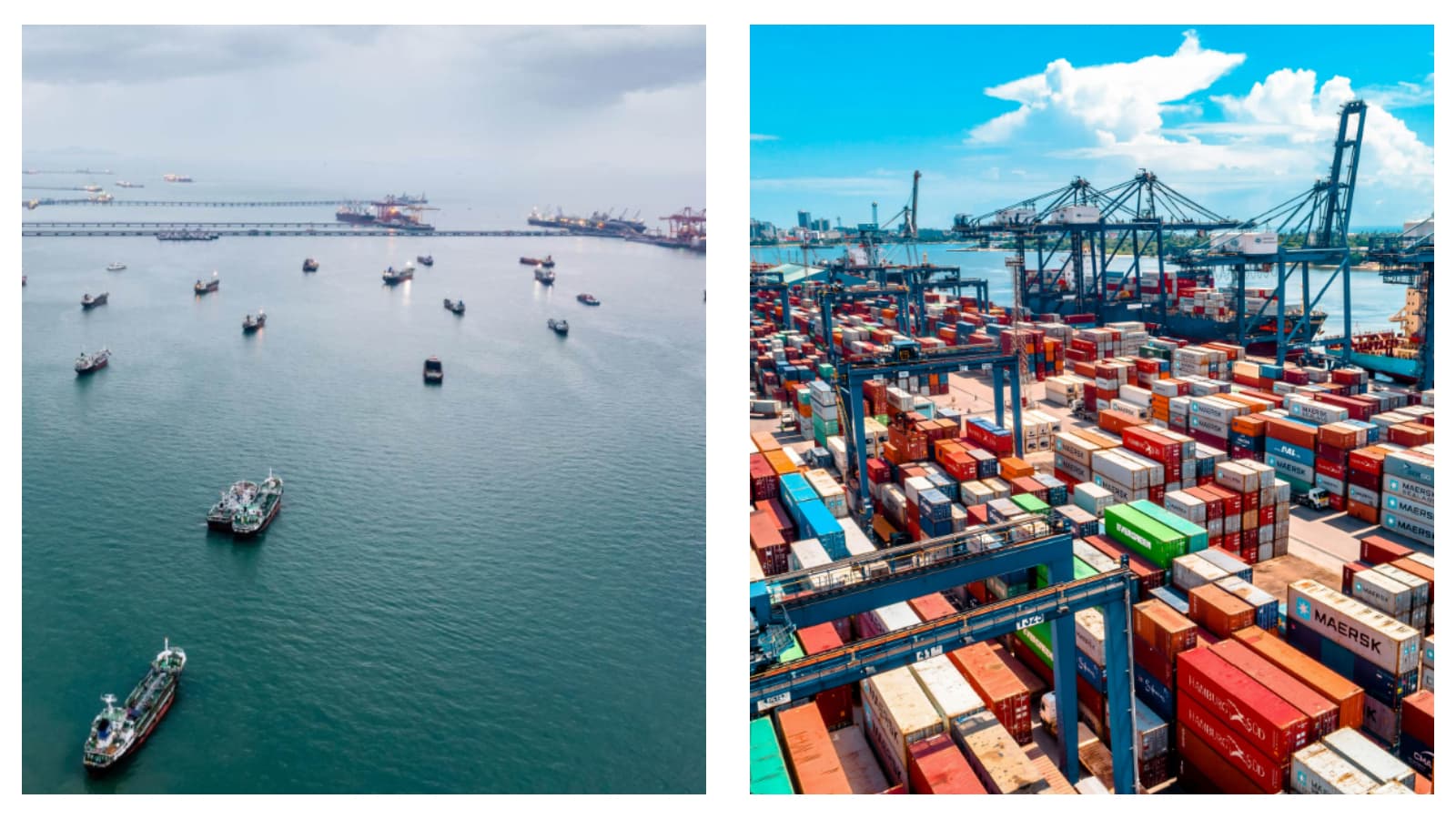
Amid El Niño-driven weather, geopolitical tensions and a string of typhoons affecting the maritime sector, global port congestion has risen sharply.
Now, a recently published report has found that the world’s major ports face another challenge: more ships are idling as congestion worsens and it is expected to take nearly a year to fix.
Shipping capacity held back
CH Robinson’s October Edge report highlighted that the congestion in some of the world’s biggest ports is due to a 12 per cent decrease in global container-ship capacity that has affected regions in East Asia, Northern Europe and India.
The report clarified that while shipping capacities remain prominent in the maritime network globally, most port operators have struggled to clear their backlogs due to a combination of bad weather, applied tariffs, geopolitics and port strikes in some regions.
Such a situation has led to predictions that 2026 will end with an uneven ocean-freight market and that decongesting ports could take between seven and 10 months, the report added.
READ MORE: No military solution to Middle East war, says Iran as Strait of Hormuz talks stall

Asian ports most affected
Consequently, shipping capacity has dropped, which could hit peak shipping seasons such as the ongoing Golden Week holiday in East Asia and the nearing Christmas season.
Strong typhoons have repeatedly disrupted operations in most Asian ports, forcing vessels to either dock or idle for days and leaving longer cargo backlogs and messy transshipment hubs.
Meanwhile, other ships seek refuge at less packed ports, but that could lead to spillage of congestion into other regions, global freight data and technology platform Freightos pointed out.
Maritime analyst and editorial director of Splash Maritime Group Sam Chambers said that while port capacities could improve slightly before the end of the year, situations will be tangled once more during the celebration of the Chinese New Year in February 2027.
YOU MAY ALSO LIKE: Philippine Senate bill seeks to support global opportunities for Filipino artists, creatives

What is port congestion?
A port becomes congested if it experiences a backlog of ships waiting to load or unload cargo, which leads to delays and disruption to the regular flow of ships and containers.
Some of the effects of port congestion include ships being anchored or idled for extended periods of time.
A port usually welcomes carriers with at least 10,000 to 20,000 containers in one freight shipment, and unloading procedures take days and even weeks.
The economic consequences of port congestion lead to higher costs for shipping companies due to demurrage (penalties when ships remain in ports beyond the agreed free port period), delayed delivery of cargo and a financial burden on businesses relying on the timely delivery of goods.
Port congestion is often blamed on poor infrastructure, limited storage capacity, ongoing labour disputes, delays in customs and an unusual change in shipping traffic.
READ NEXT: Football news: Argentina’s golden era draws to a close as Lionel Messi takes final bow

Expect freight rate increase
Chambers said shipping freight rates are bound to increase too, particularly intra-Asia rates due to the congested ports in Northern Europe and Asia.
The Intra-Asia Container Index rates for Shanghai in China to Laem Chabang in Thailand have made a whopping 22 per cent jump to $1,609 per 40-foot container.
The rates for Shanghai-Jakarta have likewise increased to $2,300, a 12 per cent adjustment that has been driven by the Golden Week.
Vessel bunching is also seen as a cause of the 27 per cent uptick year-on-year in container deployment to 1.5 million teu over the last four weeks on the Asia-North Europe route.
YOU MAY BE INTERESTED IN: KATSEYE confirmed to perform at 2026 Victoria’s Secret Fashion Show
 Levi Mora
  James Mario Ajero
  Wendellyn Mateo