
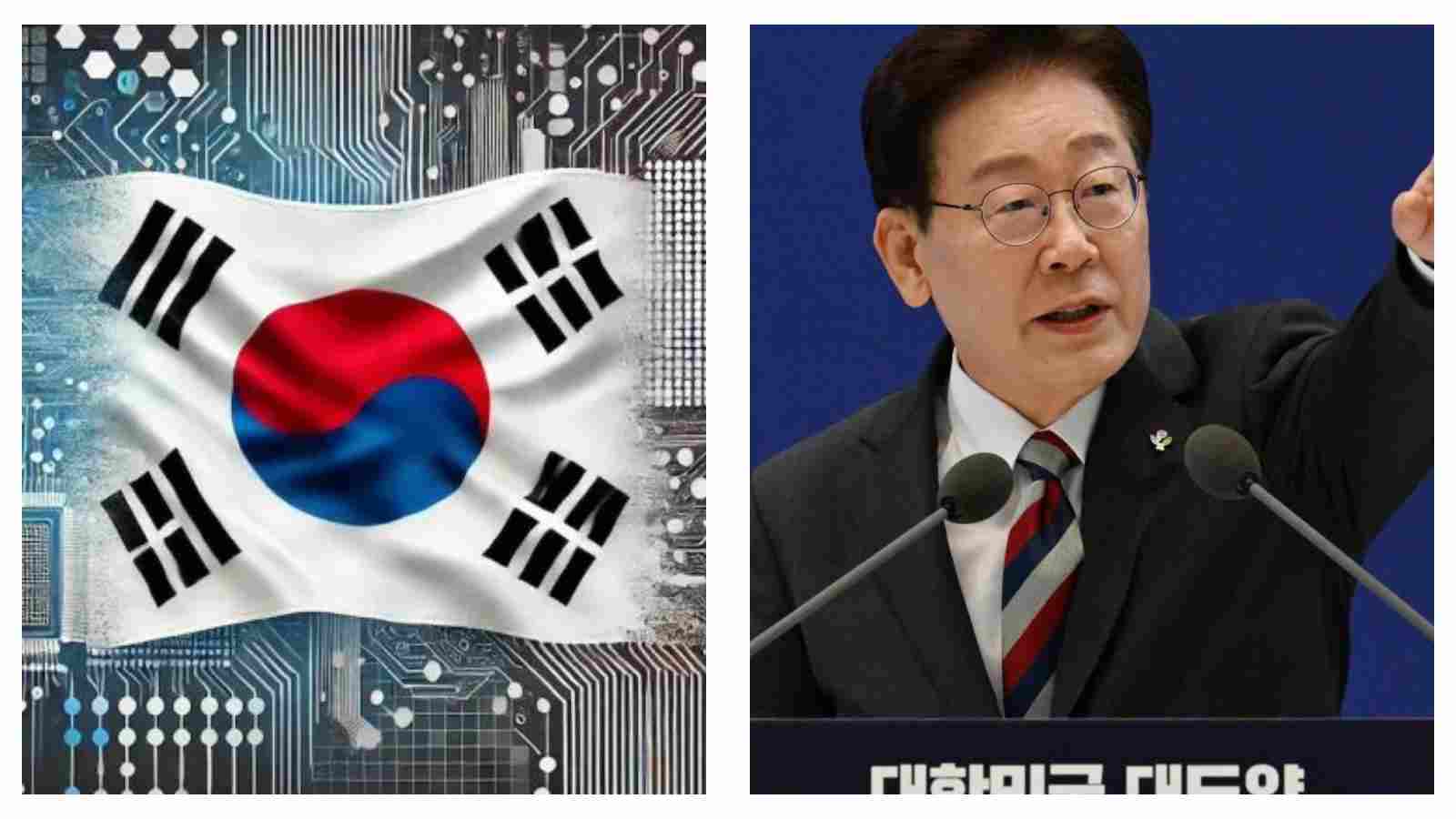
President Lee Jae-Myung has presented South Korea’s largest-ever budget proposal, a landmark spending plan that substantially increases investment in artificial intelligence and advanced chip manufacturing while bolstering national defence capabilities.
The total budget for 2027 reaches KRW821 trillion, a 12.8% rise from the previous year, and is expected to pass through parliament given the administration’s majority.
AI and semiconductor investment doubled
A standout feature of the budget is a near doubling of funds dedicated to AI and semiconductor technologies.
Some KRW21.3 trillion (USD16 billion) has been earmarked for chip production and artificial intelligence initiatives, covering everything from data infrastructure to advanced robotics.
“We will make bold investments in AI and future growth engines to boost our economy’s growth potential,” Lee told lawmakers during his annual budget address, AFP reported.
Within this allocation, KRW4.7 trillion will go specifically toward frontier AI research, with the stated goal of developing domestically produced AI systems that rank among the world’s best.
This strategy positions these technologies as national strategic assets, leveraging South Korea’s already dominant role in the global memory chip market, home to Samsung Electronics and SK Hynix, two of the industry’s top three manufacturers.
YOU MAY ALSO LIKE: Reddit plans login-only access to fight data scraping, raise ad revenue

Public-private partnerships drive tech ambitions
The government is pursuing an ambitious roadmap that includes three major national projects.
These include expanding chip manufacturing capacity across the country, creating dedicated robotics research hubs, and constructing massive-scale AI data centres.
These efforts build on already substantial private sector commitments, according to the administration.
Samsung and SK Hynix announced in June that they would jointly pour more than KRW4.75 trillion (USD3.5 trillion) into domestic operations, the largest corporate investment in the nation’s history.
To support this expansion, the administration will channel KRW2.1 trillion toward electricity, water systems, and industrial facilities.
Meanwhile, a dedicated KRW162.3 trillion “Future Fund” will also be established next year.
According to Lee, the fund is designed to channel the substantial tax revenues generated by the current semiconductor boom into long-term national development projects.
READ MORE: Fears mount as AI-generated dramas surge in China

Defence budget rises amid regional concerns
Military spending will also see an approximate 8% increase, climbing to KRW73.3 trillion.
A key priority is modernising the armed forces through digital transformation.
Lee outlined a vision to “rapidly transform our military into a smart, elite force by establishing integrated manned and unmanned systems based on AI, robots and drones.”
Planned procurements include next-generation KF-21 fighter jets and advanced nuclear-powered submarines.
This development has drawn sharp criticism from Pyongyang, which recently showcased new military technology including a hypersonic missile and a precision-guided underwater vehicle.
North Korea claimed these systems utilise AI capabilities, heightening the sense of technological competition across the peninsula.
Economic momentum and labour impacts
The budget proposals come at a time of unprecedented global demand for South Korean memory chips, driven largely by the rapid expansion of AI infrastructure.
Global shortages have driven company profits and share prices sharply upward, but the surge has also created upward pressure on wages as skilled engineers negotiate better compensation packages across the industry.
President Lee emphasised that these investments represent more than short-term stimulus as they form the foundation of a strategy to secure South Korea’s economic leadership well into future decades.
READ NEXT: Pope Leo makes history after casting his vote in the US midterm polls
 James Mario Ajero
 Carmela Calling