
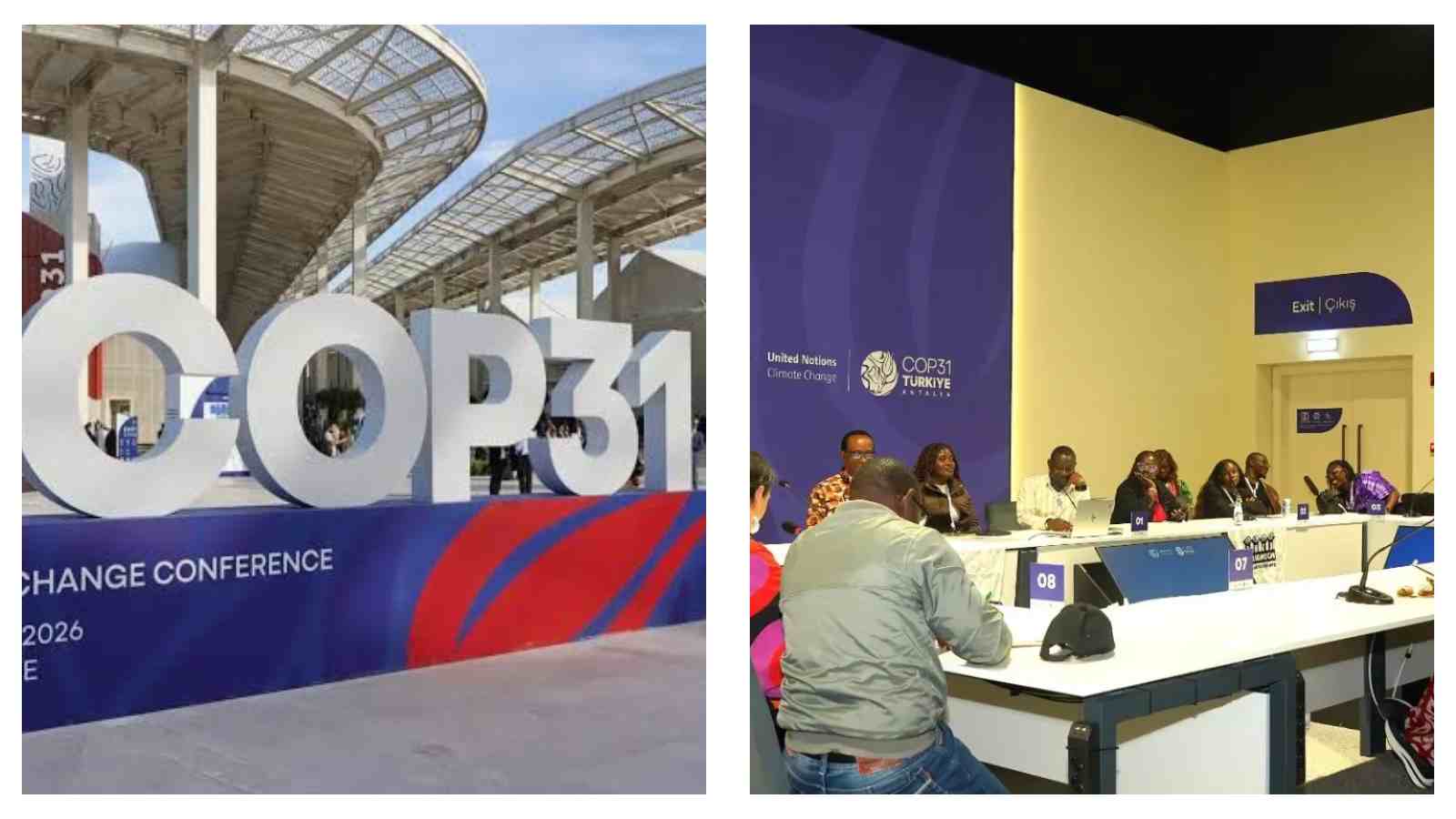
Civil society groups are sounding the alarm over what they see are struggling negotiations as the COP31 summit enters its final stretch.
Over 190 nations are participating at the annual UN climate conference that is set to conclude on Friday, although many are expecting it to be extended until the weekend.
Negotiators were able to produce a first draft deal earlier this week, before a revised version released on Thursday saw weakened or dropped references on moving away from fossil fuels — much to the dismay of civil society groups and other climate advocates.
Revised text raises concerns
The latest draft of the cover decision underscored clean energy and electrification, particularly on increasing electricity’s share of global final energy consumption to 35 per cent by 2035, which was proposed by Turkey.
Funding for adaptation will also be tripled by 2035, though some details about this goal, such as how to calculate the increase, have been left out for further discussions.
Moreover, COP31 will be the first climate summit to acknowledge the world would not be able to meet the 1.5°C warming limit that was set out in the Paris Agreement.
The text stressed that nations should strive to keep the 1.5°C overshoot small and short as possible.
“But we are determined that COP31 is not remembered for that, but is remembered as a COP which decides clearly and strongly that that is not acceptable,” Australia’s Chris Bowen said when presenting the latest text.
Some civil society groups have been left disappointed so far with the negotiations.
“Announcements in the cover decision won’t cover up the fact that negotiations are struggling,” Teresa Anderson of ActionAid International said at a press conference cited by UN News.
She mentioned the lack of sufficient financial support especially for developing nations, which are still being asked to do more despite the limited aid, and warned that “adaptation is how we all survive this climate crisis together.”
MORE INTERNATIONAL NEWS: Industry leaders hail Hong Kong’s capacity to become trade, maritime hub
Fossil fuel language removed
The dropping of two references to fossil fuels in the latest text, including their usage limits, has triggered concerns.
This was alongside the removal of a USD120 billion finance target aimed at helping developing countries adapt to climate change.
Mohamed Adow, director of climate and energy think tank Power Shift Africa, believed the new text had “gone backwards.”
“If this version of the text remains, it will be a ghost COP. The summit will have nothing to show for what happened here,” Adow was quoted as saying by Reuters.
But Turkey and Australia defended the decision, saying this year’s meeting sought to fulfill past promises instead, rather than reiterate them.
COP31 President Murat Kurum was adamant they were not pulling back.
“I think the determined steps we have taken need to be supported. It is clear we cannot get anywhere by repeating the same discussions,” Kurum said.
Moreover, Bowen said the first draft had been deliberately broad, allowing negotiators to narrow down options.
“What we’re doing is finding the most ambitious outcome that consensus will allow,” Bowen added.
YOU MAY ALSO LIKE: Top UN court says killing of Rohingya people a ‘genocide’

Have you seen Ambition?
Meanwhile, a humorous sight greeted the COP31 venue in Antalya on Thursday, where climate activists were seen holding missing-cat posters.
The missing cats, they said, were both called “Ambition” — which hated overshooting the 1.5°C temperature limit, loved a transition away from fossil fuels, and responded to climate justice.
The cat humour, however, was more than a cheeky jab.
The campaign had started in COP29, during which calls were raised to veer away from coal, oil and gas while protecting communities at the same time.
READ NEXT: Shipping groups urge IMO to adopt unified decarbonisation framework
 Eugene Nicklaus S. Laqui
 Levi Mora
 Hyacinth Estrada