
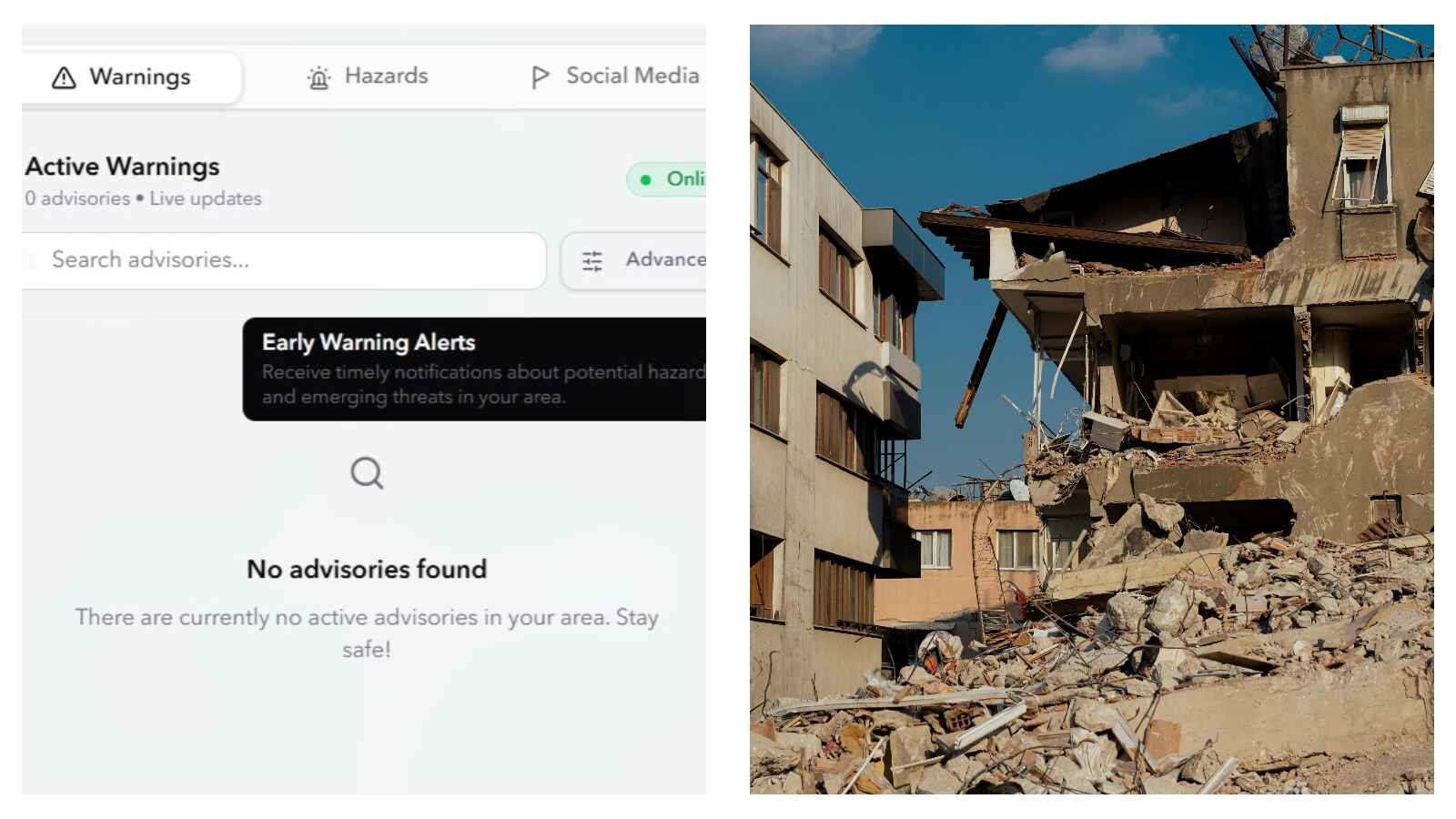
Staying safe and informed during calamities is now easier for every Filipino with the launch of “Handa” — a new integrated website that allows users to get real-time updates, report incidents, and call for emergency assistance, all in one place.
The platform, officially named as “Handa: The Integrated Platform for Preparedness, Early Warning, and Response,” is led by the Department of Science and Technology (DOST) through the Philippine Institute of Volcanology and Seismology (Phivolcs).
It brings together existing government websites into a unified system for early warning, disaster preparedness and response.
During the launch in Quezon City, DOST Secretary Dr. Renato U. Solidum, Jr. noted that one of the challenges faced by Filipinos during disasters is not the absence of data, but the fragmentation of information.
He said that many rely on multiple sources and institutions to get updates, which can sometimes result in misinformation.
To address this, Handa provides reliable, centralized updates directly from government agencies, including DOST-PHIVOLCS, DOST-PAGASA, and DENR-MGB, offering a single, trusted information.
YOU MIGHT ALSO LIKE: Faith on the move: How Filipinos mark Holy Week in changing nation
AI-powered assistant
Apart from the real-time updates and emergency call functions, the platform also features an AI assistant to help users navigate the website more easily.
This intelligent tool can answer a wide range of questions, from checking current weather conditions and the status of active volcanoes to identifying safe evacuation centers and routes.
The AI assistant is particularly useful for first-time users or those unfamiliar with disaster management tools as it will guide them step by step through the platform’s features.
‘Life-saving’ for hazard-prone residents
For Krystal Cate Castillo, a 25-year-old resident of Batasan Hills where the West Valley Fault (WVF)—a 100-kilometer active fault system capable of generating a 7.2 magnitude earthquake, often referred to as “The Big One”—passes through, the Handa platform could help keep her family safe.
“Honestly, I find the Handa website really helpful, especially for someone like me who lives in Batasan near a fault line. Knowing that my area is close to a hazard zone makes me more concerned about earthquakes, so having a tool where I can actually check my location and see the risks is a big help,” she said.
However, Castillo said that navigating the website is a bit tricky for users like her who are not too tech-savvy.
“If I’m being honest, the website can be a bit confusing at first. There’s a lot going on, and some of the terms are hard to understand if you’re not familiar with them. As a regular user, I just want to quickly know, ‘Am I at risk or not?’ So I think it would be better if it was simpler or more beginner-friendly,” she said.
“But overall, I’d say it’s really useful, especially for people living near hazard zones like me. It gives me awareness and helps me feel a little bit more prepared.”
READ NEXT: How does the Philippines prepare for powerful earthquakes like the ‘Big One’?
 Carmela Calling
  James Mario Ajero