
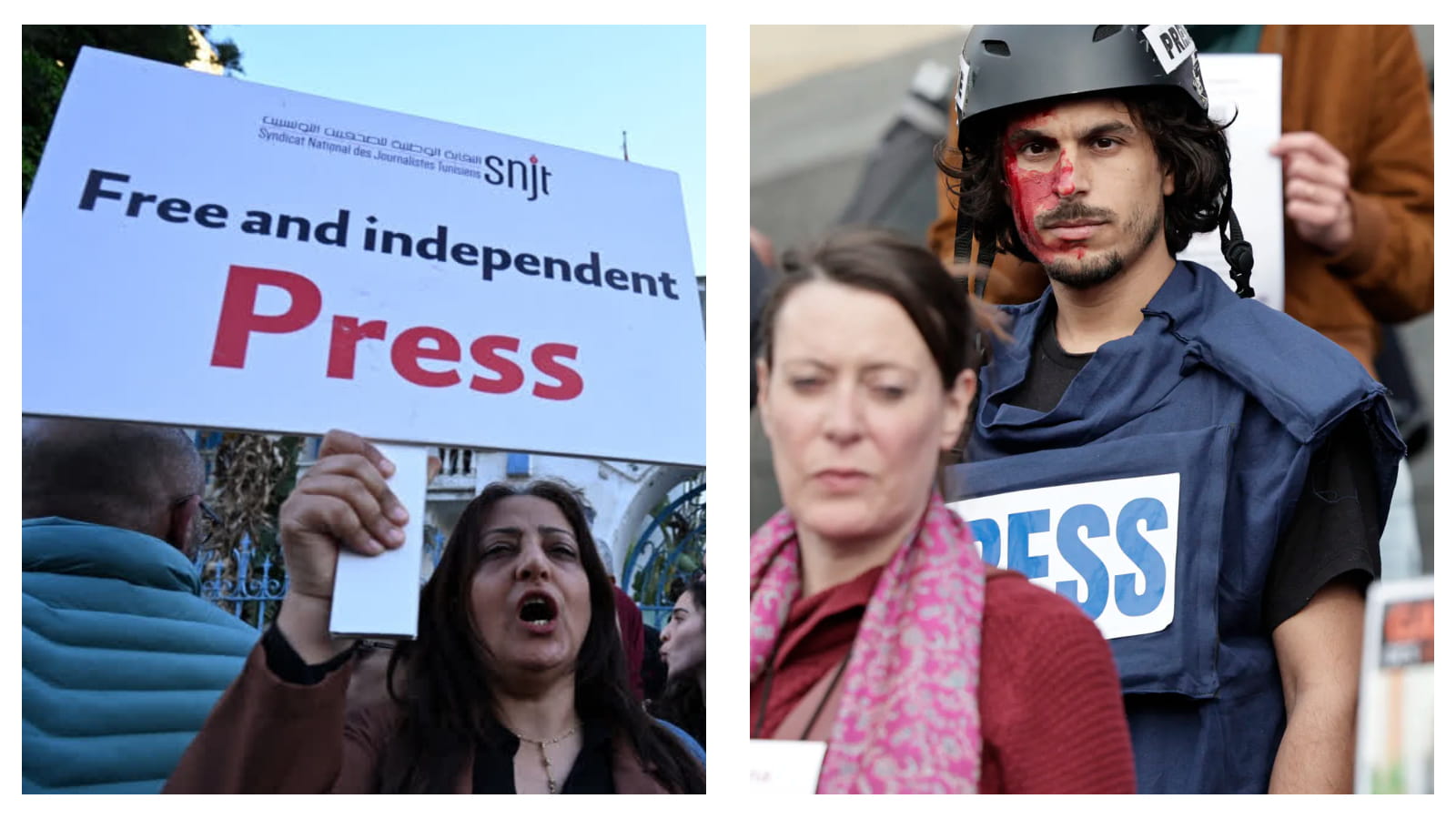
The landscape for journalism and press freedom has deteriorated to its worst point in 25 years, according to the latest index by Reporters Without Borders (RSF).
For the first time, more than half of all countries are now categorised as offering either difficult or very dangerous conditions for reporters.
“The average score for all countries and territories worldwide has never been so low,” the organisation confirmed, underscoring that the decline is a global trend, AFP reported.
Only a handful of nations remain safe
RSF highlighted an enormous divide between the best and worst environments.
It noted that just seven countries, predominantly located in Northern Europe and led by Norway, which holds the top spot for the tenth year running, maintain a positive rating.
This means the share of the global population living in places where media operates freely has collapsed from one in five people to less than one percent.
At the opposite end of the scale, Eritrea continues to rank last for the third consecutive year.
READ MORE: Meta, Microsoft to lay off workers amid AI push

Wide range of factors driving decline
Challenges vary across regions and political systems.
RSF pointed out that in established democracies like the United States, which fell to 64th place, issues include political pressure on journalists, reduced funding for public media and incidents of detention or expulsion.
In more authoritarian contexts, restrictions are far stricter.
Russia, ranked 172nd, applies national security laws to suppress independent coverage, with 48 journalists currently behind bars as of April 2026.
According to the organisation, political transitions do not automatically guarantee improvements either.
While Syria jumped 36 places following leadership changes, the situation there is still classified as very serious.
Meanwhile, military rule sent Niger plummeting 37 positions, the sharpest drop recorded this year, mirroring negative trends across the entire Sahel region.
Global systems prove inadequate
RSF asserted that current frameworks designed to protect media rights are failing to stop this downward spiral.
“Current protection mechanisms are not strong enough. International law is being undermined, and impunity is rife,” said RSF editorial director Anne Bocande.
“We need firm guarantees and meaningful sanctions to reverse this trend.”
Warning for democratic values
The shrinking space for independent reporting is not just a crisis for the media profession but also a warning signal for democratic values everywhere.
When information is controlled or suppressed, citizens lose the ability to make informed decisions and hold power to account.
The latest data make it clear that existing safeguards are not working, and collective action is urgently required to ensure that the right to truth and transparency is protected for future generations.
READ NEXT: MUBI CEO reveals platform lost over 200,000 subscribers in 2025
 James Mario Ajero
  Jheruleene Anne Ramos