
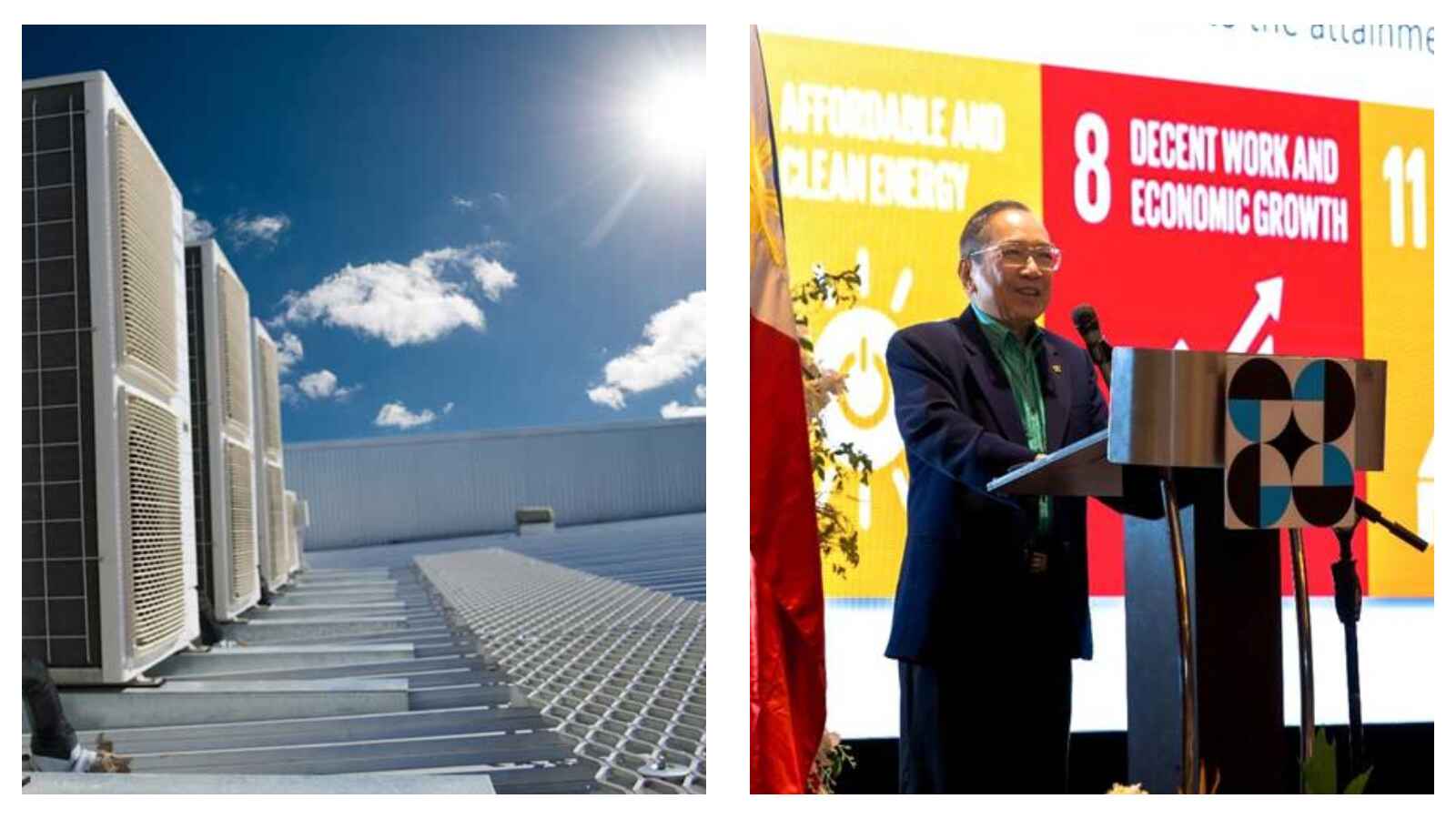
As electricity demand intensifies in the Philippines, a Filipino scientist is calling for a shift towards building designs that rely less on air conditioning and more on natural methods of managing heat, drawing on a United Nations-backed pilot project in Cambodia.
The proposal centres on passive cooling, a set of design strategies that reduce indoor temperatures without mechanical systems.
Advocates argue that such approaches could ease pressure on power supplies while lowering emissions, particularly during peak-demand periods in the hot, dry season.
The recommendation was presented by Academician Filemon Uriarte Jr. of the National Academy of Science and Technology Philippines during a regional scientific meeting.
Uriarte said the Philippines could benefit from replicating a project implemented by the United Nations Economic and Social Commission for Asia and the Pacific in Cambodia, where similar climatic conditions prevail.
Regional pilot
Uriarte said a recent technical review of the Cambodia initiative showed that passive cooling measures could deliver measurable reductions in energy use.
The project, valued at close to $1 million, tested various design interventions aimed at limiting heat gain in buildings.
“We just completed, very recently, a technical review of an almost million-dollar project being implemented by the United Nations ESCAP on passive cooling strategies for sustainable development in Cambodia,” he said in an interview with the Philippine Information Agency.
He added that the findings prompted a recommendation to expand the approach across Southeast Asia, including the Philippines, where such methods remain underdeveloped.
Passive cooling techniques rely on natural processes such as airflow, radiation, and insulation rather than mechanical cooling.
Measures can include planting vegetation to influence air movement, applying reflective coatings to roofs and walls, installing solar films on windows, and using external shading devices.
“You can design your outdoor vegetation so that you can redirect the flow of air around those trees, divert it, or concentrate it in a certain direction,” Uriarte said.
YOU MAY ALSO LIKE: US, Venezuela end seven-year isolation with revived ‘vital’ direct air route

Implications for energy use
The Cambodian trial offered data that Uriarte said could be relevant to the Philippine context.
In Cambodia, around 45 per cent of electricity consumption is used for cooling.
The study found that widespread adoption of passive cooling could reduce emissions linked to cooling by at least 17 per cent.
Electricity demand for cooling is also projected to fall by about 20 per cent between 2030 and 2040 compared with a scenario in which no changes are made.
Over time, the project could lead to a cumulative reduction of nearly three million tonnes of carbon dioxide by 2035.
“When we evaluated the project, we said it was successfully implemented. It is effective insofar as the objectives were concerned on reducing energy consumption,” Uriarte said.
The call for wider adoption comes as the Philippines faces increasing pressure on its energy system.
Uriarte suggested that passive cooling could complement these efforts by reducing demand rather than increasing supply.
By lowering the need for air conditioning in residential and commercial buildings, such strategies could ease strain on the electricity grid during peak periods.
READ NEXT: World Bank approves funding to boost women’s employment in Tajikistan
 Elan Castanares
  Newsjustnews writers
  Mary Mae Balasanos