
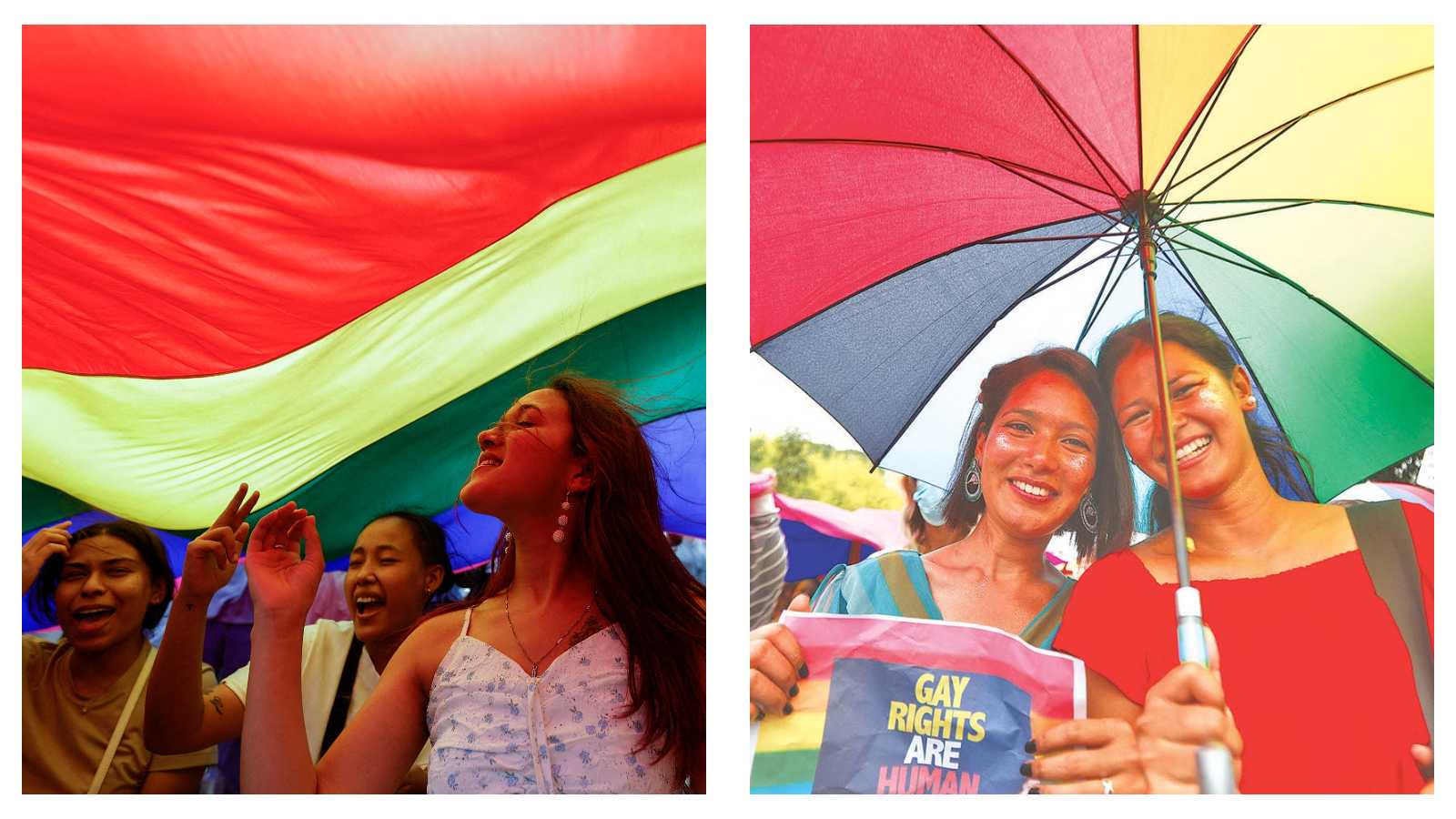
Nepal has made history as the first South Asian country to explicitly include the queer community in its ministerial mandate.
As part of a major government overhaul, the recently elected Balendra Shah government has launched the Ministry of Women, Children, Gender and Sexual Minorities and Social Security.
This made the country the first in South Asia to institutionalise LGBTQIA+ rights.
The formation resulted from a merger between the former Ministry of Women, Children and Senior Citizens and the government’s social security arm, the Ministry of Labour, Employment and Social Security.
YOU MAY BE INTERESTED IN: Cockroach Janta Party: India welcomes a new political party of… roaches?
‘Historic and long-awaited’
Leading human rights organisations have welcomed the move, calling it a “historic and long-awaited milestone for Nepal’s gender and sexual minority communities”.
“It reflects the government’s recognition of rights, dignity, and inclusion of sexual minorities within the national governance network,” the Blue Diamond Society, Nepal’s leading queer activist organisation, said in a statement.
“We celebrate this important achievement and are encouraged to see our issues formally recognised within a government ministry’s name and mandate.”
“This marks an important step toward meaningful inclusion.”
On Thursday, the government named Sita Badi as the head of the newly-formed ministry.
The 31-year-old Rastriya Swatantra Party politician previously served as the Minister of Women, Children and Senior Citizens, before it was restructured to include gender and sexual minorities.
As part of her first act, she declared May 17 as the International Day Against Homophobia, Biphobia and Transphobia in Nepal.
She also called for a policy reform to promote gender equality in political and social spaces.
Nepal’s take on queer rights
Nepal has some of the most progressive laws on gender minorities’ rights in Asia.
In 2007, the country legalised a “third gender” classification for non-binary people.
This gave gender nonconforming Nepalis the right to be identified outside the M/F gender marker.
During the same year, the country outlawed a 1963 mandate banning “unnatural sexual intercourse”, which criminalised sexual acts between non-heteronormative couples and people of the same sex.
In 2015, the country legally recognised gender and sexual minorities in its constitution.
In 2023, the Nepali Supreme Court stepped up the community’s inclusion by legalising marriages between same-sex individuals and non-traditional couples.
Then in 2026, the country made history by electing Bhumika Shrestha, the first transgender lawmaker to become a member of the parliament under the proportional representation system.
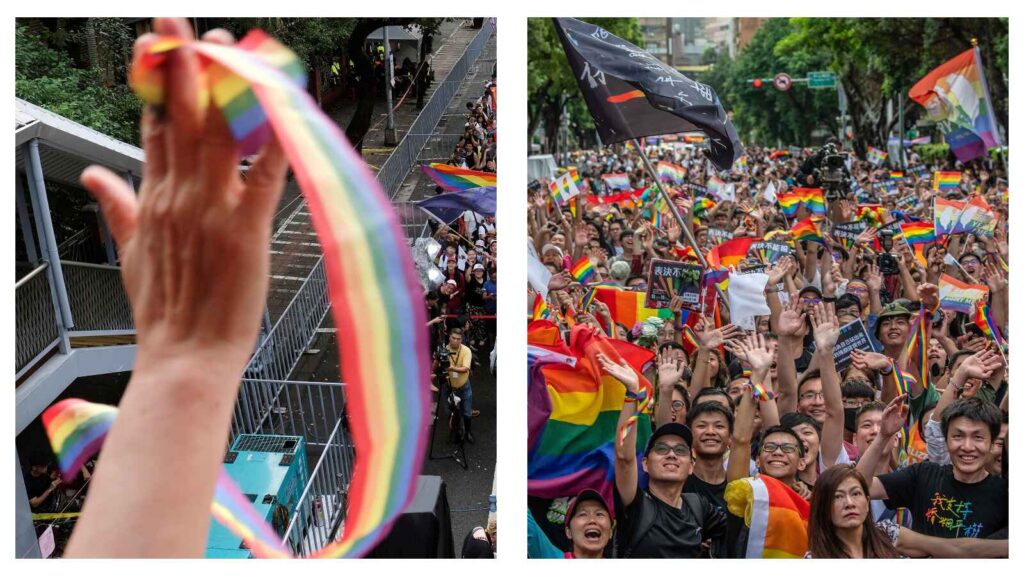
YOU MAY ALSO LIKE: Taiwan’s marriage equality landscape – Seven years since historic legalisation
‘Institutionalisation is just the beginning’
Despite the perceived progress on the country’s gender minority inclusion, observers are still calling for the government to recognise LGBTQIA+ rights in practice.
Many Nepalis of non-binary gender classifications are still experiencing discrimination in their daily lives.
In 2025, a lesbian couple in Sunkoshi Rural Municipality in Sundhali was forced to separate after the local government refused to legally recognise their union.
According to the local unit, there is still no established legal procedure for the registration of same-sex marriages in the municipality.
The Kathmandu Post also reported the lack of a third gender classification in the national census.
“The census shows our population is very low, which isn’t a fact,” queer activist Sammon Chhetri told the Post.
“We need proper data collection to ensure reservations and rights,” he added, reiterating that the lack of a proper label prevents the inclusion of non-binary individuals in the national data.
Likewise, rights worker Resham Neupane said that institutionalisation is just the beginning.
“The ministry should ensure that these rights are implemented in real life, not just on paper,” said Neupane.
“And not as an act of pity or mercy.”
READ NEXT: Nepal PM Balendra Shah rejects criticism over informal settlement demolitions
 KC Maderia
  James Mario Ajero
  Levi Mora