
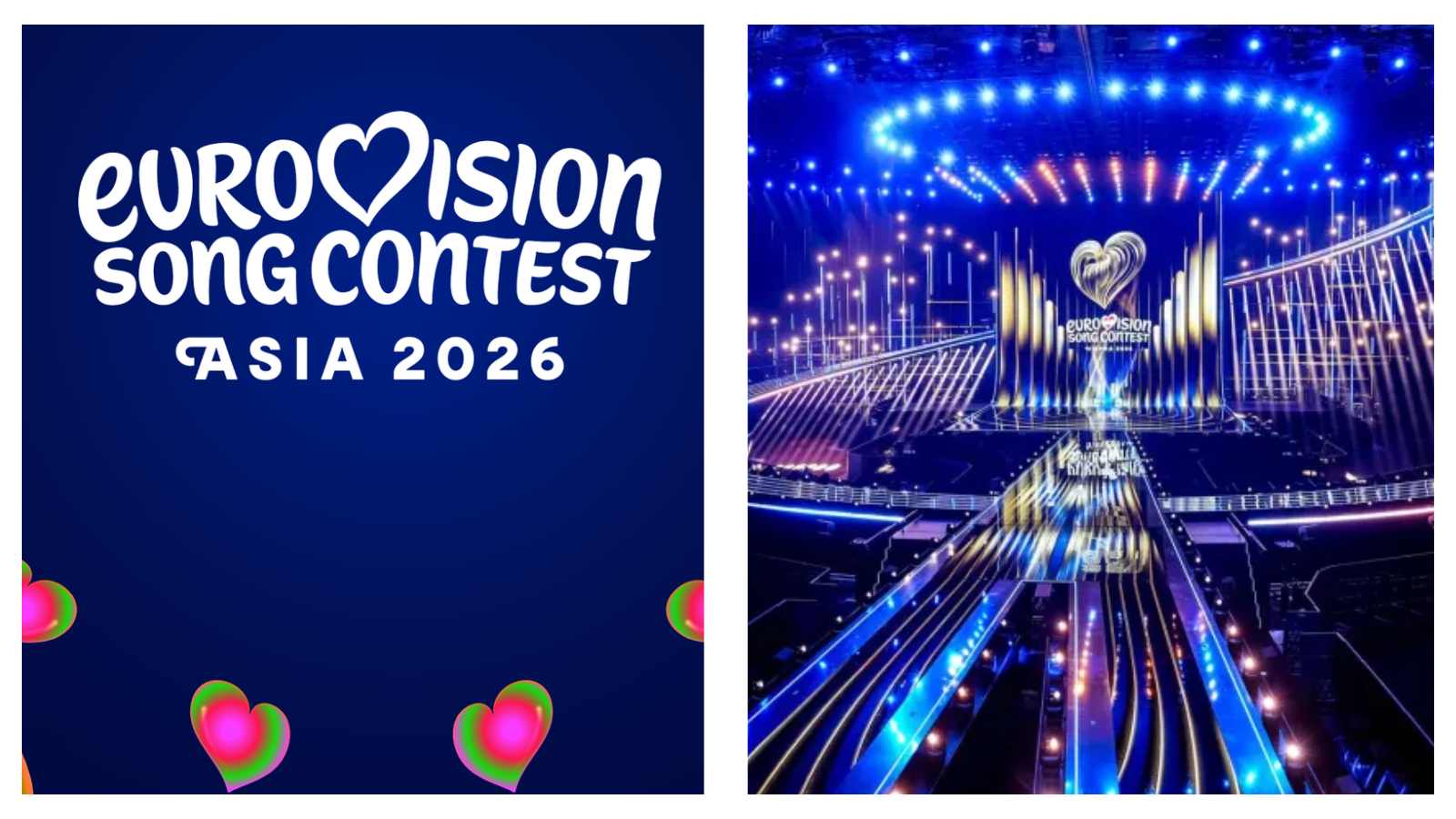
Eurovision, the world’s longest-running music competition, will make its way to Asia next weekend. But will it match Europe’s version, which has been running for decades?
On November 14, 11 countries from Asia will bring their representatives to participate in the competition to be held in Bangkok, Thailand.
The participating countries are Bhutan, Bangladesh, Cambodia, Laos, Malaysia, Mongolia, Nepal, the Philippines, South Korea, Thailand, and Vietnam.
These countries have chosen their representatives, including some big names in the industry such as Vietnam’s Toc Tien and Malaysia’s Aina Abdul.
What to expect at the Eurovision Asia?
Eurovision executive producer Assaf Blecher said the Asian edition of Eurovision seeks to introduce the competition to a new audience.
“Eurovision is very big in Europe and it’s very new in Asia,” he said.
He mentioned that preparations took three years and people are expecting more from the show.
“Suddenly they understood the spirit of Eurovision,” he said of those involved, hailing “the music, the extravagance.”
“It’s a window to other countries, to music, to people, to costumes,” he told AFP.
The European Broadcasting Union (EBU), which owns Eurovision, said the Asian format will follow Europe’s, where each country sends one act, performing live, for a maximum of three minutes and with up to six performers on stage.
The EBU approves every song and lyric. It also prohibits political songs the same way it is barred in Europe.
Who will represent each country on the Asian stage?
Eleven acts were chosen through national competitions. Bangladesh will send Beatmosphere with the song “Umi Ele.” Bhutan, meanwhile, will have their Nyendra sing “Hello Semo.”
Cambodia will be represented by Monetrey to sing “I Let You Go.” Laos’ Thinla will sing “Bae,” while Aina Abdul from Malaysia will sing “Bluest Sky.”
Mongolia has Beck to sing “Chamguigeer (Without You),” while Nepal chose Pratik Himal Rai to sing “Ananta Maya.”
The Philippines will have Carmelle Collado to sing “Sobra-Sobra.” South Korea will be represented by K-pop star Junhee, who will sing “Deep Dive.”
Thailand’s Mang and Daou will sing “Aroma,” while Toc Tien from Vietnam will perform “Em Tien.”
READ THIS: Ex-NCT member Lucas Wong to join Jerry Yan in new Taiwanese drama
How can the voting be done?
The result of the Eurovision Song Contest Asia 2026 will be decided by a 50/50 combination of professional jury votes and public votes. The entire voting process will be held online.
Voting can only be done using the official Eurovision Asia website or on the app.
Just like the European format, viewers from competing countries can vote, but no nation can vote for itself.
This means if a voter is from the Philippines, they cannot vote for their own entry.
Each user will get eight free votes, and these votes need to be distributed to at least three different songs.
To increase the votes, viewers can purchase 10 additional paid votes for a maximum of 18 total votes per user.
Hit or Miss? What do people think about Eurovision Asia
The Eurovision Song Contest is very successful in Europe, having been established in the late 1950s and has been running for seven decades already.
Eurovision attracts more than 100 million viewers every year.
According to Dean Vuletic, author of Postwar Europe and the Eurovision Song Contest, the newest edition could face challenges, specifically whether it could “capture the attention and fascination of the local audience.”
Vuletic said the Eurovision Contest was still a success as it was introduced during the rise of television and at a period of postwar European integration.
“So there’s a reason why Eurovision is peculiarly European, and why I think it would struggle to succeed elsewhere,” he said.
Despite his reservations, Vuletic still wants to see how it goes and has already travelled to Thailand for the final show.
Vuletic also noted how Eurovision Asia songs are mostly love songs, saying the show is “lacking some provocation or some meaningful messaging that can resonate with international audiences.”
“This is what makes Eurovision in Europe special compared to other song contests.”
Meanwhile, PR expert Bettina Miski said she is unsure if the contest’s queer culture will automatically transfer.
She noted that some countries in Asia have more restrictive media, including Malaysia and Bangladesh, which criminalize same-sex relations.
As the Asian edition is on its way, viewers are waiting to see whether this format will stay and will be renewed for a second edition.
READ NEXT: TikTok’s ‘For You’ feed facing its biggest challenge yet
 Jacinth Banite
 Hazel Camba
 Levi Mora