
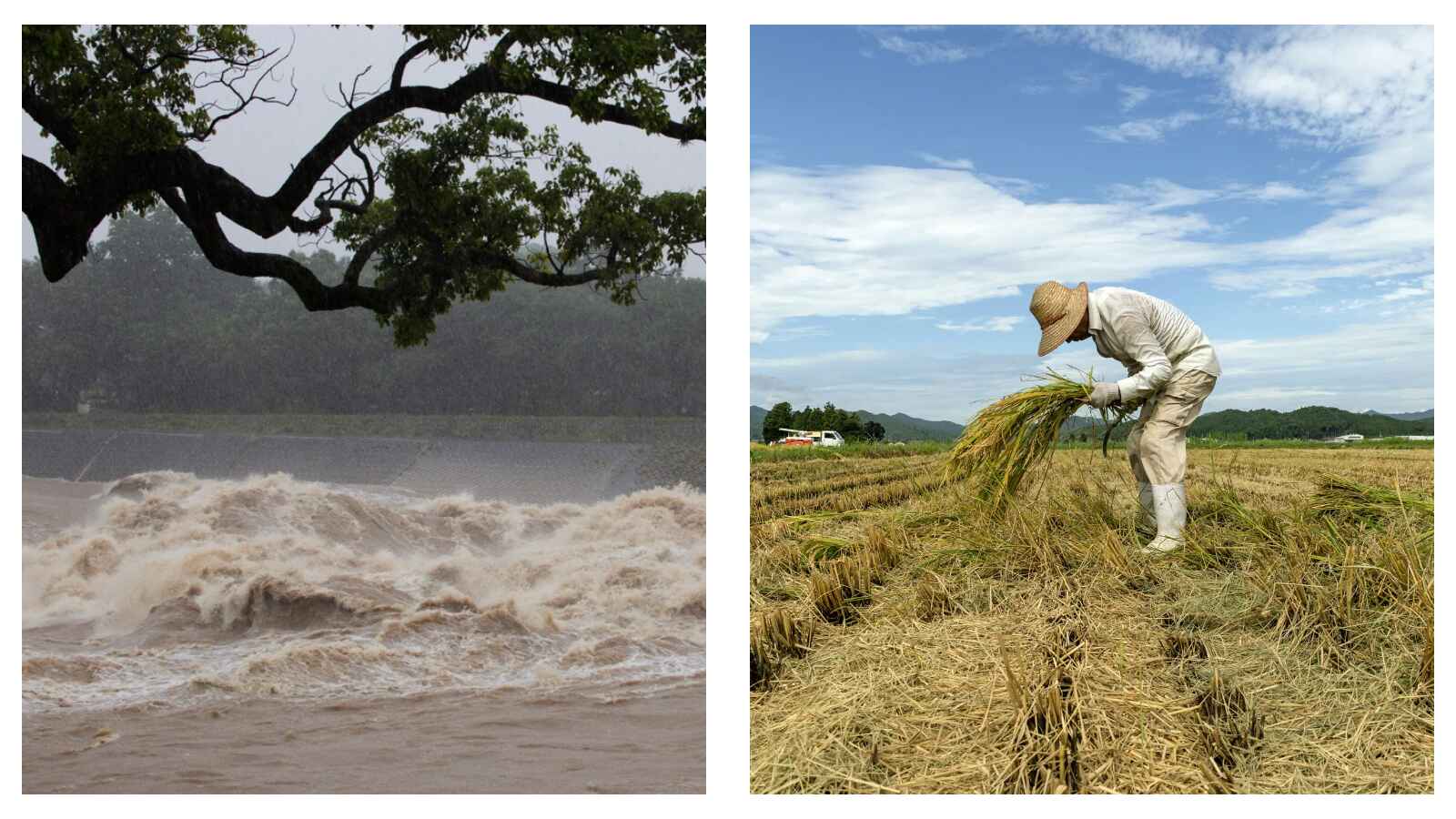
A warning has surfaced from a new government climate impact assessment that disaster preparedness and food supply in Japan are currently being challenged by the accelerating global warming due to the evident decline in rice quality and more persistent flooding.
Japan’s Ministry of the Environment has released a report that provides a scientific assessment of the ways climate change continuously burdens key industries and the daily life of citizens.
Its discovery noted that 65 per cent of 80 evaluated items across seven sectors – including agriculture, disaster prevention and public health – are projected to suffer serious impacts, while 68 per cent are in need of specific urgent countermeasures.
Key sectors face mounting strain
The assessment, now containing new details for the first time in five years, will be used as a reference for central and local governments as well as businesses when creating climate adaptation and mitigation policies.
The ministry suggested that the environment minister could officially approve the report as early as next month.
A related report from Japan Today highlighted rice, a staple of the Japanese diet, as among those that will struggle to endure the progressing climate change.
As warned, both yields and grain quality are projected to weaken due to rising temperatures as well as potential geographic shifts in suitable cultivation areas.
Fruit production is also at risk, with optimal growing zones for mandarins and other fruit trees anticipated to move northward as temperatures increase.
Furthermore, heavier rainfall is foreseen to cause a sharp surge in flood-prone areas and landslides, emphasising the strain climate change could place on infrastructure and disaster response systems.
The worst is also expected in its effect on public health, blaming higher temperatures for the escalation in heatstroke-related deaths.
YOU MAY ALSO LIKE: High Seas Treaty brings rules to international waters

Heat risks demand urgent action
Warnings from the assessment added stronger chances of densely populated urban areas and parts of northern Japan experiencing significantly higher mortality rates during events under intense heat should average global temperatures ascend 2.7 degrees Celsius above preindustrial levels by the end of the century.
While helpful initiatives such as developing heat-tolerant rice varieties could aid in preserving quality if warming is maintained at about two degrees Celsius, the report cautions that progress in temperature increases would still result in produce declines.
The assessment paints a clear picture of climate change as a near-term threat rather than a distant risk, signalling that delayed action could undermine Japan’s food security, public safety and economic stability.
READ NEXT: Philippine-built, methanol-powered Kamsarmax bulk carrier starts voyage
 Carmela Calling
  James Mario Ajero