
By Shauna Hyland
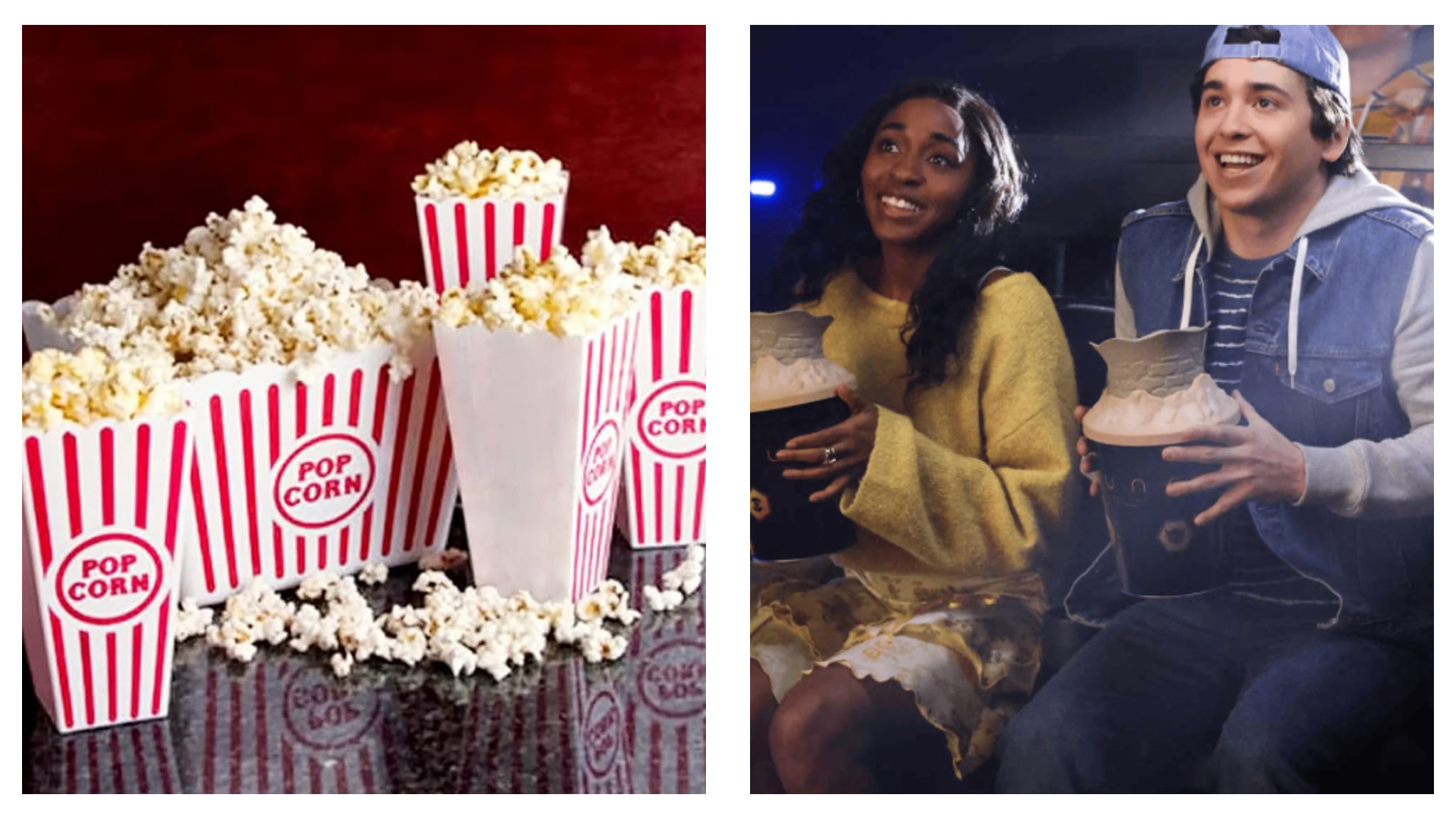
In recent years, popcorn buckets have attracted a lot of attention due to their increasingly extreme styles – but how far have they really come?
The buckets we find at the cinema now are known for their extravagant designs, with examples including a pink Corvette bucket for the Barbie film.
Not everyone is amused about this shift towards lavish popcorn buckets, but have they really changed all that much?
Popcorn buckets: A history
Popcorn buckets were first introduced in the late 1940’s as boxes, following the post World-War II boom.
They began to take the cylindrical ‘tub’ shape that we know today in the 1950’s.
However, in 2010, popcorn buckets underwent a notable change which determined their foreseeable future.
Disney has always been known for collectible memorabilia.
In 2010, they created their first themed bucket: the 2010 Mickey Mouse popcorn bucket.
Disney profited alone from these buckets for years.
However, during the late 2010s, cinemas realised the hidden business potential these buckets held.
The shift towards more designed buckets
Cinemas eventually adopted Disney’s approach themselves, turning popcorn buckets from simple metal containers to memorable collectables.
A particularly pivotal popcorn holder was AMC’s 2019 R2-D2 bucket for ‘Star Wars: The Rise of Skywalker’.
This marked the beginning of an era of creativity and consumerism, which saw popcorn buckets turning from practicality to phenomenon.
In 2024, the height of this craze was reached.
In honour of ‘Dune: Part Two’, cinemas released a sandworm bucket mirroring the creatures seen in the film, with extreme attention to detail.
The bucket became so hilariously notorious that Saturday Night Live included it in one of their episodes.
But alongside this increase in detail and design, prices were also slowly hiking up.
As a result, many franchises began following suit and releasing buckets for their own films.
READ MORE: TV news: ‘The Boys’ season five is headed for a destructive final two episodes
A feat of attraction
Another memorable example is the Deadpool & Wolverine head popcorn bucket.
Retailing for £34.99, this popcorn bucket was highly sought after and introduced an additional element of desirability.
This proved that cinemas had officially created a consumer item that audiences wanted badly enough to go out of their way to attain.
Cinemas had to introduce quantity restrictions in order to limit re-sellers as these items were so sought after.
Due to this, cinemas also saw a reason to increase prices once more.
The most expensive bucket, setting a Guinness World record, was the Fantastic Four Galactus bucket.
The bucket was $80, the most expensive to date, holding 9 litres of popcorn. This indicated cinemas are aware they’ve found a way to help keep cinema alive: merch.
Where are we now?
Now, cinemas are still enjoying creating intricate and collectible popcorn buckets such as the recent Yoshi popcorn bucket for the 2026 ‘The Super Mario Galaxy Movie’.
The bucket was criticised by some, saying there wasn’t much room for popcorn, and others delighted in its multi-use purpose.
Fans took to social media to playfully display all the ways they had utilised their popcorn buckets, leading to others once again wishing to indulge, meaning increased sales.
Another recent example is the 2026 ‘The Devil Wears Prada 2’ handbag bucket. The ‘bag’ also features charms centred around the film.
Popcorn buckets are becoming increasingly popular, as people see it as not just a collectible, but a solid memory of the film.
Many differ over whether it has gone too far, as some film-goers love the outrageousness of recent buckets, and others miss the original, simple steel collectible buckets.
READ NEXT: Artificial intelligence threatens to reshape creative industries
 Levi Mora
  Kamille Q. Cabreza