
By Kamille Q. Cabreza
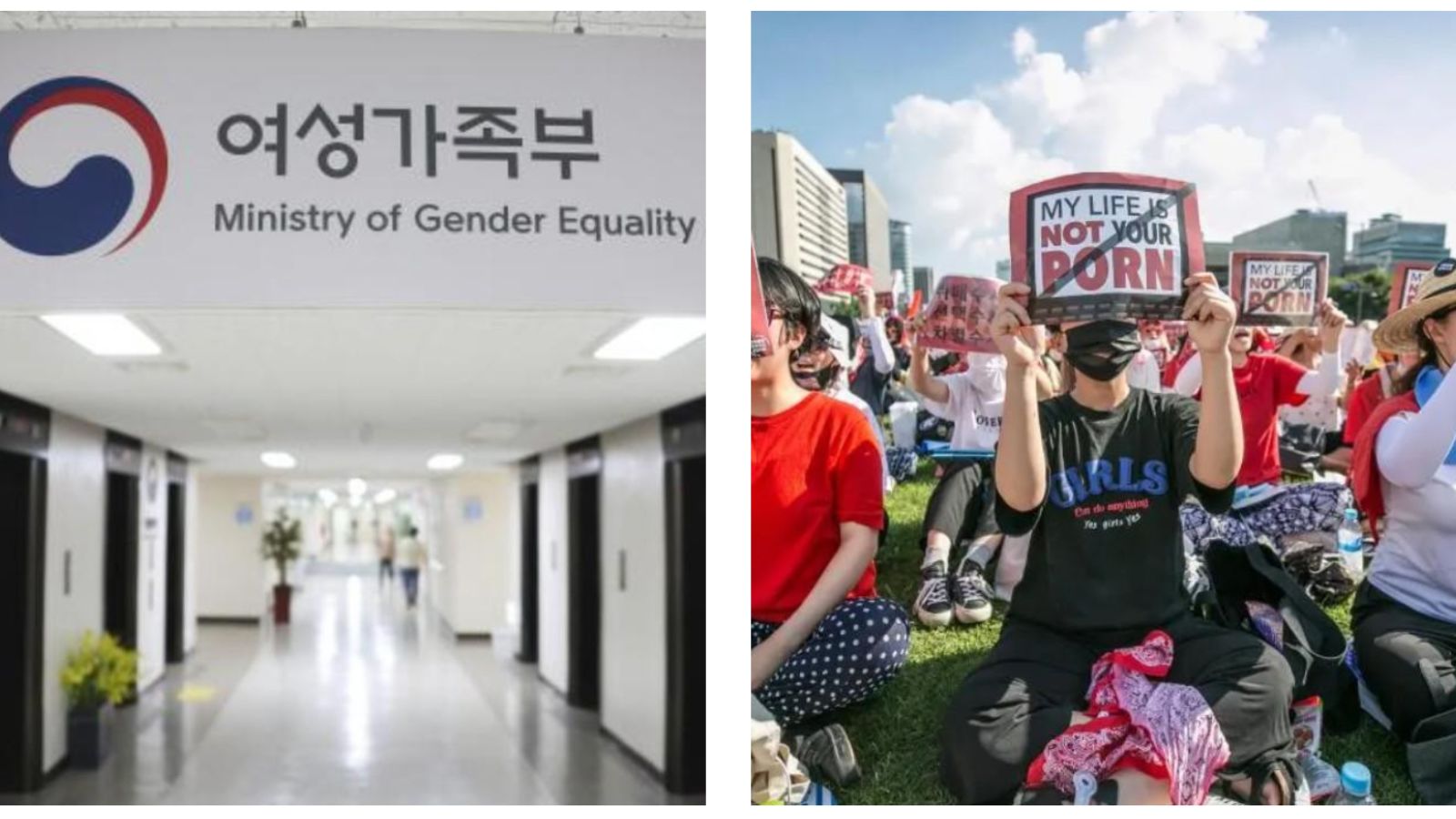
South Korea’s Ministry of Gender Equality and Family (MOGEF) has opened a counselling centre for victims of digital sex crimes whose well-being was compromised by corrupted schemes elsewhere.
The move is part of the government’s efforts to provide victims with effective and accessible assistance in all 17 cities and provinces across the country as cyber assaults continue to rise.
Deepfake-related sex crimes have become a major problem in South Korea, with sexual content produced by artificial intelligence – frequently without the victim’s consent – raising numerous social and legal issues.
‘Nth Room’ case
The recent ‘Nth Room’ scandal, centred on a digital sex-crime operation, sent shockwaves through South Korean society.
At least 74 individuals – including minors – were allegedly coerced into posting graphic and even violent videos of themselves to chat rooms on the social media platform Telegram.
The chat rooms boasted over 260,000 users, who paid for their participation using videos of their own or cryptocurrency.
Cho Ju-bin, the chat room’s founder and mastermind, was arrested in March 2020, months after the police opened an investigation.
He was then sentenced to 42 years in prison and registered as a sex offender for life, according to Yonhap News Agency.
A nationwide movement for more robust online protections was subsequently sparked by Cho’s crimes, which revealed serious weaknesses in South Korea’s legislation against digital crime.
However, new types of online sexual exploitation continue to present difficulties, prompting more debate around legislative revisions and technological solutions.
READ MORE: Kim Sae-ron’s death exposes South Korean entertainment industry

Building legislative and digital safeguards
In light of such scandals, the South Korean government has undertaken sociological, technological, and legal actions in order to counteract the increase in sex offenses linked to deepfakes.
The Sexual Violence Prevention and Victims Protection Act was also modified by the MOGEF last year so as to specify the extent of assistance that the federal and local governments can provide in removing illegally recorded videos, Korea.net reported.
For victims, the amendment further improved post-exploitation assistance systems by creating dedicated support centres.
Stronger measures to combat deepfake sex crimes were then announced by the MOGEF in November.
As a next step, it will launch a centralised consultation hotline for support centres across the country in April once the trial operation is complete.
The ministry continues to hold working-level discussions on combating digital sex crimes alongside the Korea Communications Commission and the Korean National Police Agency.
With that said, given the anonymity of online offenders and the quick development of AI – not to mention the global reach of deepfake material – it remains a struggle for the South Korean government to tighten policy execution.
The increasing threat of deepfake sex crimes ultimately necessitates international co-operation, improved AI-based detection systems, and ongoing legal reform.
YOU MAY ALSO LIKE: The barriers of conservatism: Teenage pregnancy in the Philippines
 Carmela Calling
  James Mario Ajero