
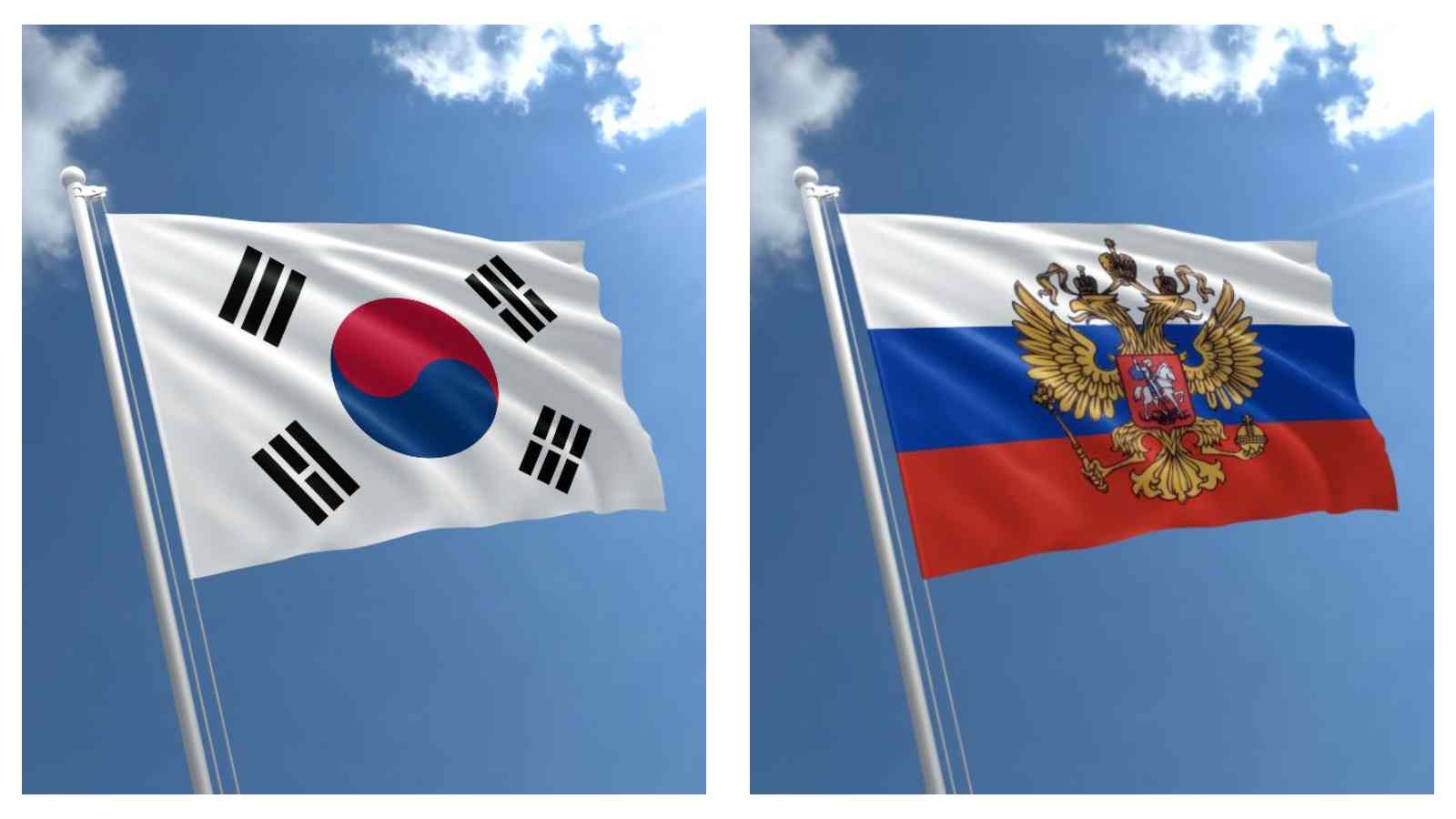
South Korea’s successful test of an Arctic shipping route to Europe has fuelled expectations that Seoul will pursue closer economic ties with Russia, with analysts telling DW News that the initiative goes beyond reducing shipping times.
They said the voyage through the Northern Sea Route (NSR) reflects President Lee Jae-myung’s efforts to preserve economic ties with Moscow while carefully balancing ties with Western partners amid Russia’s war in Ukraine.
The development also comes as South Korea’s diplomatic dispute with Ukraine intensified after its President Volodymyr Zelenskyy revealed in September that two North Korean prisoners of war, who had been imprisoned in Ukraine, were transferred to South Korea.
Seoul accused Zelenskyy of breaching an agreement to keep the transfer of the prisoners of war confidential, according to DW News.
Seoul explores Arctic trade route
A South Korean container ship completed a round trip from Busan to Rotterdam through the NSR in 50 days, shaving at least 10 days off the fastest journeys via the Suez Canal.
The Arctic passage is around 7,000 kilometres shorter than the traditional route and also avoids the geopolitically sensitive waters of the Middle East.
Joseph Kristanto, a maritime security analyst at Singapore’s S Rajaratnam School of International Studies, said the NSR “presents significant economic potential” for South Korea as it gives them a closer link to European markets.
“In addition to potentially lowering shipping costs and transit times, the route’s development could strengthen Busan’s position as a regional maritime hub and create opportunities for South Korea’s shipbuilding sector,” he told DW News.
The government aims to launch regular commercial operations on the NSR by 2030, with the recent voyage serving as a trial for logistical feasibility.
Relations with Russia
Analysts said Seoul’s interest in the Arctic route also reflects an effort to maintain workable relations with Moscow despite Western attempts to isolate Russia over its invasion of Ukraine.
Andrei Lankov, a professor of history and international relations at Seoul’s Kookmin University, said South Korea is “trying to send signals to the Russian government that it is willing to manage relations.”
He said Seoul’s diplomatic dispute with Kyiv earlier this year over the transfer of two North Korean prisoners of war may have allowed Lee’s administration to distance itself from Ukraine and avoid pressure to give material support.
Lankov said that such a position would likely have been welcomed by Russia and could encourage them to stop providing North Korea with more advanced military technology.
Geopolitical risks
Meanwhile, Kristanto cautioned that expanding the NSR could also expose South Korea to a new form of strategic dependence on Russia, which controls navigation along its Arctic coastline.
He explained that Moscow could exert influence through shipping regulations and “the provision of icebreaker assistance.”
Kristanto also cited how it could affect Seoul’s relationship with Europe.
“From the European perspective, closer economic engagement with Russia risks undermining efforts to isolate Moscow over its invasion of Ukraine,” he said, according to DW News.
‘Cautious approach’ to NSR
As for the Arctic route, which has become increasingly accessible due to melting sea ice linked to climate change, Kristanto said Seoul is likely to take “a cautious and incremental approach” as it weighs the potential of the NSR against geopolitical concerns.
“Seoul is unlikely to abandon the initiative altogether,” he said, citing growing Chinese interest in Arctic shipping, but added that the country would seek to avoid “unnecessarily antagonising its Western partners.”
Lankov, on the other hand, said South Korea is keeping a low profile while assessing future opportunities.
He added that the country is preparing for the possibility that sanctions on Russia may eventually be lifted after the war.
READ NEXT: Maritime news: Seafarers’ safety, gender equality take center stage at IMO’s 138th session
 Wendellyn Mateo
 Lucia Caporalini
 Eugene Nicklaus S. Laqui