
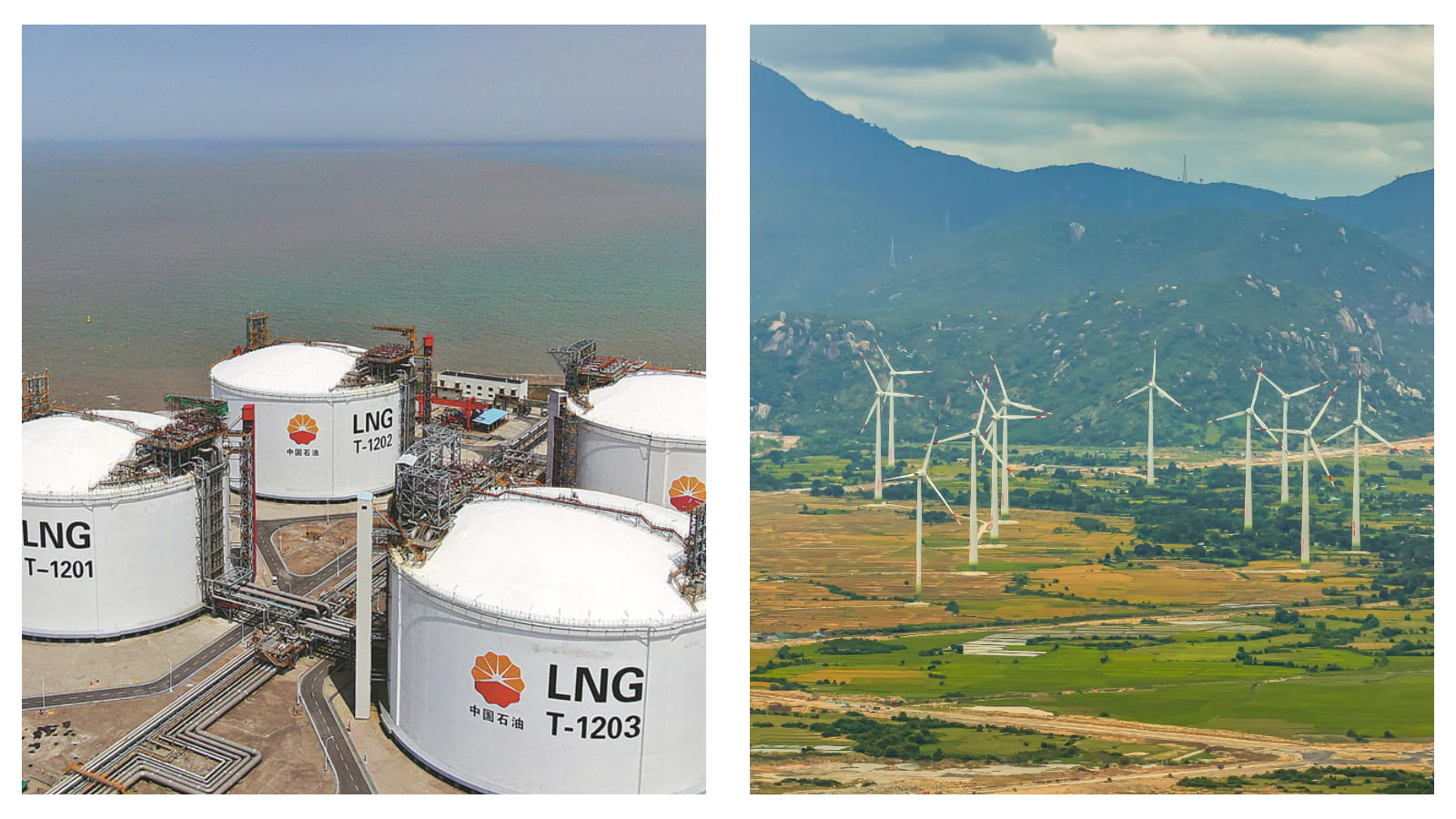
Vietnam is revising its national energy master plan for 2021-2030, with a long-term outlook to 2050, as stronger economic ambitions, planning adjustments and rapid technological progress require updates to ensure adequate energy supply for socioeconomic development.
The country’s goal of achieving double-digit economic growth between 2026 and 2030 has significantly changed energy demand forecasts, making it necessary to update the national energy strategy to secure supply for the economy, the Ministry of Industry and Trade said in a Vietnam News Agency report.
In the draft plan released for public consultation, the ministry highlights energy security as a top priority, aiming to ensure supply can meet demand to sustain average gross domestic product growth of at least 10% annually during 2026-2030.
Key projections and proposals
Total final energy consumption is forecast to reach approximately 120-130 million tons of oil equivalent by 2030, rising to around 175-200 million tons by 2050, according to the plan cited by the Vietnam News Agency.
The proposal also seeks to increase petroleum reserves, including both crude oil and refined products, to cover about 90 days of net imports by 2030.
READ MORE: Philippine province studies electric tricycle conversion as part of transport shift
Expanding renewables and clean energy
Renewable energy is projected to contribute 25-30% of total primary energy supply by 2030, expanding sharply to 70-80% by mid-century.
Energy efficiency measures are expected to cut consumption by eight to 10% by 2030 compared with business-as-usual projections.
Greenhouse gas emissions are forecast to decline by 15-35% by 2030 relative to baseline levels, while emissions from the energy sector are estimated at 433-474 million tons of carbon dioxide equivalent in 2030, falling to roughly 101 million tons by 2050.
Domestic crude oil production during 2026-2030 is expected to range between 5.8 and eight million tons annually, while natural gas output is projected at 5.4-11 billion cubic meters per year.
LNG, hydrogen and new infrastructure
The ministry also plans to expand liquefied natural gas (LNG) import infrastructure to support gas-fired power generation and establish LNG-based energy hubs nationwide.
Green hydrogen production is targeted to reach 100,000-200,000 tons annually by 2030, with long-term ambitions of producing 10-20 million tons each year by 2050.
Renewables are expected to generate 30.9-39.2% of electricity by 2030, potentially rising to 47% with strong international backing through the Just Energy Transition Partnership, and reaching 67.5-71.5% by 2050.
The draft strategy also proposes building two inter-regional renewable energy industrial and service centres by 2030, while exporting between 5,000 and 10,000 megawatts of electricity.
READ NEXT: Rising dark fleet activity observed off Malaysian waters: UANI
 Ciara Mina
  Rosemarie Zamora
  Jacinth Banite