
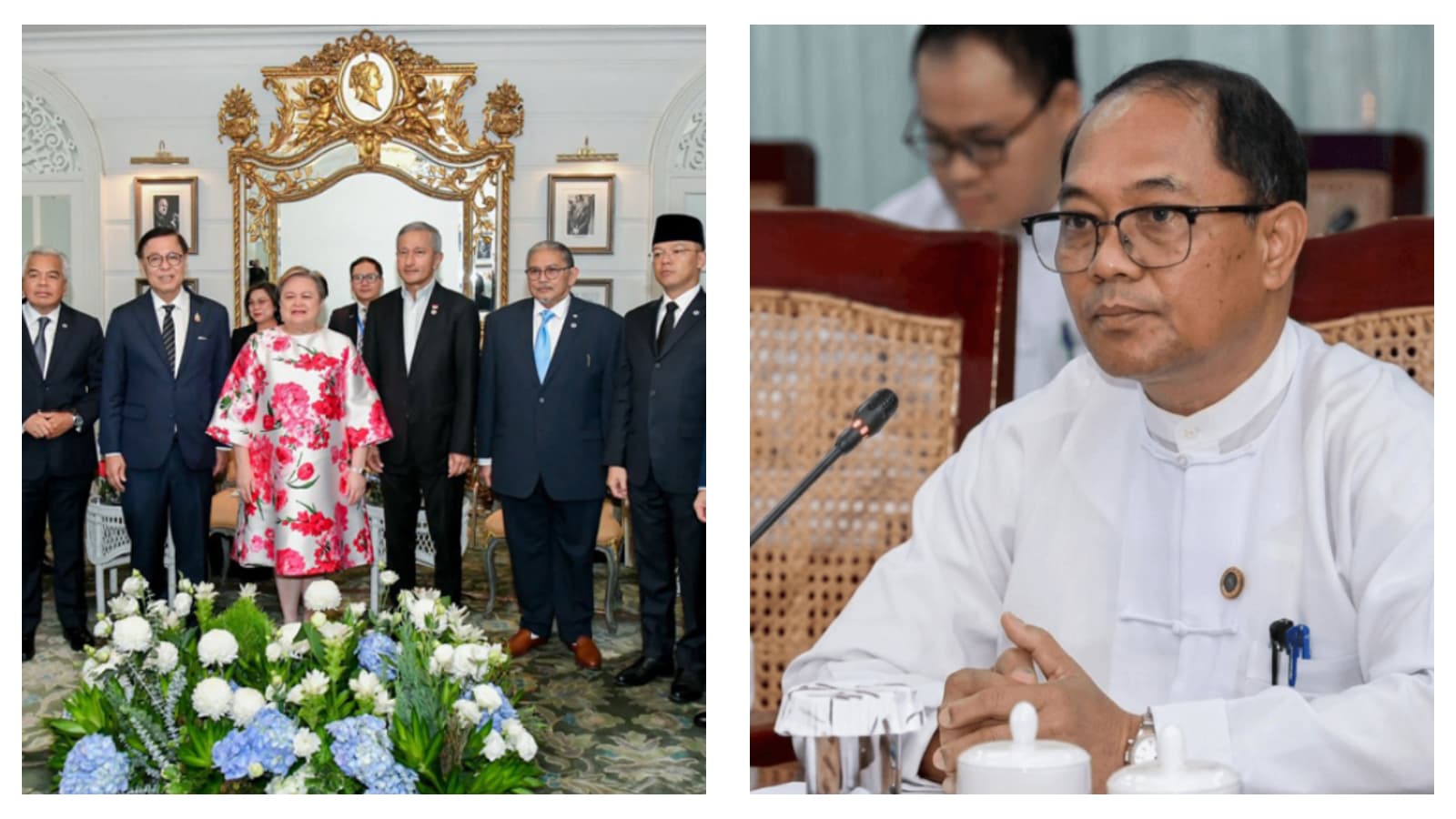
Foreign ministers from the Association of Southeast Asian Nations (ASEAN) have convened for high-stakes, in-person talks with a representative from Myanmar.
The special consultations focus directly on addressing the protracted crisis gripping the state since the February 2021 coup.
Entry point for dialogue
According to The Diplomatic Insight, the objective of the talks is to provide a venue for member states to review the security situation and evaluate Myanmar’s compliance with regional peace initiatives.
The Philippine News Agency confirmed that the Philippines, acting as the ASEAN chair, formally led the informal consultation in Bangkok, Thailand, to dissect the implementation of the region’s “five-point consensus” peace framework.
The military junta views the session as a critical diplomatic reset opportunity following highly controlled domestic elections earlier this year, which saw former junta chief Min Aung Hlaing assume the presidency.
The Thai foreign ministry noted that this political shift in Myanmar presents a unique diplomatic opening that has not existed at any point over the previous five years.
READ MORE: US launches fresh strikes on Iran, hits 140 military targets

Expectations, limitations of meeting
The meetings feature crucial engagement from Myanmar’s military-appointed foreign minister, Tin Maung Swe, who is briefing his regional counterparts.
However, officials are being careful to manage expectations regarding a sudden diplomatic thaw.
Maratee Nalita Andamo, a deputy spokesperson for the Thai foreign ministry, clarified that the session is strictly intended as a platform for an open exchange of views.
She emphasised that these are informal consultations in nature and do not alter ASEAN’s established position or restrictions regarding Myanmar’s top leadership.
The strict parameters governing Myanmar’s participation will remain visible during subsequent regional summits.
When the Philippines hosts the ASEAN Foreign Ministers’ Meeting in Manila from July 18 to 24, all member nations will be represented by their foreign ministers except for Myanmar, which will remain restricted to sending its permanent secretary.
Internal friction continues to shadow the process, with some member states viewing the Bangkok talks as a necessary step to engage the junta, while others maintain a strict, non-negotiable stance against full political normalisation until genuine democratic progress is made.
The members of ASEAN are Brunei, Cambodia, Indonesia, Laos, Malaysia, Myanmar, the Philippines, Singapore, Thailand, Timor-Leste and Vietnam.
YOU MAY ALSO LIKE: Chinese stars unite to support Guangxi flood victims after devastating typhoon
 Ciara Mina
  Rosemarie Zamora
  Jacinth Banite