
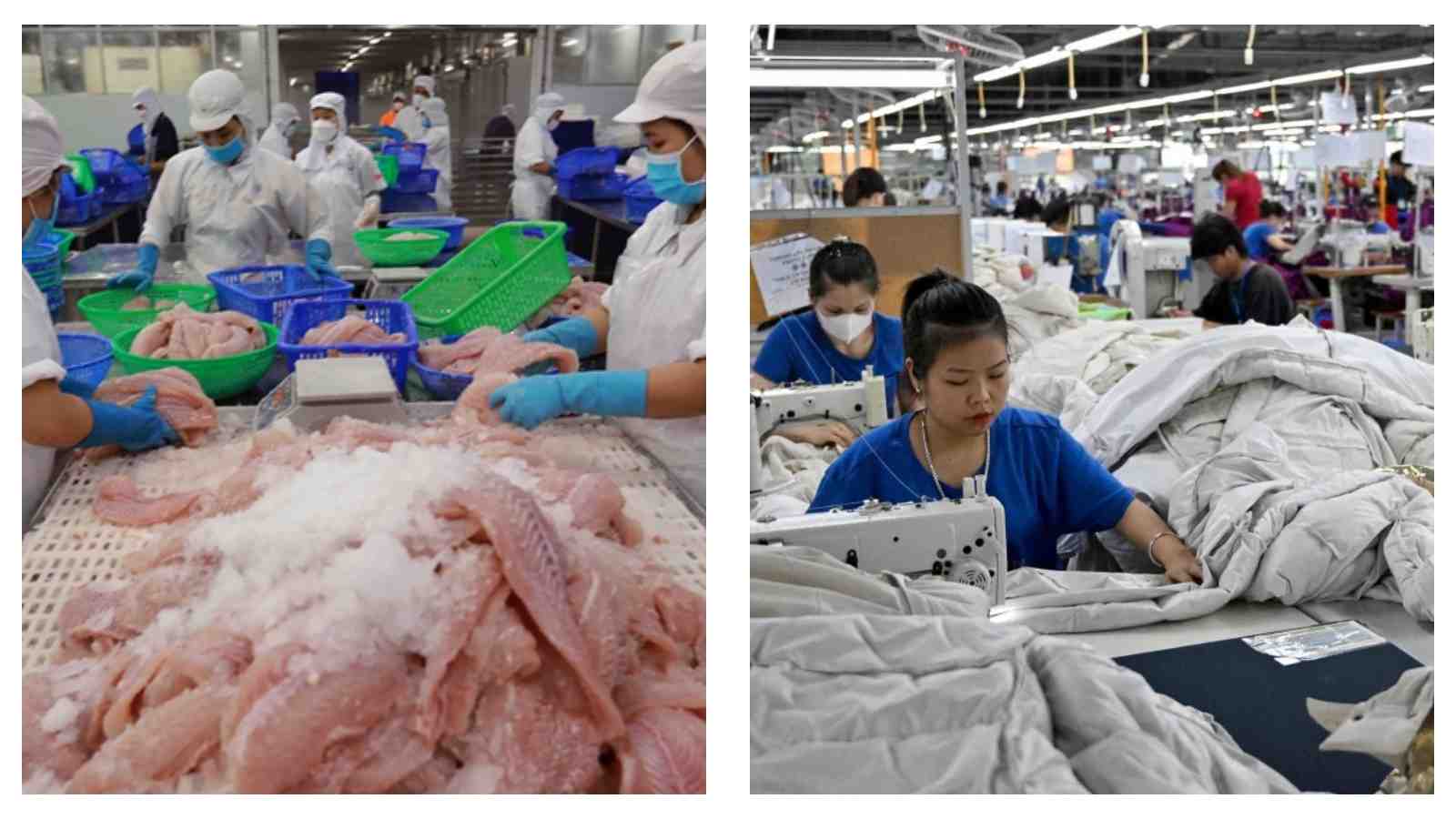
Vietnam’s seafood and garment industries are facing labor shortages despite higher wages, highlighting challenges as the Southeast Asian country expands efforts to send workers abroad for better-paying jobs.
The situation reflects a broader dilemma as the nation seeks to move toward higher-value industries while relying on overseas employment to generate remittance income, analysts say.
Between 130,000 and 150,000 Vietnamese workers leave the country for overseas jobs each year.
The number of Vietnamese working abroad reached nearly 900,000 by the end of last year, according to the Ministry of Home Affairs.
These workers send home between $6 billion and $7 billion annually, making a significant contribution to the national economy, South China Morning Post reported.
Wage increases fail to attract workers
However, the growing number of workers seeking employment overseas has also contributed to labor shortages in domestic industries.
A report submitted by the Vietnam Association of Seafood Exporters and Producers to the Ministry of Finance in late June identified labor shortages as a major challenge for the seafood industry, particularly in key production centers such as the Mekong Delta region and Ho Chi Minh City.
Companies in the sector raised wages by 25-30%, but the increases failed to significantly improve recruitment and employee retention.
The Vietnam Textile and Apparel Association similarly reported after a May meeting with Deputy Prime Minister Pham Gia Tuc that competition for workers had become increasingly intense.
The garment industry is competing not only with overseas employers but also with domestic electronics and machinery manufacturers offering higher wages, according to Hoang Lan Anh, a labor migration researcher at the University of Melbourne.
READ MORE: Jakarta becomes latest Southeast Asian city to welcome Cong Ca Phe

Overseas versus domestic migration
For workers from Vietnam’s poorer central provinces, the decision was between taking higher-paying jobs overseas and accepting low-wage jobs in local industrial centers, rather than a choice between working abroad and staying home, Anh said.
“Labor exports have been treated by the government primarily as a poverty-reduction strategy because migrant workers mainly come from the disaster-prone and resource-poor central Vietnam, where food processing and manufacturing roles offer very low wages,” she said.
Anh said most central Vietnamese workers she interviewed felt they had little choice but to migrate because of the lack of viable employment opportunities in their hometowns.
Given the low wages available in northern and southern Vietnam, working overseas was often seen as a more financially rewarding option.
“If someone migrates from Nghe An (in central Vietnam) to Binh Duong (a major industrial hub just north of Ho Chi Minh City) to work, their capacity to visit the family and perform care duties is not much different from that of someone in Japan or South Korea,” Anh said.
Although the domestic seafood processing and garment industries offer numerous jobs, workers typically earn only $250 to $350 a month, which is barely enough to cover household expenses.
“By comparison, Vietnamese workers in destinations such as Japan and South Korea can earn three to five times more. Overseas employment offers rural migrant workers the only avenue for ensuring the family’s economic security,” Anh said.
READ NEXT: Solar panels on UK balconies: The energy revolution we have been waiting for?
 KC Maderia
  Adam Peaker
  Newsjustnews writers