
By Emily Hodson
The validity of product labels such as “sustainable” and “eco-friendly” has increasingly come under scrutiny in the UK.
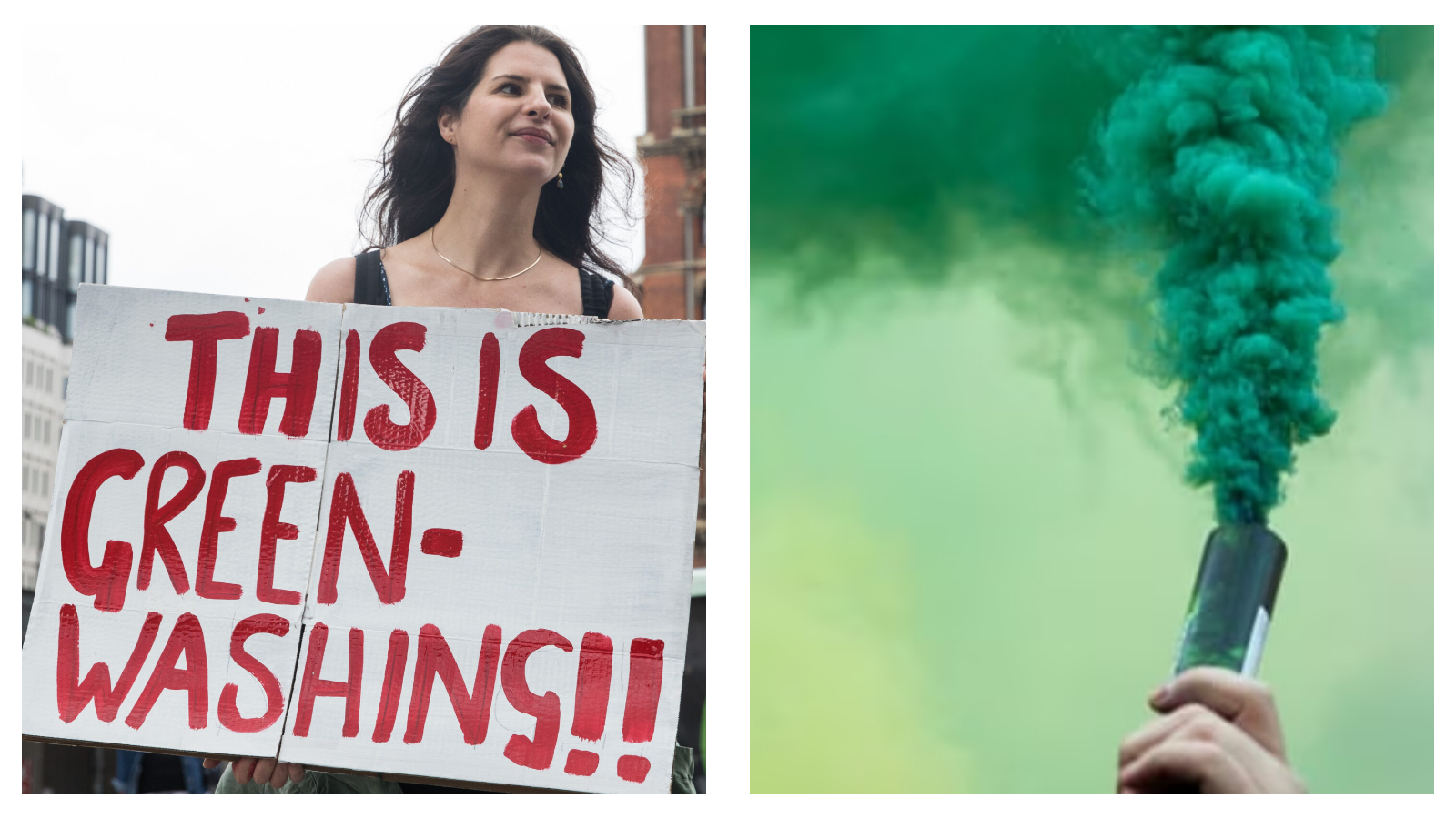
This is the problem of greenwashing.
Greenwashing is a deceptive marketing strategy designed to make a company appear more environmentally responsible than it actually is.
The dilemma is: is the issue too large to solve?
The scale of the problem
In June 2026, the UK’s Advertising Standards Authority (ASA) analysed 7.7 million online adverts shown to consumers in the UK.
Approximately 61,000 adverts contained environmental claims.
Around three-quarters of these claims were classified as “absolute,” containing product descriptions such as “eco-friendly” or “sustainable.”
The ASA reported that these broad claims require a substantial amount of evidence to support them.
Importantly, this report did not examine whether all 61,000 adverts included examples of greenwashing.
However, it highlights the alarming scale of environmental advertising that the UK is having to monitor.
Fashion greenwashing
The problem extends beyond advertising.
In March 2024, ASOS, Boohoo and George at Asda signed formal agreements to make more accurate green claims.
This followed an investigation by the Competition and Markets Authority (CMA) into the fashion items the businesses were claiming to be sustainable.
In some cases, products within environmental ranges may have been made from as little as 20% recycled fabric.
As a result, the companies agreed to provide clearer evidence of the makeup of their products for consumers.
They did not admit to liability or wrongdoing.
If consumers cannot figure out how “green” a product is, how can they make an informed sustainable choice?
READ MORE: Solar panels on UK balconies: The energy revolution we have been waiting for?

Regulation: Has Brexit changed this?
Regulation of greenwashing in the UK differs from the European Union’s approach.
From September 27, 2026, there will be more restrictions to protect consumers from vague environmental claims and labels on products.
The aim is to allow consumers to understand clearly the sustainability of the products they are purchasing.
This may also benefit sustainable businesses.
Companies committed to genuine sustainability may be recognised more by consumers and so might benefit more financially.
How is the UK tackling greenwashing?
The UK has a separate system for managing greenwashing.
The Competition and Markets Authority’s Green Claims Code provides guidance for businesses on how to label sustainable products with credible evidence.
Before making environmental claims, businesses are encouraged to examine the full life cycle of a product.
Therefore, the UK has not been left without protection against greenwashing following Brexit.
However, questions as to whether these protections are weaker than those in the EU are yet to be answered.
ALSO ON NJN: Local court hands ousted Syrian dictator Bashar Assad with death penalty

Can we solve greenwashing?
As climate change encourages consumers to make more sustainable buying choices, greenwashing will likely remain an ongoing issue.
The UK’s legislation and guidance for businesses may have encouraged companies to provide clearer information for consumers.
Despite this, with the EU introducing further legislation, many are questioning whether the UK could reinforce their approach.
Ultimately, the problem of greenwashing should not be left solely to consumers.
When shoppers see an “environmentally friendly” label, they should be able to trust its authenticity, rather than having to question it themselves.
Greenwashing is not a problem that will disappear completely, but stricter regulations could make it less of a problem for consumers to solve themselves.
READ NEXT: Harry Potter fans force reroute of major UK-Ireland electricity cable
 Ian Trinidad
  Eugene Nicklaus S. Laqui
  Newsjustnews writers