
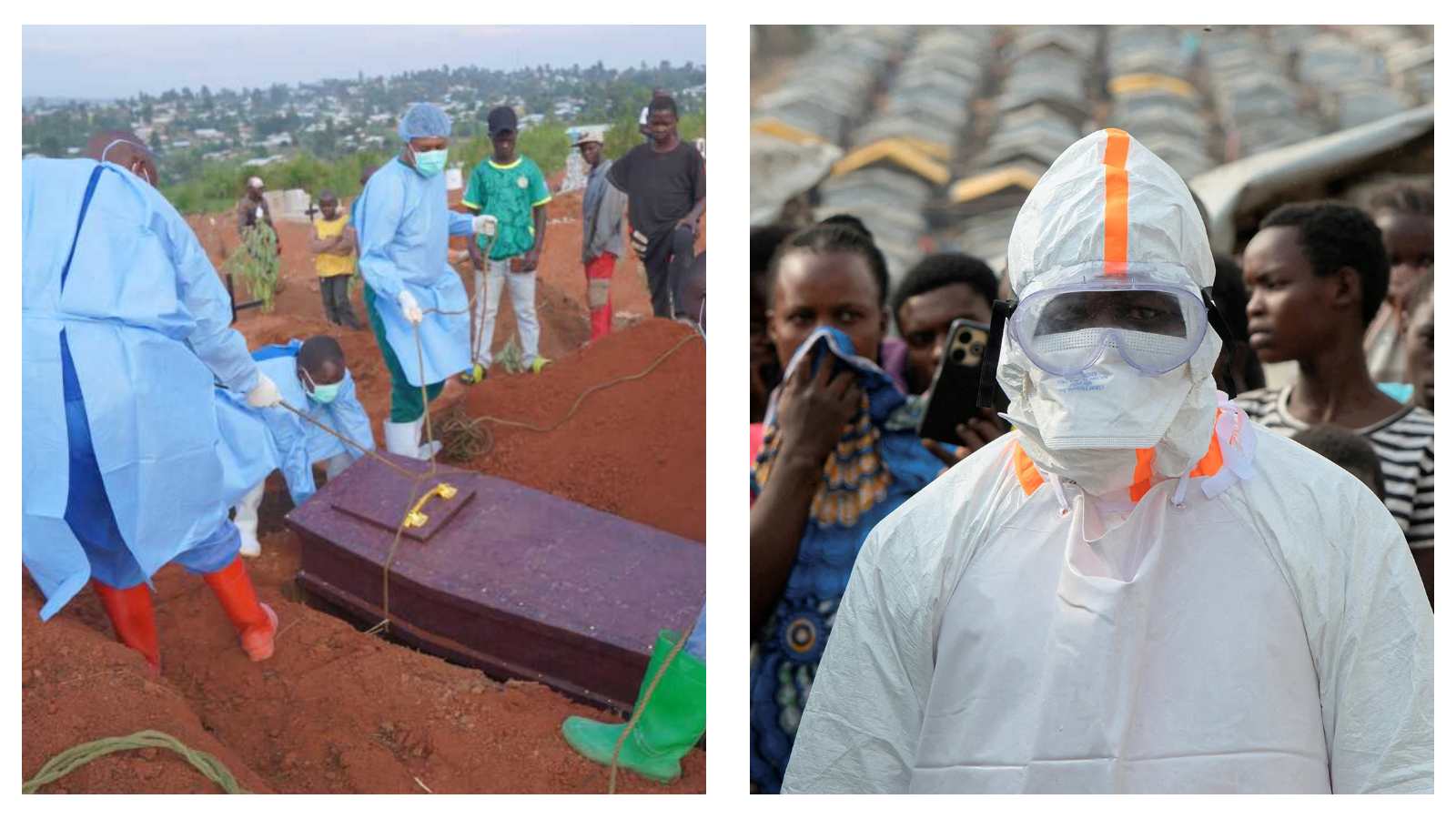
The Democratic Republic of the Congo (DR Congo) is still grappling with a fast-spreading Ebola outbreak, which international health experts said could possibly kill more people than the deadliest epidemic of the virus on record.
An official tally released on Friday showed that out of the 5,290 Ebola patients recorded in the country since the outbreak declaration in May, 2,516 have passed away, with one infected person believed to be dying every 30 minutes.
The numbers put the current Ebola outbreak in DR Congo “on track to become the deadliest” in history, as it could surpass the one which caused 11,000 deaths across West Africa between 2014 and 2016, the United Nations warned in a statement.
Caused by the Bundibugyo ebolavirus (BDBV), which is found primarily in sub-Saharan Africa, Ebola spreads through contact with the body fluids of infected animals or people.
It usually comes with flu-like symptoms, such as fever, severe headache, muscle aches and extreme fatigue.
Ituri detections
The origin of persisting Ebola transmissions in DR Congo was traced to the northeastern province of Ituri, where early detections reportedly occurred in around January or February this year.
According to the August 14 report of the World Health Organisation (WHO), cases were initially confined to the mining town of Mongbwalu, but has now expanded to more than 50 zones in six provinces, with Bas-Uele being the most recently affected.
The provincial capital of Buta reported one confirmed case of Ebola in early August, identifying the victim as a motorcycle taxi driver who has had travel history to Haut-Uele, another of the six infected provinces.
North Kivu, South Kivu and Tshopo have also reported a number of Ebola cases since May.
The WHO has classified the current outbreak as a public health emergency of international concern (PHEIC), citing “intense rise in cases, broader geographic spread and continued high mortality.”
Appeal for global support
In a separate statement issued on Friday, UN experts warned of an even worse situation for the country’s public health landscape amid inefficient response funding.
“We’re only covered for the next few weeks, and very soon funding will run out,” UN Senior Ebola Co-ordinator Julien Harneis said, as quoted by UN News.
According to the veteran aid official, “conditions on the ground are extremely difficult,” thus requiring immediate international support.
Remaining humanitarian assistance for the DR Congo epidemic includes US$30.5 million from the UN’s Central Emergency Response Fund (CERF), and another US$80 million from the United State government, according to UN data.
However, Harneiss said recent major cuts to international humanitarian budgets, led primarily by the Washington and European donors, severely strained aid works in conflicted nations like DR Congo.
“Every delay in funding and implementation makes this epidemic more deadly, more difficult to stop and more expensive,” he said. “So, we need that international support immediately.”
This has been DR Congo’s 17th Ebola outbreak, occurring only five months since the previous outbreak.
A rise in Ebola cases has also been reported in Uganda this year, although not as extreme as its neighbour.
The last confirmed Ebola case in Uganda was reported on June 21, involving someone who travelled from DR Congo, according to the US public health agency.
Experts said the likelihood of the Ebola epidemic spreading outside the African region is very low.
READ NEXT: Egypt receives 48 smuggled artefacts returned by US
 Kamille Q. Cabreza
  Jheruleene Anne Ramos
  Wendellyn Mateo