
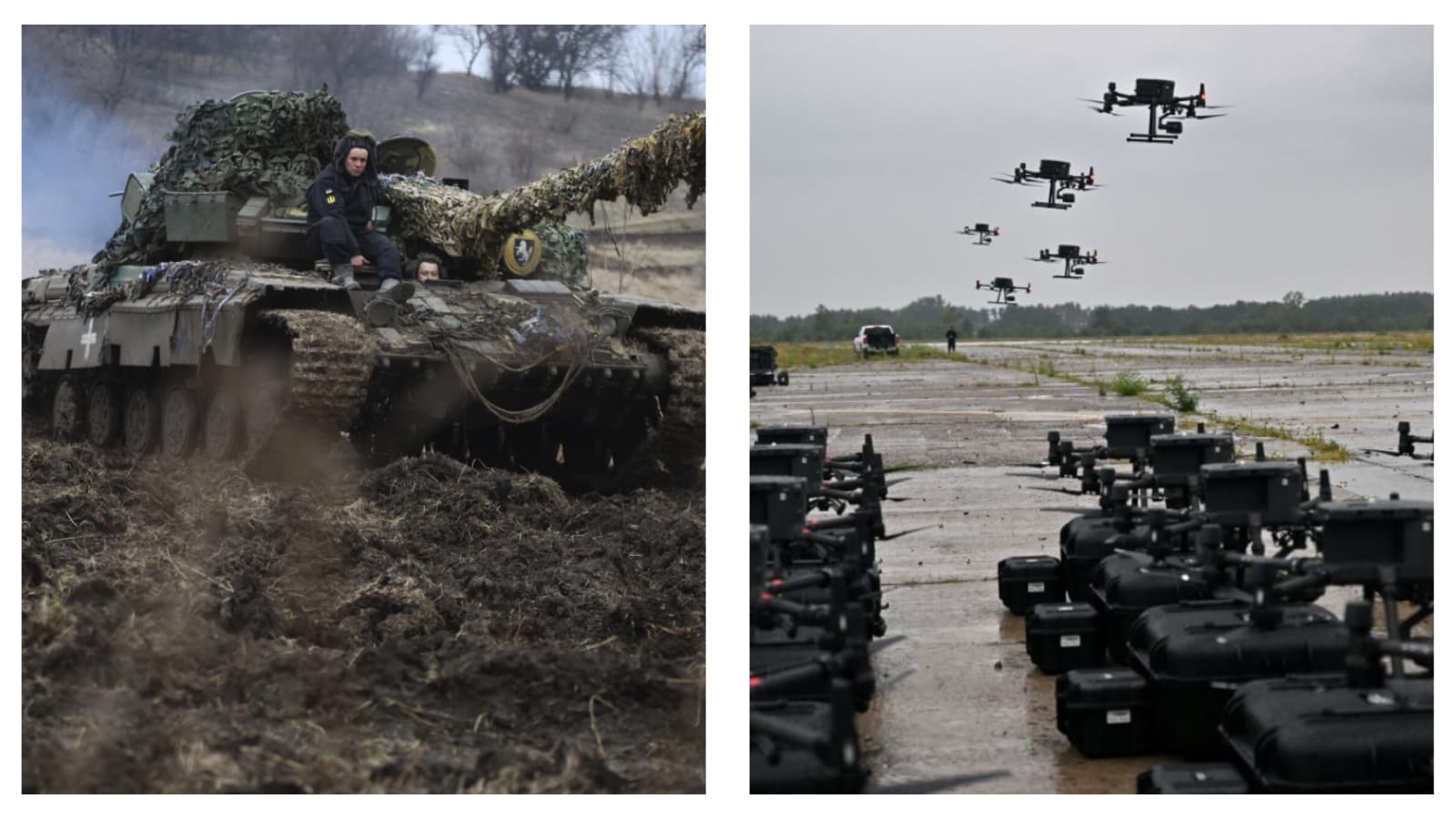
Ukraine’s Defence Procurement Agency (AOZ) has reported that the country raised its financial allocation for weapons acquisition to three times the previous size in order to accommodate additional military hardware this year.
The dramatic budget increase reached up to UAH1.7 trillion (US$41.5 billion), bolstering the long-term capabilities of Ukraine’s armed forces four years into the war against Russia.
That funding surge was attained through European financial backing and other international aid packages.
From weapons to logistics
The stronger stream of capital contributed to various tactical areas operated by the Ukrainian military.
AOZ revealed that the military received 2.47 million first-person view (FPV) strike drones and 121,200 multirotor uncrewed aerial vehicles in the first half of 2026 alone.
These numbers have already surpassed the country’s acquisition of the same items last year.
The agency also reported that aside from bolstering the country’s drone fleet, significant acquisitions of artillery munitions, heavy armoured vehicles and digital logistics networks were recorded this year.
READ MORE: Ukraine’s ex-defence minister calls for presidential election

Sustaining war of attrition
Despite Russia’s technological and logistical superiority at the onset of the war, Ukraine managed to hold out against Russian offensives through a combination of European support and adaptation to asymmetrical warfare.
The significant increase in the military budget thus aims to enable Ukraine to sustain a long-drawn, attritional war over extended lines while utilising Kyiv’s effective military tactics.
Moreover, the war has shown that cheap drones have become a credible alternative to artillery shells as highly manoeuvrable ground- and sea-surface strike weapons.
The presence of a strong drone fleet likewise allows Ukraine to respond quickly against high-value targets.
YOU MAY ALSO LIKE: Germany approves intel reforms to fight cyberattacks, terrorism

Western weaponry and funding
While Kyiv has been diligent in developing its own capabilities, especially in the area of long-range strike missions, this budgetary expansion highlights the growing influence of Western funding on Ukraine’s security infrastructure.
Compared to the start of the war, when Ukrainians were struggling to meet their defence requirements in the short term, increasing their weapons procurement capacity provides Kyiv with solid, long-term control over its growing defence market.
Although Ukraine may not be able to join the North Atlantic Treaty Organisation (NATO) in the foreseeable future, the need for actual membership is becoming irrelevant as Western nations funnel support for Kyiv, transforming Ukraine into a new frontier with Russia.
READ NEXT: UN conducts second informal poll in search for next chief
 Kamille Q. Cabreza
  Jheruleene Anne Ramos
  Wendellyn Mateo