
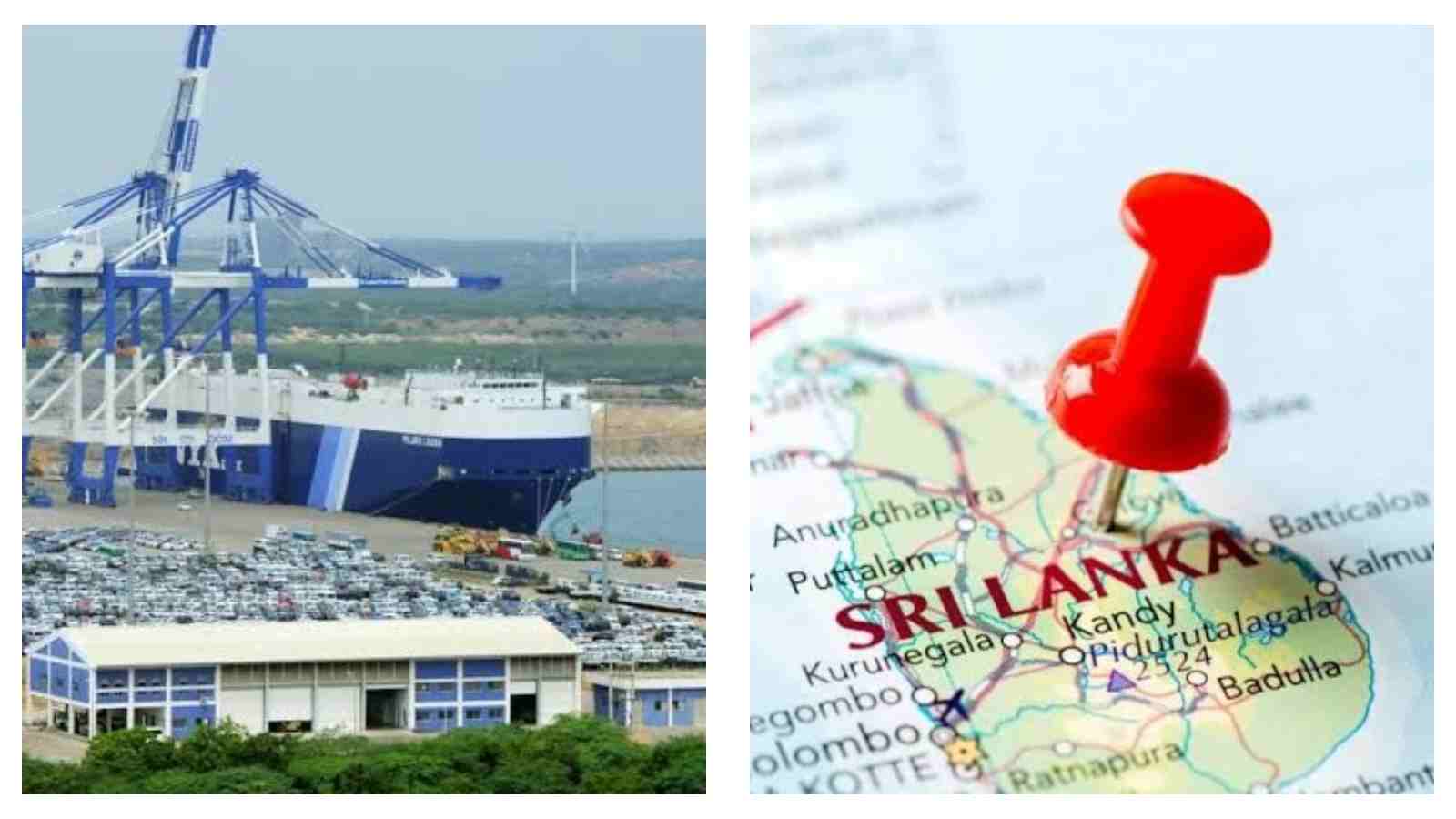
Sri Lanka has signalled its commitment to strengthening long-term practical co-operation with China and South Asian nations across a broad range of ocean-focused sectors.
Some of these sectors include marine science, fisheries, aquaculture, the blue economy, technology, and human resource development.
The pledge came from the island’s minister of Fisheries, Aquatic, and Ocean Resources, Ramalingam Chandrasekaran, during his recent official visit to China.
The minister delivered the keynote address at the opening of the China–South Asian Countries Marine Co-operation Forum, held September 17-18 in the Qingdao West Coast New Area.
His trip followed a formal invitation from Wei Zexun, Director-General of the First Institute of Oceanography under China’s Ministry of Natural Resources, and included a three-day official program.
High-level gathering focuses on shared ocean challenges
The forum brought together more than 100 government officials, experts, and academics from China, Sri Lanka, Bangladesh, the Maldives, and Pakistan.
Delegates explored critical shared issues, including climate change, marine environmental protection, ocean disaster monitoring, early warning systems, disaster risk reduction, and capacity building.
Sri Lanka’s delegation included Ministry Secretary Dr. B.K. Kolitha Kamal Jinadasa; National Aquatic Resources Research and Development Agency (NARA) Chairman Dr. Sanath Hettiarachchi; NARA Director General Dr. K.H.M.L. Amaralal; and Senior Oceanography Researcher Dr. W.N.C. Priyadarshani.
China’s leadership in fisheries and aquaculture highlighted
Chandrasekaran emphasised China’s global leadership in fisheries and aquaculture, noting that its scientific advances, policy frameworks, and systematic planning offer valuable models for Sri Lanka and the broader region.
He outlined Sri Lanka’s future fisheries strategy, which centers on alleviating pressure on wild fish stocks through the expansion of aquaculture, ocean-based industries, value-added products, and modern technology.
The minister re-affirmed Sri Lanka’s diplomatic stance of engaging in regional fisheries and maritime affairs while upholding its non-aligned policy.
Regional collaboration key to shared threats
Addressing the forum, Chandrasekaran underscored that transboundary challenges, such as climate change, marine pollution, resource depletion, and illegal, unreported, and unregulated (IUU) fishing, extend beyond national borders.
He called for enhanced joint research, data sharing, marine observation, and disaster early warning mechanisms among South Asian nations and China to safeguard ocean resources and expand livelihood opportunities for coastal communities.
READ MORE: Trump ban blocks CNN, MS NOW, Politico reporters from White House

Legislative reforms and technical co-operation
The official noted that both nations are actively updating their fisheries management frameworks.
China’s revised Fisheries Law takes effect May 1, 2026, while Sri Lanka is drafting a comprehensive new Fisheries Act to replace the 1996 Fisheries and Aquatic Resources Act.
He expressed gratitude for China’s ongoing technical assistance and training programmes, and highlighted the potential of emerging fields such as blue finance, artificial intelligence in marine science, and ocean science as areas for future collaboration.
Global ocean vision emphasised
During his visit, Chandrasekaran also attended the 2026 Global Ocean Development Forum in Qingdao on September 17, which focused on sustainable ocean economic growth and global governance.
He concluded with a powerful vision: “The ocean does not divide us, but connects us.”
Future maritime co-operation, he stated, must balance marine conservation with creating sustainable economic opportunities for coastal communities that depend on the sea.
READ NEXT: Philippine lawmakers propose stricter gun control after rise in campus violence
 Wendellyn Mateo
 Angelica N. Hall
 Lucia Caporalini