
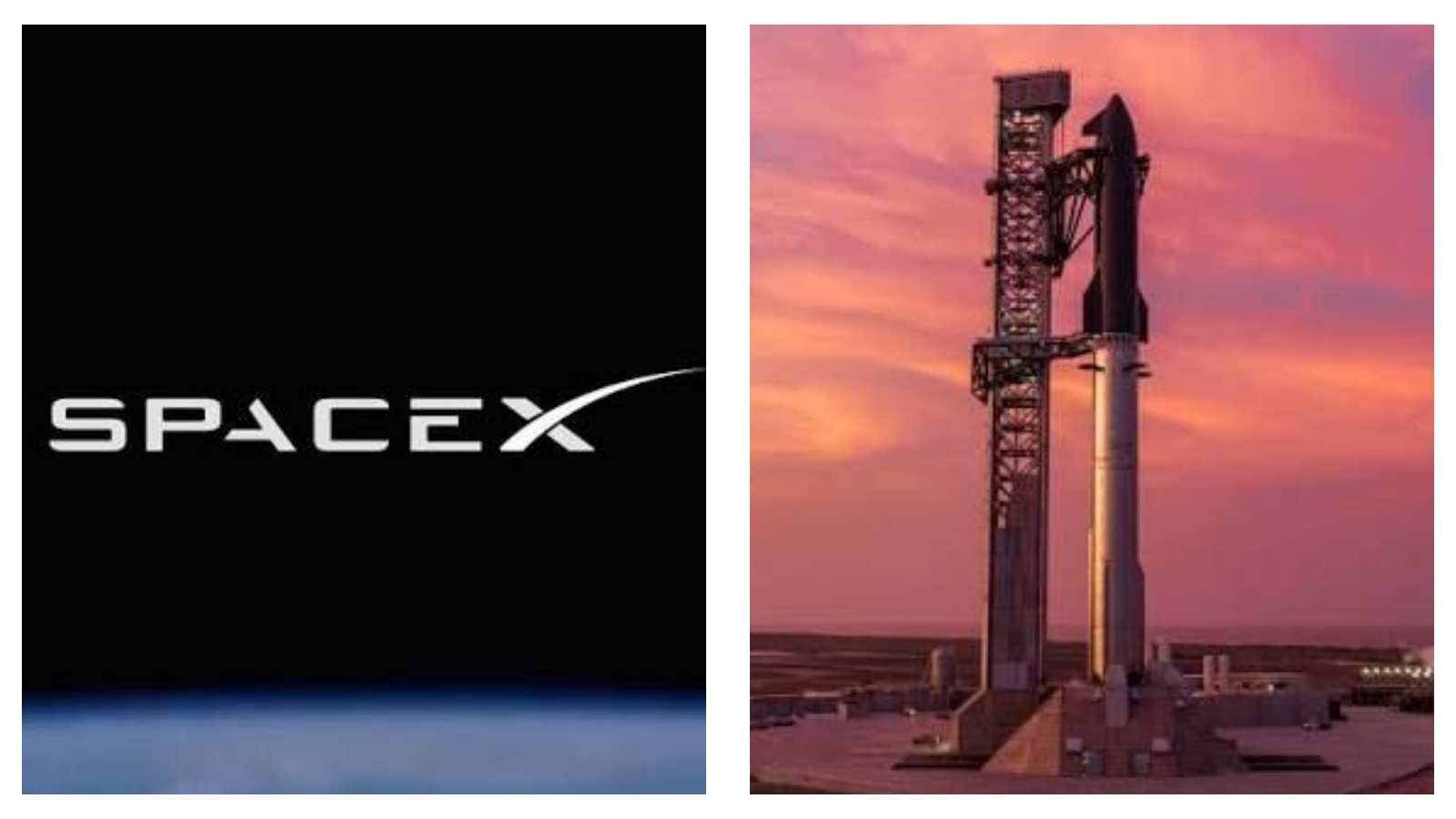
SpaceX will attempt to place its Starship rocket into Earth orbit for the first time on Monday, advancing a program three years in the making toward eventual missions to the Moon and Mars.
Scheduled for 7:15AM local time in Texas, the flight marks the 14th test of the world’s largest and most powerful launch vehicle.
The mission will seek to demonstrate capabilities far beyond earlier trials, which remained within suborbital limits.
A long road to orbit
If the flight proceeds as planned, Starship will travel to an orbit approximately 275 kilometers above Earth, reaching a speed of about 28,000 kilometers per hour.
Objectives include deploying 26 next-generation Starlink satellites and testing in-orbit refueling systems.
The full mission is expected to last roughly 10 hours and will include six orbits before splashdown in the Pacific Ocean.
The first-stage booster, known as Super Heavy, will separate shortly after launch and descend into the Gulf of Mexico.
SpaceX clarified in a statement that it does not intend to recover either vehicle during this flight.
READ MORE: Taylor Swift breaks MTV VMAs record and pays tribute to Dolly Parton

Technical challenges
Reaching orbit demands performance and precision beyond what the rocket has demonstrated to date.
“That’s the hardest part, requiring more forces and more complex calculations,” said Kathleen Curlee, senior analyst at Georgetown University’s Center for Security and Emerging Technology.
“To reach the necessary altitude and speed, the rocket has to do different things when it’s experiencing different levels of gravity.”
Since 2023, Starship has flown in full configuration but only on shorter, suborbital trajectories.
Multiple previous attempts ended in explosions, and the vehicle has undergone extensive modifications, but critical hurdles remain before it can operate as a fully reusable system.
Different standards of success
Curlee noted that engineering standards and public expectations may not align.
“Just achieving flight and getting data would be considered a success,” she stated.
The expert added that public and investor reaction will also likely be stricter.
“They need to have flashy tests” because anything less would be seen as a failure, she was quoted as saying.
YOU MAY ALSO LIKE: Mexico’s school phone restrictions draw support, concerns

Competition, delays, and what comes next
Starship’s journey has not been without setbacks.
Repeated delays have pushed back key milestones, while a rival Chinese firm has demonstrated rapid progress in developing reusable launch systems, a domain SpaceX has long dominated through its reliable Falcon rockets.
Still, the company retains unmatched momentum in the global launch market, built on a philosophy of calculated risk-taking.
Regardless of Monday’s outcome, three additional SpaceX missions are slated for later in the same week, including one carrying astronauts to the International Space Station.
READ NEXT: ‘Europe is with you’: EU chief unveils fresh relief package for conflict-torn nations
 Elan Castanares
 Ciara Mina
 Jheruleene Anne Ramos