
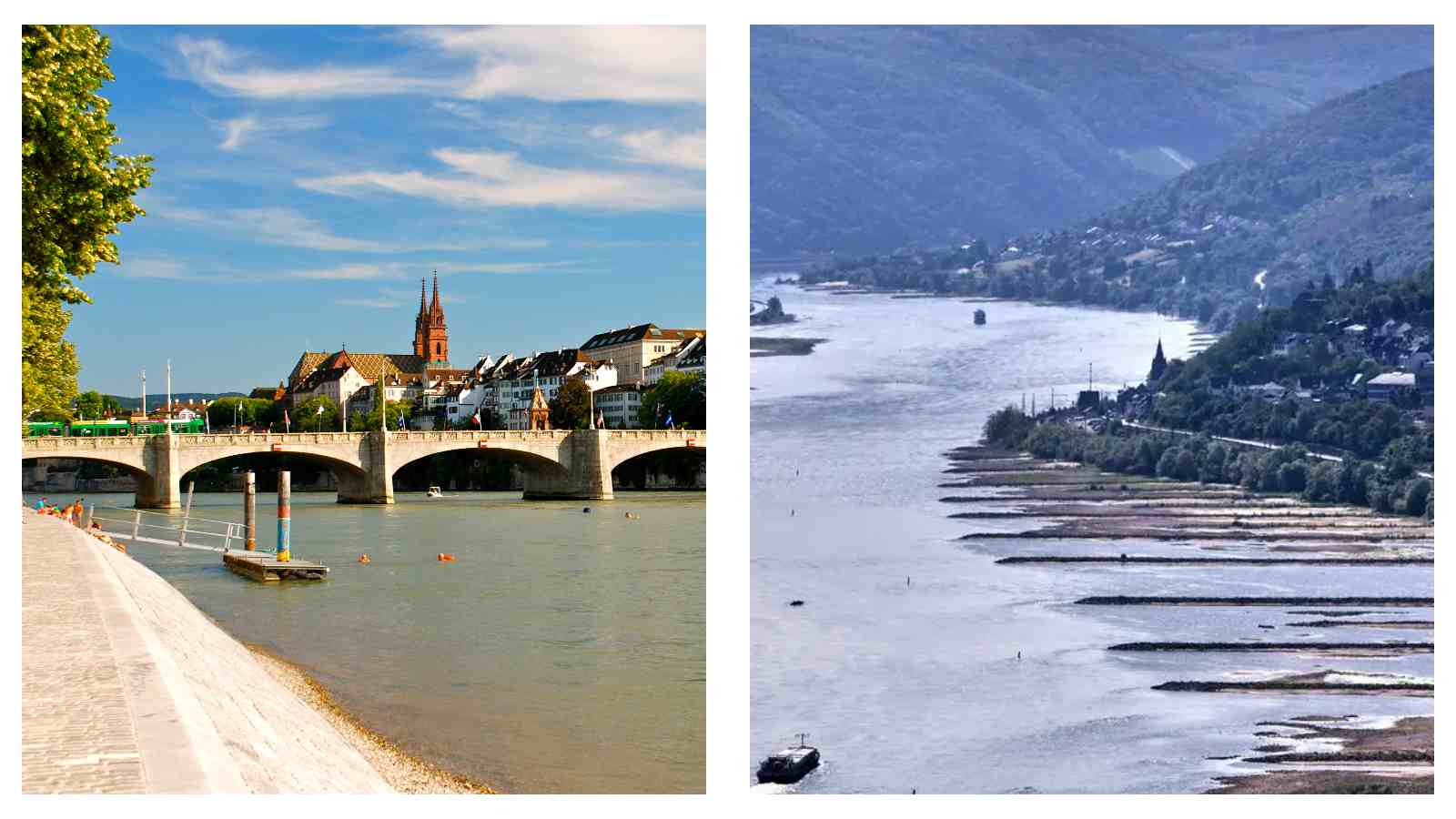
Water levels at Germany’s Rhine river has dropped to an all-time record low, making the area unpassable for laden cargo vessels.
On Tuesday, the navigable depth around Kaub – a reference point for ships – has further declined, discouraging most German ship captains to sail around the area for fear of possible incidents, such as running aground.
Series of heatwaves in Europe further worsen the situation
The waterway is facing record-low levels, which makes it difficult for larger ships to operate and Thomas Puls, a transport expert at IW Economic Institute in Cologne, said that the upper and middle sections of the river in Germany are cut off from major northern ports, particularly in Germany’s Duisburg and Rotterdam in the Netherlands.
Puls cited the lack of rainfall in the European country as the main cause of the water level decline.
The issue has forced the shipping industry to ponder on effective ways to navigate the area without damaging their ships.
He noted that some firms have already resorted to using specially-adapted vessels to transport products over the past few weeks.
German government implements measures to alleviate effects of low Rhine water levels
On Tuesday, the German government extended a regulation that lifts the ban for trucks driving on Sundays and public holidays.
The ruling provides companies impacted by the problem a reprieve, as they could continue their business that has been drastically affected by the decline of the Rhine’s water levels.
However, Puls believes the regulation is not sustainable in the long run, saying that switching goods transport from shipping to trucks is difficult.
He noted that many trucks are typically required to carry the cargo of a single commercial vessel.
Ships on the Rhine carry large cargoes of goods such as petroleum products and Puls called on authorities to take measures, such using more shallow-draught ships adapted for low waters, to “strengthen resilience.”
In Germany, only around five percent of goods are transported by river.
However, the Rhine plays a big role in maritime transport in the European nation as around two-thirds of its inland freight cross the waterway, he noted.
READ NEXT: UK bets on two new major projects to revive its shipbuilding sector
 Elan Castanares
 Ciara Mina
 Jheruleene Anne Ramos