
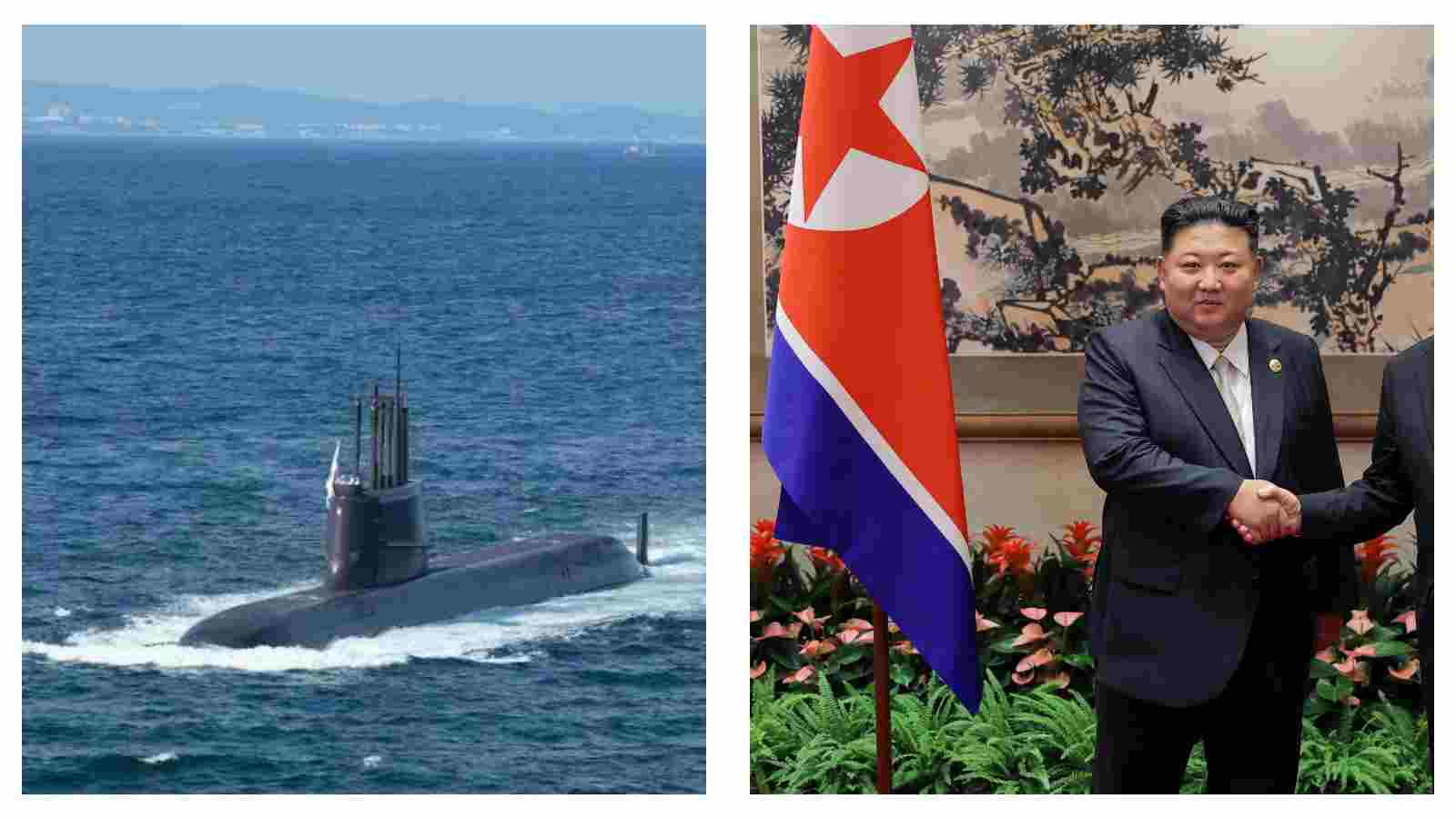
American support for South Korea’s push for nuclear-powered submarines is a destabilising move against regional peace, according to North Korea’s foreign ministry, raising concerns about what it calls a nuclear arms race in the Asia Pacific.
In a statement published by the state-run KCNA, Pyongyang slammed the US-led nuclear proliferation strategy through its deals with South Korea and Australia, accusing Washington of orchestrating “a dangerous development” in the current international nuclear order.
Pyongyang said that similar military initiatives risk pushing the region towards confrontation.
Seoul’s naval build-up
Under the deal signed last year, Seoul aims to launch its fleet of nuclear-powered submarines by mid 2030.
This will be a significant boost in military capability as it will enable South Korea to continuously conduct surveillance and patrol of North Korean ballistic missile submarine ports and other important maritime chokepoints.
Unlike their diesel-electric and air-propulsion-supported counterparts, nuclear submarines can remain submerged for extended periods, making them ideal for long-duration operations.
Acquiring such a high-end military asset grants South Korea access to sensitive technology and investment, which is certain to boost its agenda to build a navy capable of long-range maritime power projection.
Additionally, nuclear submarines offer unprecedented tactical speed and stealth, providing Seoul a second-strike capability in the event of a confrontation in contested waters.
YOU MAY ALSO LIKE: Sri Lanka warns global order fraying, urges humanity over destruction

Pyongyang pushes back
For North Korea, such a military acquisition is concerning, especially for its maritime interests in the region.
South Korea’s deployment of nuclear-powered submarines as forward units could limit Pyongyang’s movements in the vicinity of territorial waters, upending the balance of power in the region.
With the threat of submarines looming around, North Korea could find itself in a difficult scenario where a complicated plan would be required so it could project its naval power should the need arise.
Though Pyongyang is still armed with a nuclear deterrent, vocalising its protests against American-led military modernisation in the Asia-Pacific is crucial to push its narrative as a nation opposing Washington.
READ NEXT: Vietnam builds up momentum to achieve nuclear power, AI development
 Vivien Bernardino
  Angelica N. Hall
  Geoffrey H. Latayan