
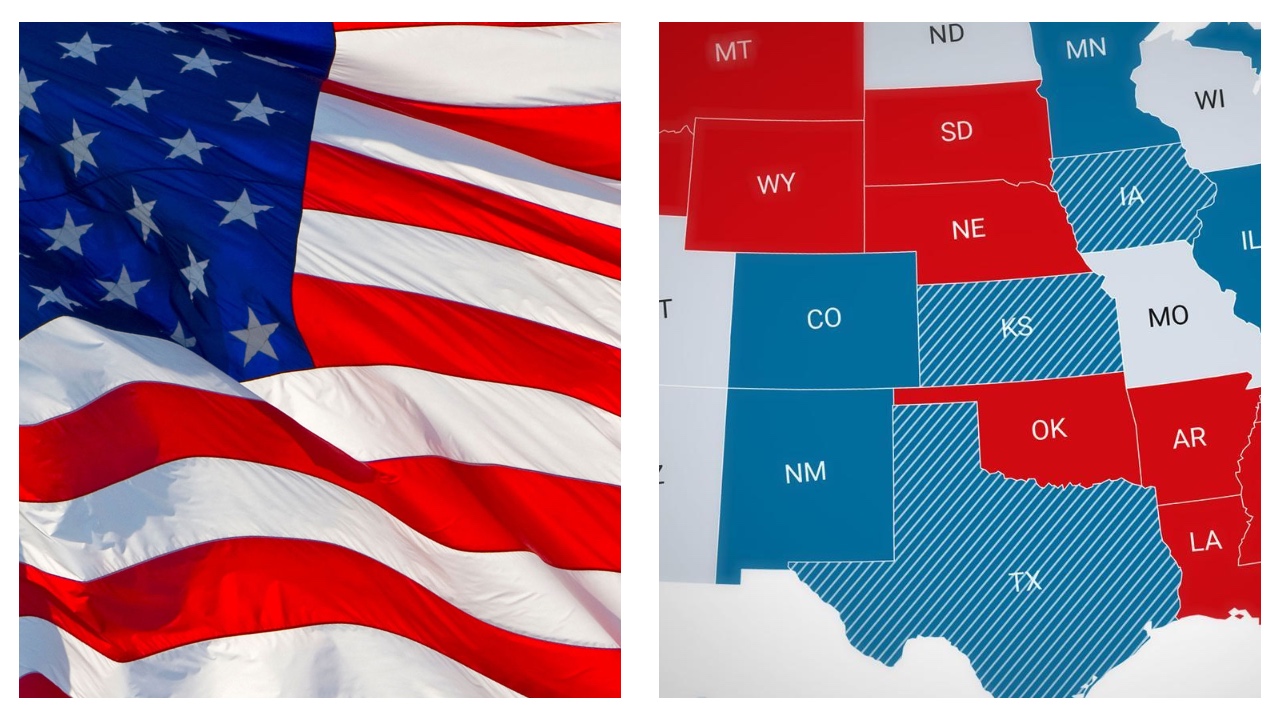
United States Democrats scored one of their biggest midterm victories in decades, breaking through long-time Republican strongholds such as Texas and South Carolina and reclaiming control of both chambers of Congress.
The sweeping result weakened President Donald Trump’s hold on the legislative branch and raised fresh questions about the Republican Party’s grip on states long regarded as conservative strongholds.
Democratic candidates also flipped Republican-held Senate seats in Iowa, Kansas, North Carolina, Ohio, South Carolina and Texas, while winning key governorships in Ohio and Texas, according to The Associated Press.
The party was projected to win at least 250 seats in the House of Representatives, comfortably clearing the 218-seat threshold for a majority, while securing at least 54 seats in the Senate after wresting control from Republicans.
Trump accepts losses
The outcome gives Democrats control of Congress for the remainder of Trump’s term, which will allow them to set the legislative agenda, launch congressional investigations and issue subpoenas, possibly complicating the president’s domestic priorities.
Trump struck a conciliatory tone after the election, saying he could work with Democratic majorities on “many more things than people understand,” as reported by CNBC News.
The president made no attempt to dispute the outcome after spending months warning about election integrity, with one adviser telling CNN the Democratic victories were “essentially too big to rig.”
Exit voter polling by the CNBC suggested that people were driven primarily by economic concerns.
Nearly nine in 10 respondents said that the cost of living played a crucial or major role in their congressional vote, while the economy was ranked as the country’s most important issue.
MORE US ELECTION NEWS: Three ways Democrats can reshape Washington following seismic midterm win
Data centre backlash affected votes
The elections also highlighted growing public resistance to data centre development, with dozens of communities approving restrictions on new projects in one of the most closely watched local issues on ballots across the country.
At least 33 cities and towns backed moratoriums, stricter regulations or outright bans on data centres, while only one community in North Dakota voted against new restrictions, according to Data Centres on the Ballot, as cited by USA Today.
The issue became a factor in the midterm elections, with candidates who backed tougher restrictions on the data centre industry winning contests in Texas, Michigan, Arizona, South Carolina and Ohio.
Meanwhile, communities in Ohio and Oklahoma voted to remove mayors amid criticism over proposed data centres.
Political analysts said the results underscored “bipartisan hostility” over the rapid expansion of AI infrastructure.
“We’ve known for a while that people are very unhappy about data centres,” David Karol, an associate professor at the University of Maryland studying American political development, told USA Today.
“Data centres are a national topic, but largely a local issue,” he added.
“When data centres themselves were on the ballot, they lost overwhelmingly.”
READ NEXT: James Talarico and Gina Hinojosa win in Texas midterm race
 Zach Heynes
 Geoffrey H. Latayan
 Hyacinth Estrada