
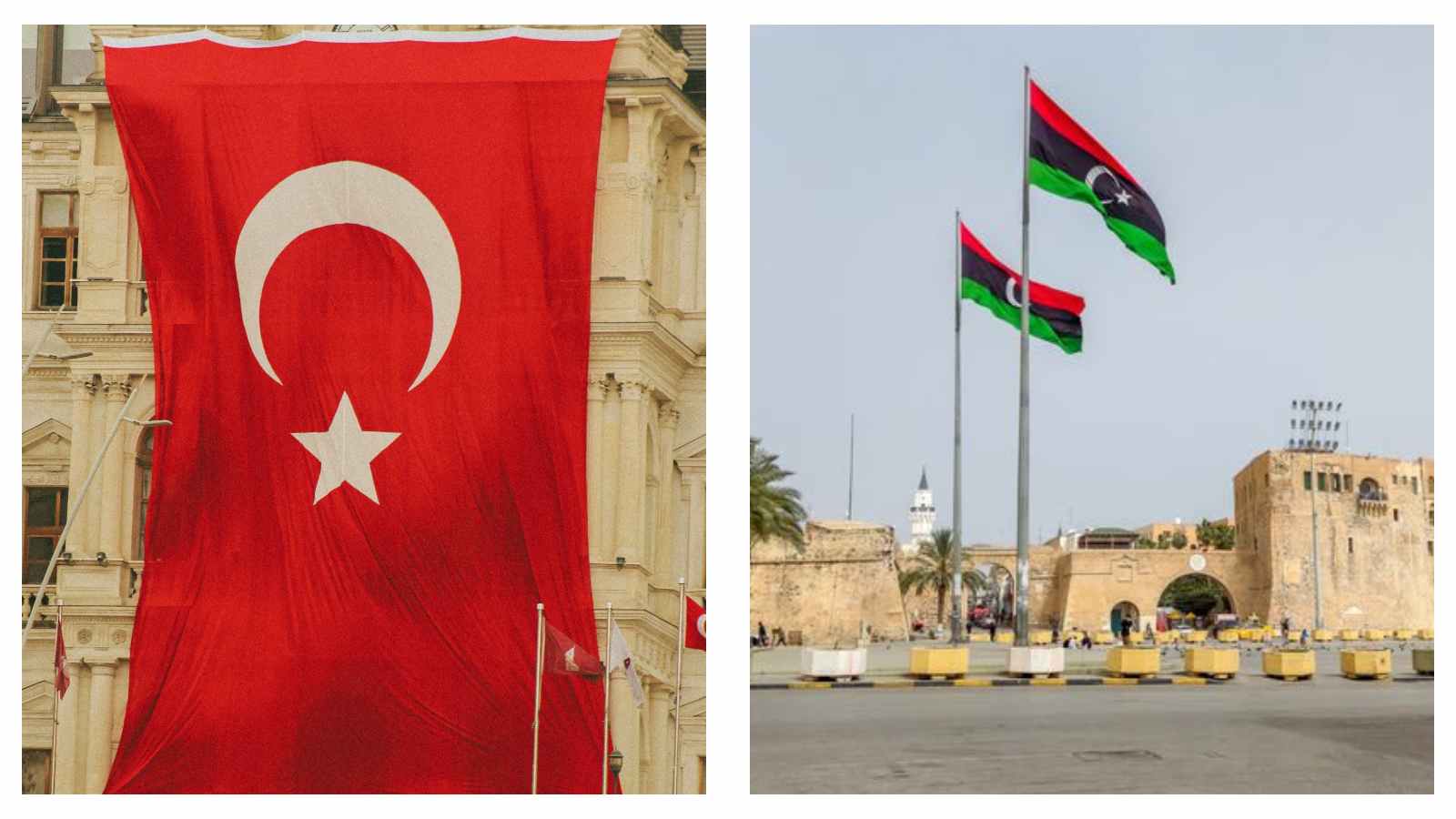
Greece and other Mediterranean countries have strongly condemned the scope of the controversial 2019 maritime deal between Turkey and Libya.
They argued that their agreement has crossed multiple water territories and islets, as well as an alleged attempt to hinder underwater development that could potentially link Athens to Jerusalem.
The Greek government submitted a statement to the United Nations (UN) reiterating its opposition to the deal, which allegedly reorganized the maritime borders of neighboring Islamic nations.
However, Athens argued that some of the Greek islands and waters have been included within the scope of the deal.
Such a move, it emphasized, is a clear violation of maritime and international laws, as well as an attempt to discredit Greece’s sovereign claims on its territories.
Greece’s statement also highlighted that the agreement between Turkey and Libya attempted to “distort geography” by disregarding the presence of Crete, Rhodes, and the Karpathos islands, as well as other crucial Greek economic zones.
Protests from Cyprus and ally Egypt
Cyprus, another Mediterranean territory in conflict with the deal, said that the situation has only led to a mess of maritime boundaries that could block the construction of a USD2.1 billion subsea power cable that would link Greece, Cyprus and Israel.
The issue raised by Cyprus and Greece has prompted the European Union (EU), both member states of the bloc, to intervene in the issue.
The EU said that the deal was a violation of the United Nations Convention on the Law of the Sea, to which Turkey is not a signatory member.
The same sentiments were raised by Egypt, despite being friendly with Turkey. It said that the deal has crossed the country’s sovereign rights within the Egyptian exclusive economic zone and continental shelf and “carries no legal consequences for Egypt.”
YOU MAY ALSO LIKE: Free maritime courses draw over 10,000 seafarer enrollees within three months

Turkey claims legitimate and ongoing deal
Meanwhile, Turkey has shunned the criticisms of its Mediterranean neighbors and emphasized that its maritime memorandum of agreement with Libya has been in force since its signing on November 27, 2019, and has been upheld under a “principle of equity” that protects Turkish and Libyan interests in their maritime territories.
The deal had initial protests from the Libyan Parliament during the early stages of negotiations between Turkey and Libya.
The latter nation had only changed its stance after Ankara sent its military forces to help regain control of the Libyan capital, Tripoli, by then Libyan Prime Minister Fayez al-Sarraj, against the military forces of Khalifa Haftar back in 2020.
READ NEXT: EU hints at leniency on harnessing oil, gas in the Arctic region
 Elan Castanares
 Kamille Q. Cabreza
 Carmela Calling