
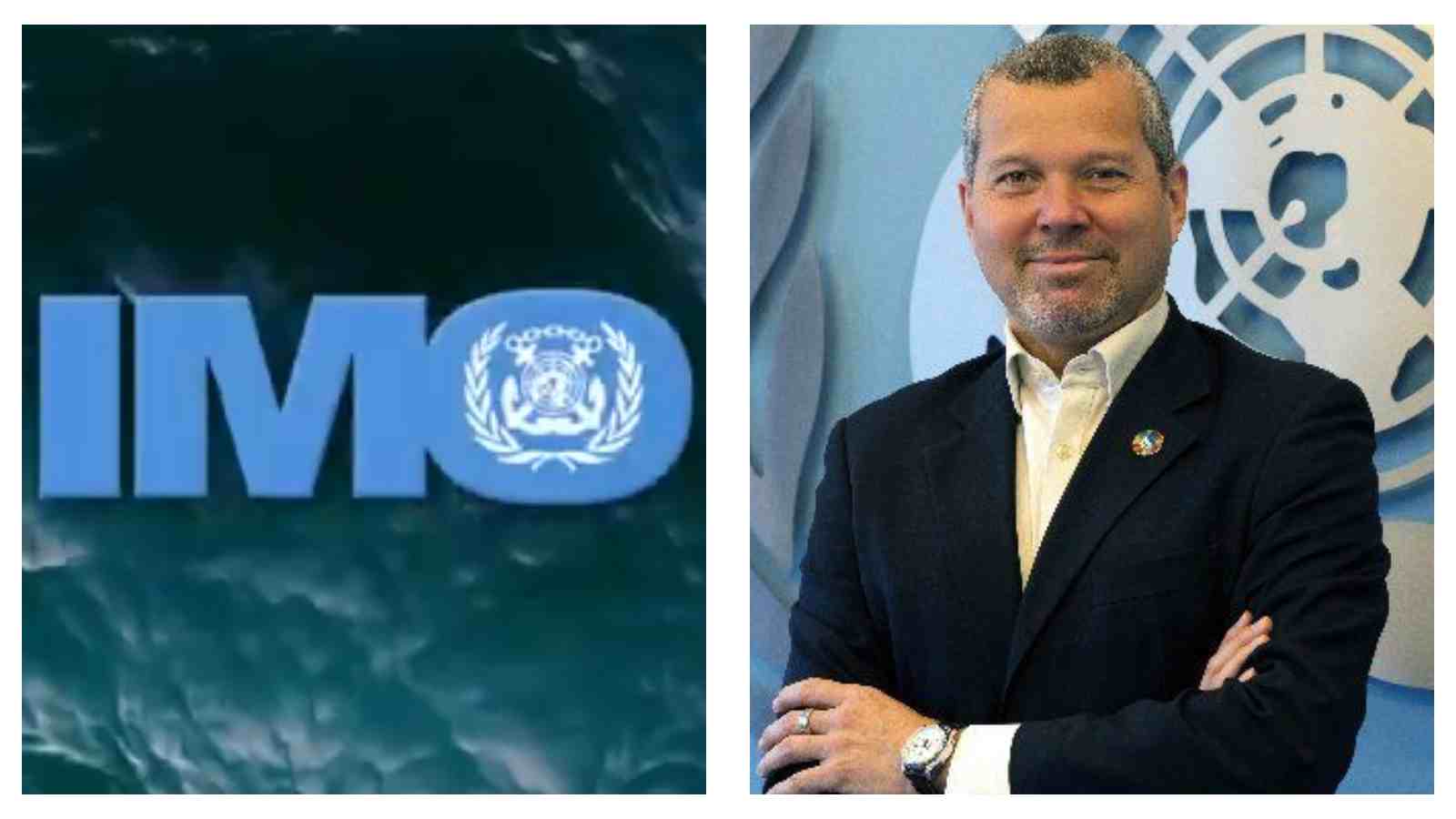
The International Maritime Organization (IMO) recently concluded its five-day Council Session, which centered on pressing issues facing the global maritime industry, particularly the ongoing risks seafarers face amid regional geopolitical tensions, and on upholding the organization’s mission to pursue gender equality on and off the job.
The 138th Council Session was presided over by IMO Secretary-General Arsenio Dominguez and emphasized how regional conflicts have reshaped the world’s vital waterways, and how the lives of seafarers have been on the line as drones and missiles hit commercial ships.
He said that the organization continues to remind warring parties to avoid hitting merchant ships while innocent and civilian lives are onboard and to allow commercial vessels to pass through international waterways under the principles of the signed resolution C.8(137).
According to the IMO, a Filipino seafarer died last Thursday in an alleged drone attack that struck the ship he was on board, bringing the total number of casualties among seafarers in the Middle East to 25 since the war between the United States and Iran began in February, Dominguez said.
The Black Sea has also become a center of attention regarding the safety of sailors and civilian ships as Ukraine and Russia continue to exchange missiles and drones.
Maritime security firm Ambrey said that over 570 ships have been targeted in the Black Sea and at least 40 seafarers have been killed in the region, earning it the moniker of the “world’s deadliest shipping route.”
Upholding women’s welfare
Meanwhile, the recent session also shed light on the ongoing commitment of the IMO to upholding gender equality among women seafarers.
The Council tapped Yu Jiajia for the 2027 IMO Gender Equality Award to acknowledge her efforts in going beyond the challenges in the maritime sector and to highlight women’s contribution in the industry.
The organization said that it has always prioritized the equality of women in the male-dominated maritime industry.
It will further value their representation under its gender program, launched in 1988, with its latest publication, “Handbook on Gender Mainstreaming,” intended to be a resource material for maritime administrations, institutions and firms to integrate their policies with gender perspectives effectively.
Since then, more women have become part of the sector, accounting for 1.2% of the global seafarer workforce, according to the Seafarer Workforce Report of BIMCO, or equivalent to 24,059 women designated as seafarers.
Dominguez set to remain IMO’s secretary-general
Dominguez has secured unanimous support from the Council to retain his seat as secretary-general of the IMO, which will then be relayed to the IMO Assembly to certify his re-election.
His term began on January 1, 2024, after being elected in July 2023, at a time when the maritime sector was gradually recovering from the impacts of the COVID-19 pandemic.
Upon approval, Dominguez is set to lead the IMO for a new term running from January 1, 2028, to December 31, 2031.
Among his core missions as IMO’s 10th secretary-general were to push for decarbonization in the global shipping industry and rally international support for the organization’s Net Zero framework.
Such a move was intended to sustainably revolutionize the industry and realign IMO’s commitment to joining the global fight against climate change.
READ NEXT: EU rules out two Indian shipbreaking yards from approved recycling list
 Wendellyn Mateo
 Angelica N. Hall
 Lucia Caporalini