
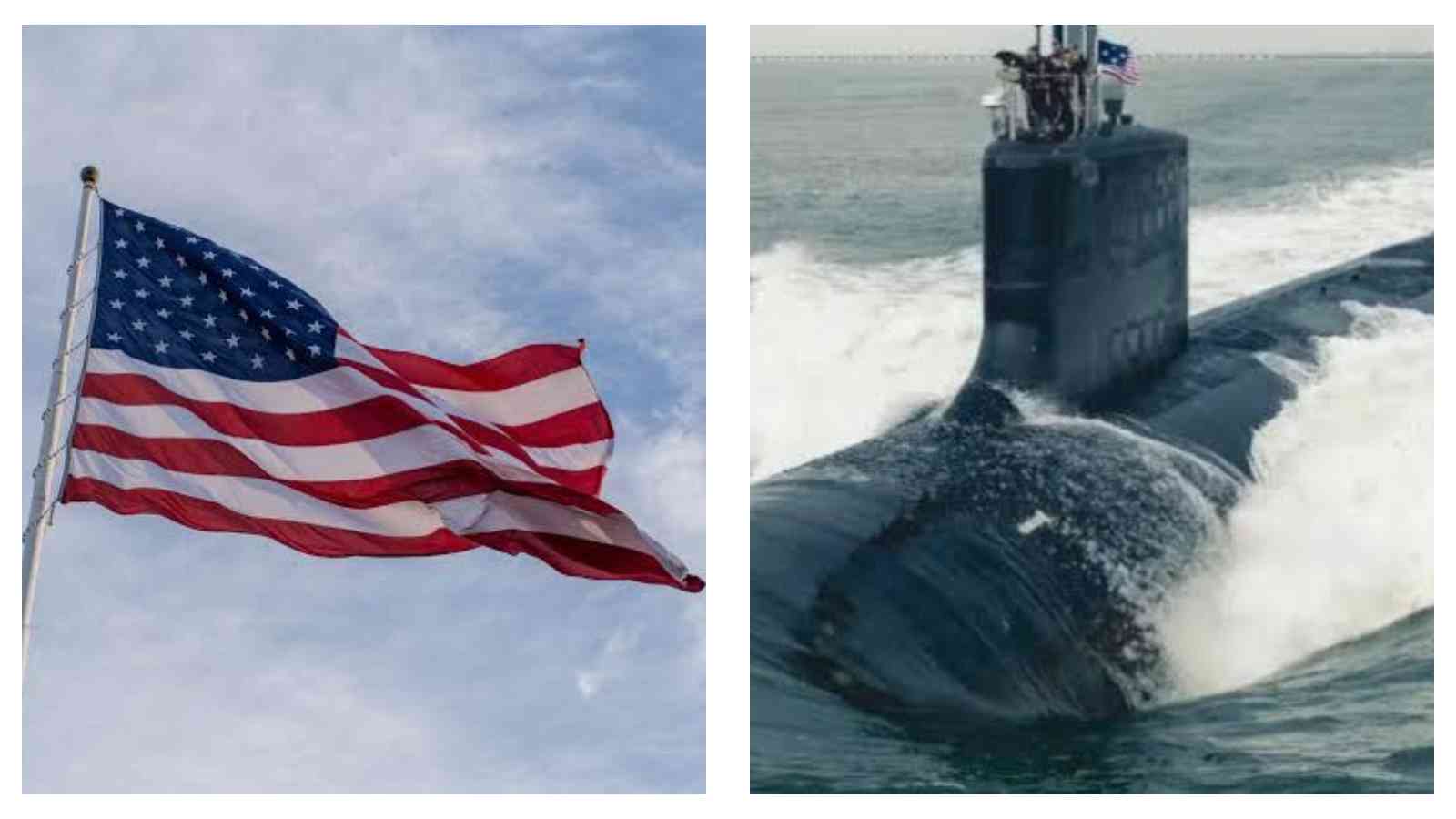
America’s submarine-building output has accelerated by 30% over the past year as Washington aims to rapidly close numerical and modernisation gaps in its current fleet.
Nuclear-powered submarines play a crucial role in the United States’ overall security umbrella and power-projection doctrine in far-flung regions like the Asia-Pacific.
The US Navy currently relies on its Cold War-era Ohio-class submarines to carry the majority of its nuclear missile deterrent following previous delays in the delivery schedule of replacements.
As these boats approach the final stages of their operational lifespan, it necessitates accelerating efforts to replace them with modern submarines to keep up with contemporary security challenges.
Delivery bottlenecks
According to reports, local shipyards are undergoing aggressive manufacturing upgrades and worker recruitment to drive forward the programme for new Columbia-class ballistic missile submarines and Virginia-class attack submarines.
The planned lead ship of the Columbia-class vessels, the USS District of Columbia, is already behind the delivery schedule by 18 months, which highlights persistent difficulties in America’s shipbuilding capabilities.
New production targets show that General Dynamics Electric Boat and Huntington Ingalls Industries have deployed thousands of technicians and modernised drydocks and assembly lines to quickly address the manufacturing gaps.
The new Columbia-class ballistic missile submarines are expected to be delivered by late 2028, alongside the Virginia-class vessels.
The upcoming Virginia-class submarines are retrofitted with additional missile bays for a larger loadout of conventional cruise missiles and offset the retirement of several aging guided-missile submarines.
YOU MAY ALSO LIKE: Philippines urges maritime arbitrators to be ‘eyes and ears’ for seafarers

Maritime risks
The rising geopolitical tensions in the North Atlantic and Asia-Pacific regions put additional pressure on the US to expand its undersea forces and meet emerging challenges.
China’s rapid naval modernisation has long spooked many of America’s policymakers, especially during Barack Obama’s administration when Washington pivoted towards the Asia-Pacific.
While the US Navy undoubtedly remains the global leader in terms of gross tonnage, China is not far behind in numbers and technology. These pose a threat to America’s decades-long naval supremacy.
But due to delivery delays of important nuclear-capable submarine assets, this risks putting the US at a maritime disadvantage that could see a drop in active hulls that can help project American power over distant seas.
READ NEXT: Maritime news: India seeks to maintain database of disabled, abandoned ships
 Elan Castanares
 Ciara Mina
 Jheruleene Anne Ramos