

A decade-old Iran nuclear deal has come to an official end, marking a significant shift in the tense relationship between Iran and the United States.
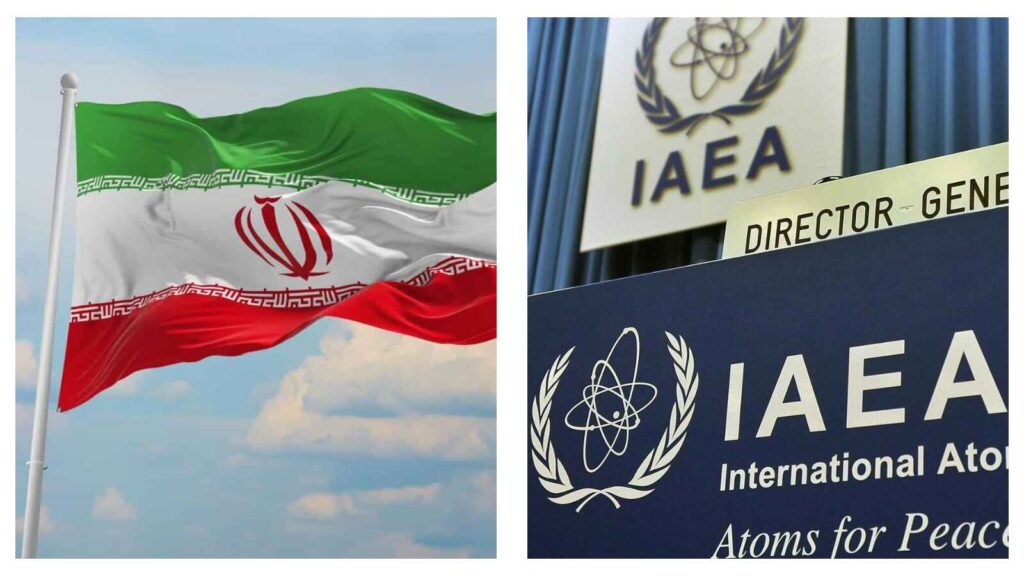
In a statement, Iran declared that the 2015 Joint Comprehensive Plan of Action (JCPOA), aimed at restricting its nuclear operations in exchange for economic sanctions relief, had been officially terminated.
“All of the provisions (of the 2015 JCPOA agreement), including the restrictions on the Iranian nuclear programme and the related mechanisms, are considered terminated,” the Iranian foreign ministry said in a statement issued on October 18.
The announcement officially ended an agreement that had been falling apart for years.
What is the JCPOA?
On July 14, 2015, Iran and six world powers comprising the US, the United Kingdom, France, China, Russia and Germany – also known as P5+1 – signed the JCPOA in Vienna, Austria, with the intention of ensuring that Iran’s nuclear programme would remain strictly civilian.
Under the agreement, Iran agreed to limit its centrifuge use, cap uranium enrichment in weapon development and allow intrusive inspections from the United Nations-backed International Atomic Energy Agency (IAEA).
In exchange, billions of dollars in oil revenue were made available when sanctions that had severely damaged the country’s economy were eased.
YOU MAY ALSO LIKE: https://newsjustnews.com/irans-lawmakers-urge-tehran-to-sever-its-ties-with-iaea/
‘Premature’ termination
The agreement started to fall apart in 2018 when US President Donald Trump unilaterally withdrew from the deal and reimposed sanctions.
This prompted Iran to resume its nuclear initiative.
Efforts by European powers to revive the deal failed in the backdrop of renewed hostilities, such as airstrikes on Iranian facilities and Tehran’s decision to end IAEA co-operation.
As a result, Britain, France and Germany triggered the “snapback” mechanism, which returned UN sanctions on the country.
What to expect next?
With the JCPOA now defunct, Tehran faces no legal restrictions on uranium enrichment and centrifuge use.
The country can now expedite its nuclear programme without external vetting.
Analysts say that this gives Iran the power to function as a “threshold state”, capable of producing a bomb without explicitly going overboard.
The US and its European allies are expected to react with fresh sanctions and diplomatic isolation, while neighbouring country Israel may step up its covert operations aimed at sabotaging Iranian facilities.
A regional arms race is also projected as Gulf nations like Saudi Arabia are expected to boost their own civilian nuclear initiatives.
Despite mounting tensions, Tehran and Washington maintain that diplomatic channels remain open between the two countries.
READ NEXT: https://newsjustnews.com/nepal-mourns-bipin-joshi-as-hamas-confirms-his-death/
 Angelica N. Hall
  Kamille Q. Cabreza
  Geoffrey H. Latayan