
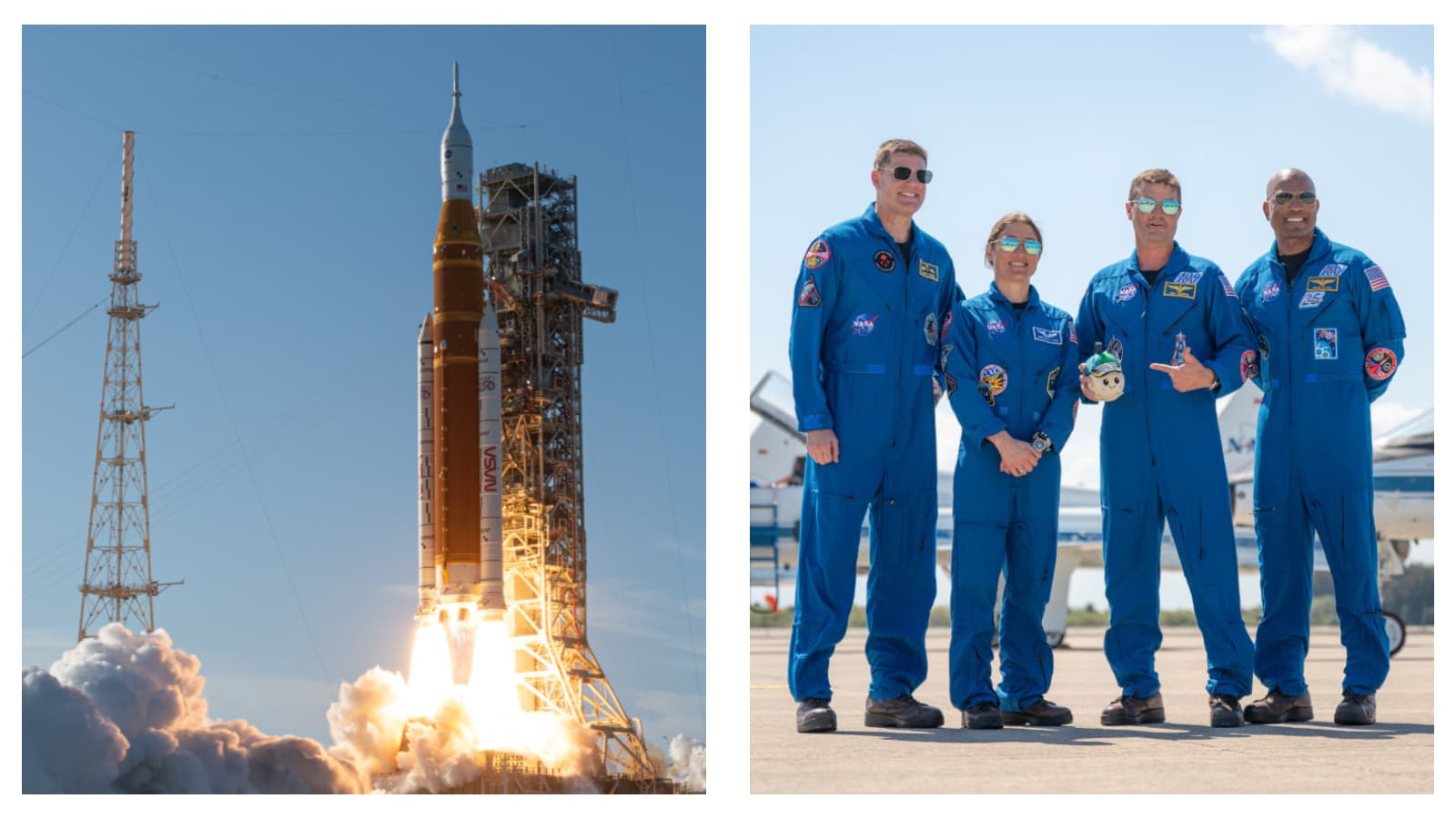
The National Aeronautics and Space Administration (NASA) has started its Artemis II mission, sending four astronauts on a flyby of the moon.
Launched on April 1, it is the first crewed spaceflight under the US space agency’s Artemis programme.
Aboard the Orion spacecraft, four astronauts – NASA commander Reid Wiseman, pilot Victor Glover, mission specialist Christina Koch and Canadian Space Agency mission specialist Jeremy Hansen – plan to venture 600,000 miles around the Moon to collect critical information for future missions.
The mission’s purpose
According to NASA, the astronauts involved in the mission are on a 10-day journey around the Moon to conduct experiments as “both scientists and test subjects” in order to assist researchers in understanding the effects of long-duration space travel on the human body.
The astronauts will also put the Orion spacecraft through a series of planned tests to evaluate systems, procedures and performance in deep space for the benefit of future crewed missions to the Moon’s surface, Yahoo News reported.
“The information we learn from the Artemis II test flight will inform future missions and help NASA pave the way for the next era of exploration on the Moon and Mars,” NASA said in a video posted to social media.
READ MORE: ‘Let us not allow ourselves to be paralysed,’ Pope Leo urges as he leads first Easter vigil

Real-time coverage
NASA is providing real-time coverage of the mission, keeping the public informed with up-to-date information on the location of the Orion spacecraft while the crew engages in live conversations.
The spacecraft carries 32 cameras and devices, including any instrument with a lens capable of capturing photos or video, inside or on the exterior of the vehicle.
Fifteen cameras are mounted directly on the spacecraft and 17 are handheld cameras operated by the crew.
On Saturday, the mission captured stunning new images of the Moon and the interior of the Orion spacecraft.
NASA reported that one of the photos revealed part of the Orientale Basin – marking the first time this region has been seen by human eyes as it had previously only been observed by robotic imagers.
The highly anticipated Moon flyby was expected on Monday.
NASA says the astronauts will observe the Moon’s surface during the six-hour flyby, adding that they will also witness a 53-minute solar eclipse from space.
This would provide a unique opportunity to “look for flashes of light from meteoroids striking the Moon’s surface, dust lofting above the edge of the Moon and deep space targets, including planets”.
YOU MAY ALSO LIKE: Rising tensions, shrinking water: Turkey, UN warn of global water supply crisis
 Carmela Calling
  James Mario Ajero