
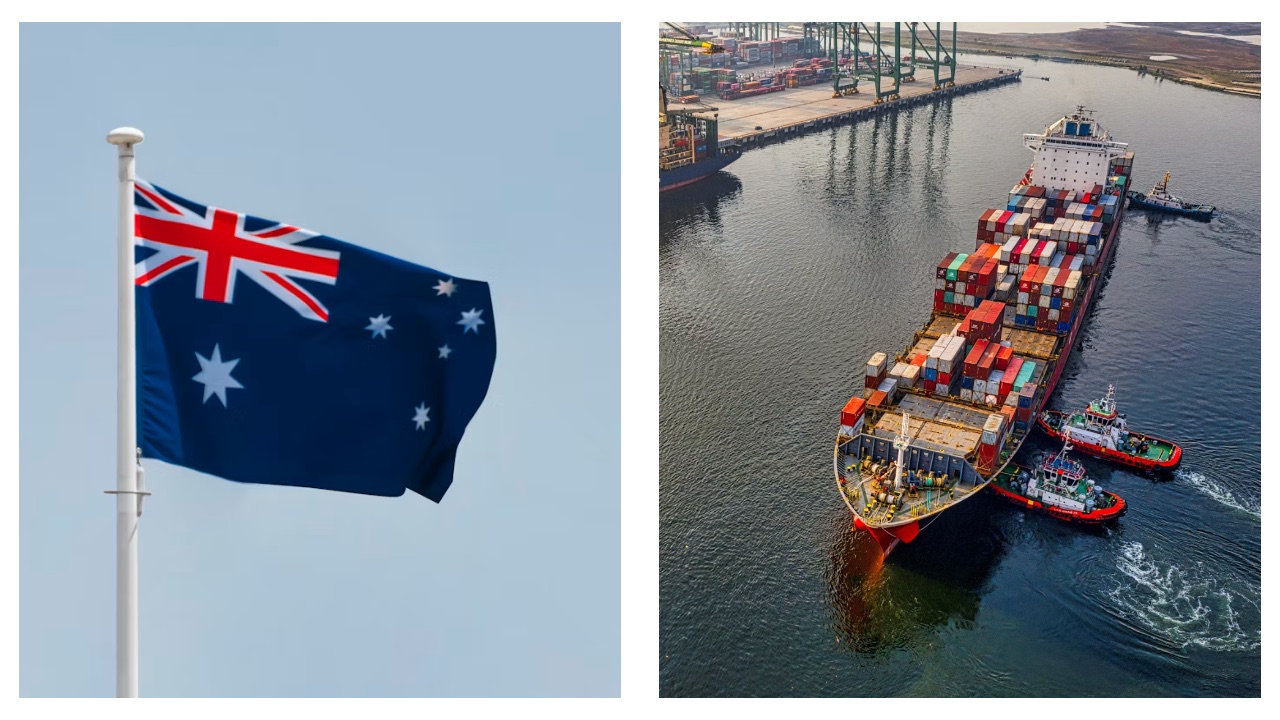
Australia’s Maritime Emissions Reduction National Action Plan (MERNAP) has been unveiled in support of the government’s programmes for environmentally friendly shipping and related industries.
The plan brings together practical government and industry actions to promote decarbonisation in the maritime sector.
In a statement, Catherine King, Minister of Infrastructure, Transport, Regional Development and Local Government, described MERNAP as “a vital piece of the country’s journey toward a sustainable future.”
The scheme, which will cover the country’s ports, shipping, energy, domestic commercial vessels and skills and training, prioritises key actions to support decarbonisation while ensuring that the shipping sector keeps its competitive standing in the international market.
MERNAP aims to support port infrastructure
According to the ministry’s press release, MERNAP aims to support port infrastructure investment and industries that accelerate decarbonisation.
It also seeks to reduce regulatory burden for emerging maritime technology, upskill its maritime workforce and continue collaboration with international partners that place their focus on maritime decarbonisation.
“[MERNAP] presents an unparalleled opportunity to be a low- and zero-carbon energy exporter of choice internationally, while creating new jobs and industry within the sustainable maritime sector locally,” said King, who also acknowledged that the maritime sector is responsible for 99% of the country’s international trade.
The minister also noted that the recent conflict in the Middle East has led to the government’s decision to establish a resilient and sustainable maritime industry.
MORE INTERNATIONAL NEWS: El Niño forecast to bring more extreme weather to Vietnam

Programme complements existing Australian incentives and policies
The plan complements existing Australian government incentives and policies.
These include the AU$1.1 billion ($786.995 million) Cleaner Fuels Programme, the Green Fuel Bunkering Strategy, the AU$30m ($21.464m) Australia-Singapore Low-Emissions Technologies Initiative for Maritime and Port Operations, the AU$55m ($39.350m) Transport Resilience and Capacity Kickstart programme and the AU$13.8m ($9.873m) Maritime Skills and Training Initiative.
The ministry also introduced an AU$100m ($71.545m) investment in a new clean energy precinct at the Port of Newcastle that is expected to facilitate production, storage, distribution and export of clean-energy products, including hydrogen and ammonia, as well as to support roughly 5,800 jobs during construction.
READ NEXT: Syria exits list of states sponsoring terrorism after nearly 50 years
 Liam McLaughlan
  KC Maderia
  James Mario Ajero