
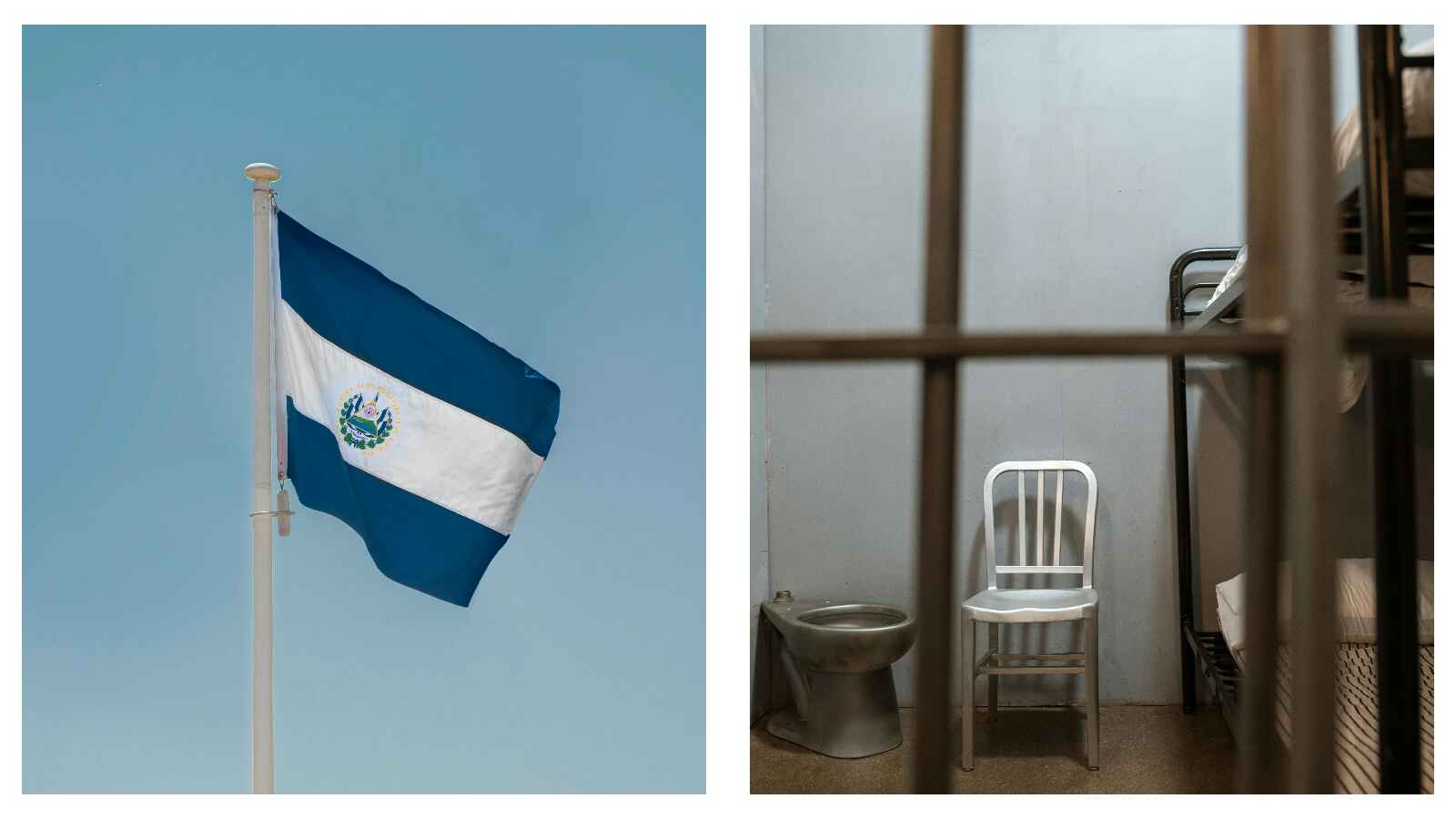
El Salvador’s legislative assembly amended the country’s juvenile criminal law in late March to allow courts to sentence minors to life imprisonment, sparking concern from the United Nations and several rights groups.
Under the amended law, minors aged 12 to 18 can be sentenced to life imprisonment if found guilty of crimes such as rape, murder, terrorism, femicide and gang membership, the United Press International reported.
The amendment also removes previous sentencing limits for serious offences. Previously, minors under 12 faced up to 10 years in detention, while those aged 16 and above could receive up to 15 years.
The measure was ratified with 57 votes in favour, marking a significant shift in the Central American country’s criminal justice system.
The move came weeks after the iron-fisted government of President Nayib Bukele amended the constitution to allow life imprisonment for adults as part of its ongoing gang crackdown.
UN, rights groups denounce amendment
Following the decision, UN bodies and several child rights groups sharply criticised the amendment, urging the government to reconsider.
The UN Children’s Fund (UNICEF) and the Committee on the Rights of the Child (CRC) said in a joint statement that the law contradicts standards set out in the Convention on the Rights of the Child, which requires that children in conflict with the law be treated in a manner that prioritises rehabilitation and reintegration.
They also noted that deprivation of liberty could only be used as a measure of “last resort and for the shortest, appropriate time.”
A spokesperson for the UN Office of the High Commissioner for Human Rights, Marta Hurtado, also urged authorities to review the decision, warning that the measure is “deeply harmful” to children.
“Prolonged detention is deeply harmful to children, violates several of their rights and affects their development and well-being throughout life, reducing their chances of successful reintegration into society,” she said.
YOU MAY ALSO LIKE: Economic shocks keep Filipino middle class on the edge of poverty

Children imprisonment won’t solve gang problem
UNICEF and CRC also said imprisoning children would not effectively address the country’s long-standing gang violence.
“Detention is not only harmful to children, but also highly costly and ineffective in preventing crime. It generates severe negative impacts on the physical and mental health of children and adolescents,” they said.
Instead, they called on the government to invest and support more rehabilitation programmes, education and social reintegration initiatives to curb cases involving minors.
“It is critical that El Salvador continue to strengthen its juvenile justice system to ensure accountability for acts committed, access to effective remedy for victims, while also guaranteeing real opportunities for development,” it said.
“This can help to ensure that children and adolescents in conflict with the law can successfully reintegrate into their communities and rebuild their lives after completing their sentences.”
They warned that prioritising punitive measures over children’s rights may only undermine public safety and the welfare of future generations.
Concerns for minors grow
Other rights groups have also raised concerns that the reform could disproportionately affect children from marginalised communities, who are more vulnerable to coercion by organised crime.
They further warned that the measure may increase the risk of life sentences based on flawed evidence or coerced confessions, while exposing minors to deteriorating prison conditions.
Juanita Goebertus, Americas director at Human Rights Watch, said the reform could place minors under the adult prison system, which has been accused of torture and other abuses.
She cautioned that transferring children to adult-run facilities represents a “massive regression for children’s rights” and increases the risk of mistreatment.
The concerns come as Salvadoran security forces have detained more than 3,300 children, most with no proven gang ties.
Bukele remains defiant
Bukele, who has described himself as the “world’s coolest dictator,” dismissed calls to review the amendment, while officials defended the reform.
He claimed that El Salvador’s decision to implement the Juvenile Offender Law in 1994, which was adopted following UN recommendations, only contributed to the increase of gangs in the country.
“So, no, thank you very much. Take your social experiments to other countries that have not suffered what we have suffered; maybe they will believe you (hopefully not). We are not going back to the past,” he said.
Security Minister Gustavo Villatoro and ruling party lawmaker Suecy Callejas also defended the reform against critics, saying that the move will strengthen public safety and ensure accountability.
El Salvador has been under a state of emergency since March 2022, allowing authorities to detain suspected gang members without warrants.
The government credits the policy with reducing homicide rates, though critics warn of widespread human rights violations.
READ NEXT: Ten countries with the lowest fertility rates in 2025
 Carmela Calling
  James Mario Ajero