

Filipino middle-class households, long seen as stable and secure, remain highly vulnerable and are often just one emergency away from falling into poverty, experts and studies say.
According to the Philippine Institute for Development Studies (PIDS), the middle class remains susceptible to economic shocks that could push them back into poverty despite years of poverty reduction efforts.
In its policy note titled “Escaping Poverty Is Not Enough: Vulnerability, Risk and the Fragile Middle Class in the Philippines,” published on March 5, researchers noted that many households remain just above the poverty line.
“Empirical analysis… shows that a substantial share of poverty in the Philippines is transient rather than chronic, with many households clustering just above the poverty line,” the report said, as quoted by Manila Bulletin.
Risk of ‘poverty churning’
PIDS said households just above the poverty line — many of whom belong to the so-called “emerging middle class” — are highly vulnerable, as they often lack sufficient financial buffers to withstand economic disruptions.
Data showed that nearly one-third of Filipino households were considered vulnerable in 2023, signalling a higher risk of “poverty churning,” where families frequently move in and out of poverty.
It noted several structural factors behind this vulnerability, including labour market informality, illness, and exposure to natural disasters such as typhoons, highlighting how welfare gains in the Philippines remain fragile and reversible.
“The Philippines has made significant progress in reducing poverty amid historical growth in recent years, but vulnerability remains widespread,” the report said.
“Many households – including a large share of the emerging middle class – are just one shock away from poverty.”
YOU MAY ALSO LIKE: Tensions in the Middle East: ASEAN nations roll out emergency measures
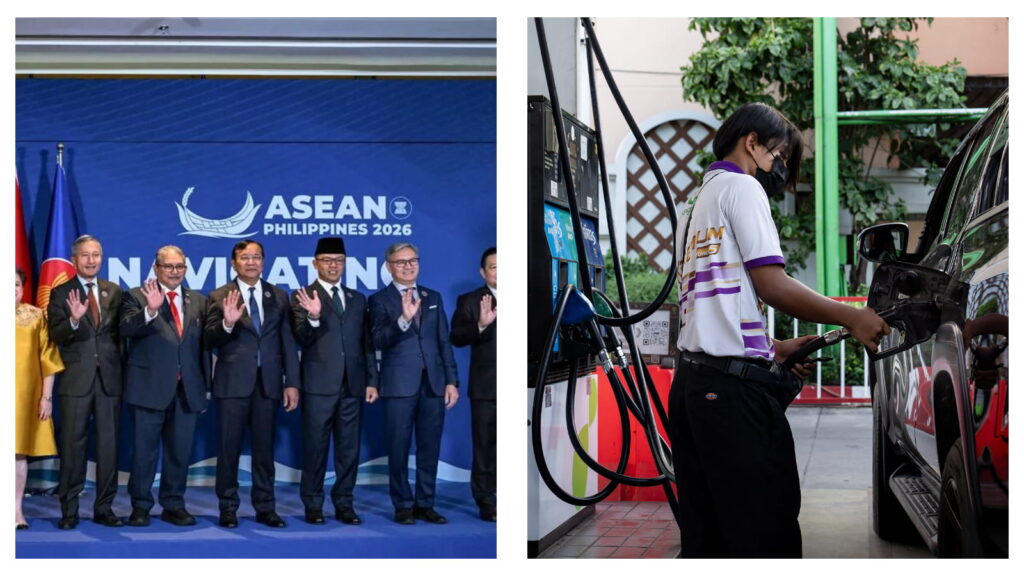
Middle class faces pressure from Mideast conflict
This vulnerability is now being tested further by rising fuel prices linked to tensions involving the United States, Israel and Iran, which are expected to hit middle-class households the hardest.
Deanne Cabalfin, one of the authors of the policy note, said higher fuel prices will ripple across household expenses, as transport costs directly affect the prices of food, goods and services.
She added that savings are often the “first casualty” in such situations, stressing that depleted savings remove a household’s primary buffer against future shocks, the Philippine Star reported.
For Lois Aglipay, an office worker from Bulacan, the current challenges have made it harder to stay afloat as she struggles to cover daily expenses.
“We don’t have any choice but to keep moving forward and working for the food,” she said, adding that she could not save money even if she wanted to due to the continuous increase of expenses.
Calls to provide financial aid for middle class
In response to this situation, Philippine Senator Joseph Victor “JV” Ejercito urged the government to provide financial assistance and subsidies to the middle class.
He emphasised that middle-income earners — including vulnerable groups such as jeepney drivers and office workers — are also bearing the brunt of the fuel crisis.
“We also need to focus on our middle-class income earners who make up 40 per cent of our population. They are also sharing and bearing the brunt of the crisis, but there is no aid provided for them,” he said.
“Now is the best time to assess what the government has been doing so far, and to inquire on the economic impact of the Middle East tension not just to our country as a whole, but more specifically to Filipino households.”
Structural reforms needed
However, experts stressed that while subsidies may provide short-term relief, structural reforms are needed to ensure households are not left to shoulder the burden of recurring crises.
Roland Simbulan, chairperson of the Centre for People Empowerment in Governance, said policies must prioritise the welfare of the most vulnerable sectors.
Similarly, IBON Foundation executive director Sonny Africa emphasised the need for more targeted support and cumulative actions aimed to help the ones who needed it the most.
“We need a lot of measures, but we have to be very careful… Bottom line, whatever measures we take has to be with the bias towards the more than 18 million vulnerable (Filipino) families,” he said, as quoted by GMA News.
Meanwhile, Teddy Casiño proposed measures to address oil price hikes, including removing value-added tax and other fees on oil.
He also urged the government to tap discretionary funds, impose wealth taxes on affluent families, and revisit corporate income taxes to offset revenue losses.
Their remarks come as inflation is expected to rise across most goods as oil prices increase and the peso weakens, putting further strain on vulnerable and middle-class Filipino households.
READ NEXT: Countries implement energy-saving measures amid soaring global energy prices
 Ciara Mina
  Rosemarie Zamora
  Jacinth Banite