
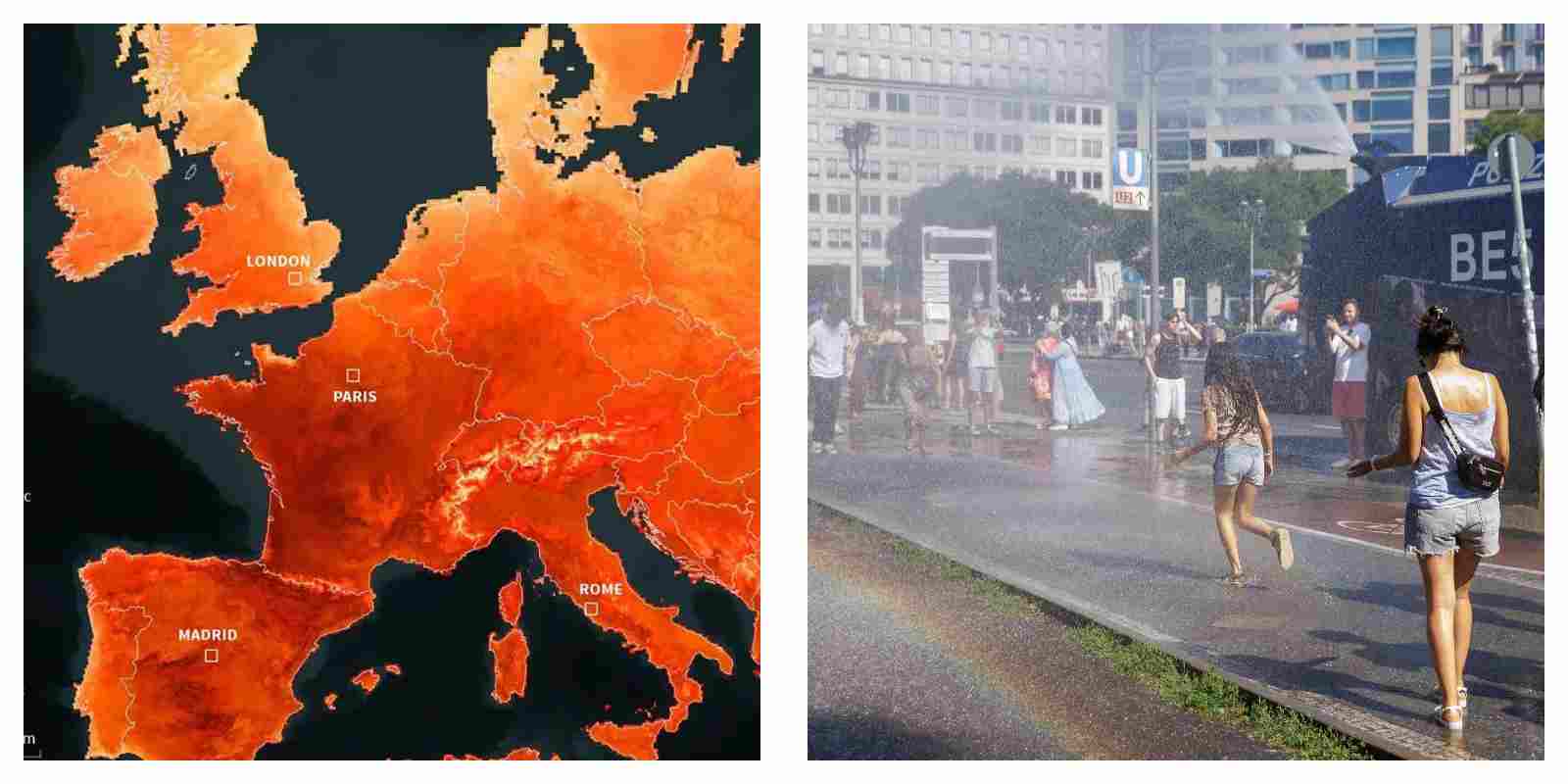
Several countries across Europe have been experiencing an early and extreme heatwave over the past few weeks, with the World Health Organization (WHO) recording high temperatures in some regions of the continent, including Germany, France, Poland and Czechia.
Last weekend, temperatures hit 40 degrees Celsius in several countries, while on Monday, temperatures reached 35 degrees Celsius across central and eastern Europe.
WHO director-general Tedros Adhanom Ghebreyesus said more than 1,300 deaths have been reported since June 21.
What is driving Europe’s extreme heatwave?
Experts said the extreme heatwave that Europe is currently experiencing is caused by a heat dome – a large, stationary area of high pressure that traps hot air over a region.
Meteorologists have also said that this phenomenon is being sustained by an omega block, which is a stalled atmospheric ‘traffic jam’ that traps weather in place for days or even weeks.
Reports of excess deaths across Europe
Recent reports by France’s public health agency said 1,000 excess deaths were reported in the country due to the heatwave that began on June 20.
Most of the deaths were senior citizens aged 65 and above.
In Spain, a senior citizen aged 90 died due to heatstroke, while seven people died in Germany due to heatwave-related incidents.
According to Garyfallos Konstantinoudis, a lecturer at the Grantham Institute – Climate Change and the Environment, heatwaves pose serious health dangers as the body is under heat stress to regulate its temperature.
This stress can lead to dehydration, heat exhaustion and even heatstroke in severe cases.
He added that heat stress can trigger heart attacks, strokes and respiratory failure among older people, people with disabilities and those without access to cooling or hydration.
READ MORE: Philippines makes maritime training free in bid to strengthen seafarer workforce
How to protect against heat dangers
As the heatwave poses a serious danger to everyone’s health, the WHO has recommended ways on how to protect oneself from heat.
According to the UN health agency, people must stay out of the heat and avoid going outside and doing strenuous activities during the hottest time of the day.
Citizens are also asked to stay in the shade and spend two to three hours in a cool place during the day.
As people tend to go to public pools or lakes to ease the heat, the WHO cautioned people to be aware of the risk of drowning and to never swim alone.
It is also important to keep oneself informed about official heat warnings.
Morever, it is advised to keep your home cool by using the night air to cool down the house by opening windows after dark, when the temperature is lower.
For people using fans, it is recommended to use them only when temperatures are below 40 degrees Celsius.
Meanwhile, for those using air conditioning, it is best to set the thermostat to 27 degrees Celsius and, at the same time, turn on the electric fan to make the room four degrees Celsius cooler.
To keep your body cool, one should wear light and loose-fitting clothing, use bed linens and take cool showers or baths.
But most importantly, keep yourself hydrated.
As extreme heatwaves become more frequent and intense due to climate change, staying informed and taking preventive measures can help reduce the risk of heat-related illnesses.
By following health advisories, keeping cool and staying hydrated, individuals can better protect themselves and their communities during periods of extreme heat.
YOU MAY ALSO LIKE: Norway tightens AI use in schools as learning concerns grow
 Jheruleene Anne Ramos
  Wendellyn Mateo
  Carmela Calling