
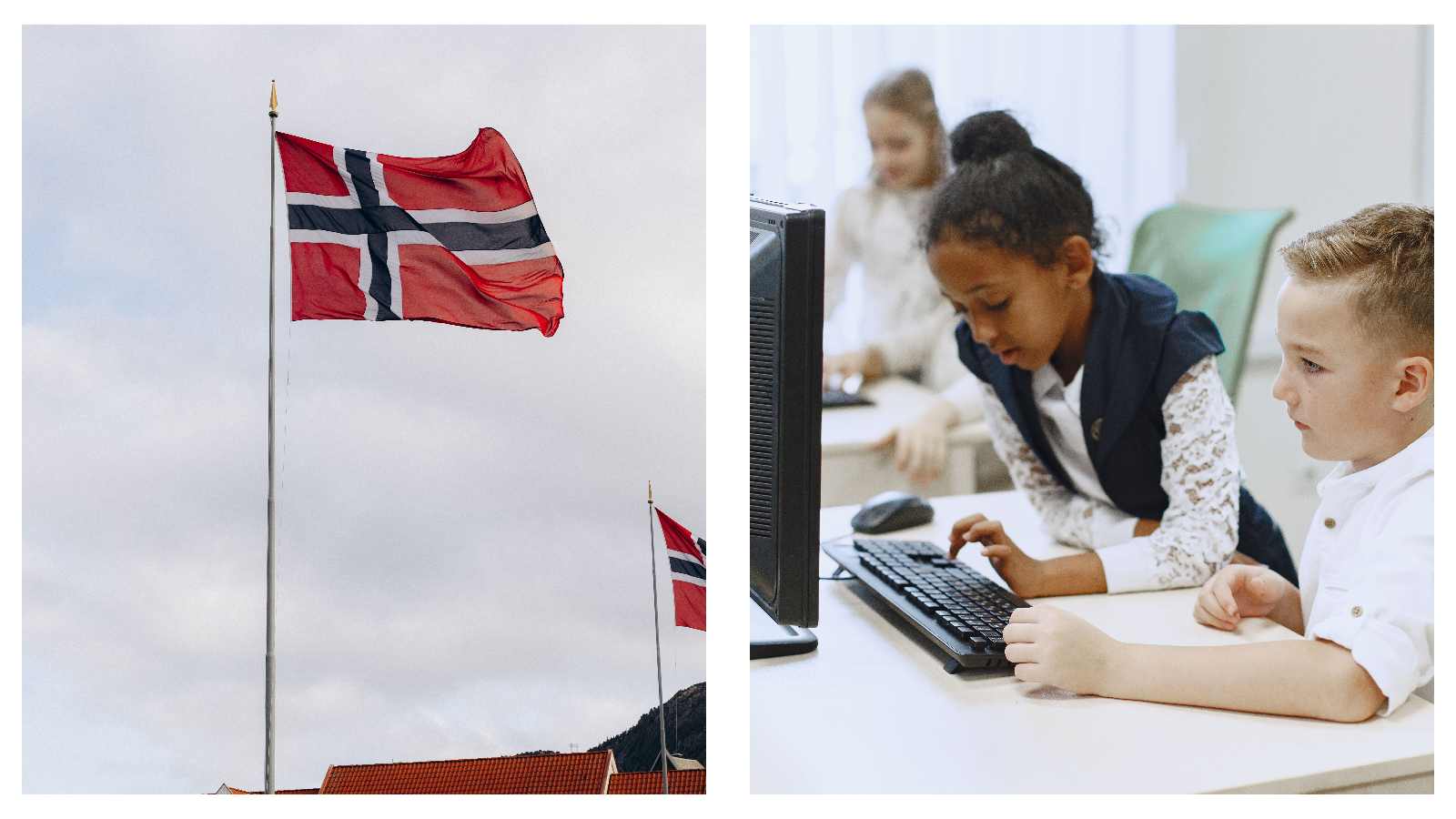
Norway is set to prohibit the use of generative artificial intelligence (AI) tools in elementary schools nationwide as part of broader efforts to protect students’ foundational skills.
Under the new standards, elementary students aged six to 13 will be strictly prohibited from using AI tools as a “general principle,” while those in lower secondary school aged 14 to 16 can use such tools under teachers’ supervision.
Meanwhile, students aged 17 to 19 in upper secondary school must learn to use AI appropriately to ensure their preparedness for further education and a technology-driven job market.
The near-total ban on AI use will be enforced from the upcoming academic year starting in late August, marking a major shift for the country, which was previously known for its digital approach to education.
More books, less gadgets
The government also said that Norway will introduce legislation to financially support the use of more books and other physical learning materials in classrooms nationwide.
This marks a notable shift for the Scandinavian country, which began adopting computers in the 1990s and integrated tablets into schools from 2010 onwards, reducing students’ dependence on books and handwritten work.
By returning to more traditional learning methods, Norway hopes to help students develop stronger long-term memory, as studies have shown that writing by hand engages parts of the brain differently from typing on a keyboard.
Earlier, the government allocated NOK20 million in the 2026 national budget to support the Reading Boost Initiative, which aims to further improve students’ reading skills, as cited by R.I.S.E magazine.
YOU MAY ALSO LIKE: United Kingdom to join Australia in banning social media for minors, says Keir Starmer

Hopes to improve learning as skills decline
Norwegian Prime Minister Jonas Gahr Stoere expressed optimism that these significant moves will help students improve their basic skills as increasing AI use risks causing them to skip “important steps” in their education.
“The most important thing in school is that our children learn to read, write and do mathematics,” he said during a press conference last week.
The moves came after the government observed that Norwegian pupils’ reading abilities had severely declined over the past few years.
In fact, 15,000 students reportedly leave primary school without being able to read properly, representing a major setback for a country once known for producing some of the world’s strongest readers.
Government plans to restrict social media use
The announcement came after Stoere said in April that the government planned to pass legislation prohibiting children under the age of 16 from using social media, joining a growing number of countries restricting young people’s access to digital platforms.
“We are introducing this legislation because we want a childhood where children get to be children. Play, friendships and everyday life must not be taken over by algorithms and screens,” he said in a statement.
Stoere added that the bill is expected to be tabled in parliament by the minority Labour government by the end of 2026, though he did not disclose which applications would be targeted.
If passed, Oslo will join other European countries such as Denmark, France and Spain, which have also announced plans to introduce social media restrictions for minors.
Smartphone ban a success
These plans emerged after Norway prohibited smartphone use in schools in 2024 following a decline in education test scores.
According to a study on Norwegian middle schools by researcher Sara Abrahamsson at the Norwegian Institute of Public Health, the smartphone ban significantly improved students’ academic performance, as cited by NBC 24.
The study also found that the move improved students’ mental health by nearly 60 per cent and reduced bullying cases, with the strongest improvements observed among female pupils and those from lower socio-economic backgrounds.
However, whether AI and social media restrictions will have a positive long-term impact on students remains uncertain, though the plans signal a shift in the government’s efforts to balance digital and traditional learning methods.
With this balanced approach, Norway hopes to create critical thinkers who are shaped not by prompts on AI chatbots, but by real-world experiences amid continued digital advancement.
READ NEXT: Apple reveals new Siri AI, outlines changes to operating systems
 Elan Castanares
  Newsjustnews writers
  Mary Mae Balasanos