

Ramadan commences on different dates across the Muslim world this year, with Saudi Arabia and Gulf nations starting on Wednesday (February 18), while other countries begin on Thursday (February 19).
Saudi Arabia leads with Wednesday start
Saudi Arabia has officially declared Wednesday as the first day of Ramadan, following the successful sighting of the new crescent moon (hilal) by teams of trained observers deployed across the kingdom.
The Supreme Court verified the reports from these observers, confirming that the moon was visible.
It highlighted that the appearance of “hilal” is a determination that carries significant weight as the birthplace of Islam and home to the religion’s holiest sites in Mecca and Medina.
In line with the announcement, the kingdom has initiated preparations to support those observing the fast, including adjusting working hours for government offices and private businesses.
Gulf countries, including Bahrain, Kuwait, Qatar, and the United Arab Emirates, have chosen to align their Ramadan start date with Saudi Arabia.
Other Middle Eastern nations opt for Thursday beginning
Meanwhile, religious authorities in Jordan, Oman, Syria and Turkey have each confirmed that Ramadan will begin on Thursday.
Their decisions were based on the determination that the crescent moon was not visible on the evening Saudi Arabia made its announcement.
Oman’s Main Committee for Moon Sighting released a formal statement explaining its conclusion.
They noted that both visual observations across the sultanate and astronomical data indicated the moon was too low above the horizon and too close to the sun to be seen on Wednesday evening.
The committee confirmed that the moon would be observable the following day, justifying the one-day delay.
In Jordan, the Ministry of Awqaf (Religious Endowments) conducted its own observations before announcing the Thursday start.
Syria’s Grand Mufti and Turkey’s Presidency of Religious Affairs also reported no confirmed sightings within their respective borders, leading to their decisions to begin the holy month a day later.
READ MORE: Property co-ownership among same-sex couples allowed under Philippine law

Asian Muslim communities follow diverse timelines
Across Asia, which is home to more than 60% of the world’s Muslim population, start dates for Ramadan mirror the global pattern of variation.
Indonesia (the world’s most populous Muslim-majority country), Malaysia and Pakistan have opted to follow Saudi Arabia’s timeline.
This coordination supports cross-cultural and economic ties between these Asian nations and the Gulf region, as well as facilitating religious practices for families with members living across borders.
Several South and West Asian nations, including parts of India, Lebanon and Yemen, have announced they will begin Ramadan on Thursday.
In India, the All-India Muslim Personal Law Board and regional moon sighting committees made their determination based on local observations and astronomical calculations.
In the Philippines, regional Muslim councils have made independent decisions based on their own observations.
The Bangsamoro Autonomous Region in Muslim Mindanao indicated that the first Tarawi (evening prayer in Ramadan) would start on Wednesday night, while the actual fasting begins at the following dawn on Thursday.
This allows local groups to maintain traditions while ensuring unity within their own regions.
Variation in timing reflects traditional and practical considerations
The split in start dates highlights the longstanding practice within Islam of determining lunar months based on local moon sightings.
While some countries prioritise direct visual observation as a matter of tradition, others incorporate astronomical calculations to supplement their assessments.
This diversity in approach has been a feature of Ramadan observance for centuries, reflecting the faith’s ability to adapt to different contexts while remaining rooted in core teachings.
Importantly, the variation does not indicate division within the Muslim community.
Instead, it underscores how local practices can coexist within a global faith, with believers respecting each other’s determinations while recognising the shared purpose of the holy month.
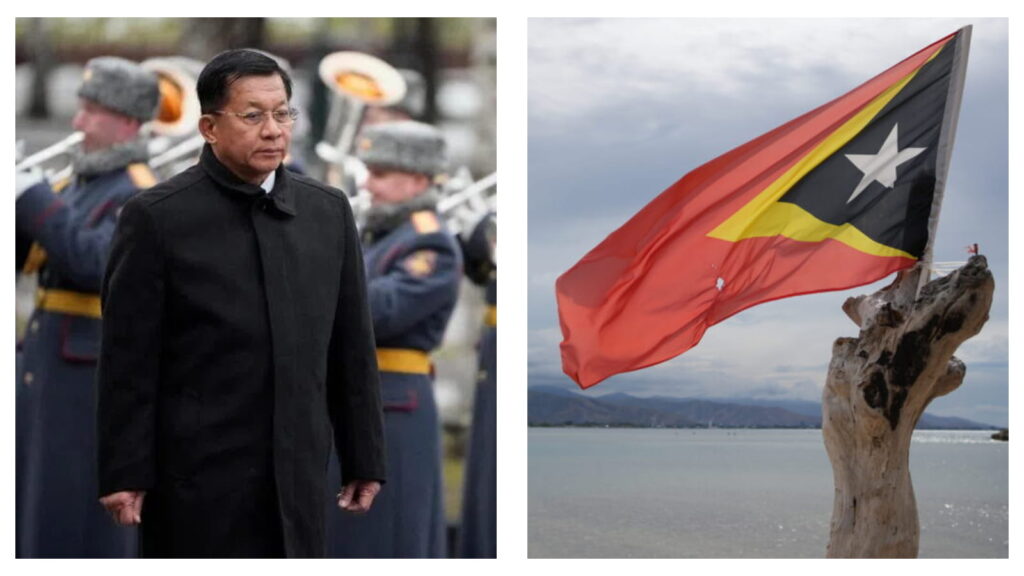
YOU MAY BE INTERESTED IN: Timor Leste becomes first ASEAN member state to probe Myanmar junta’s ‘crimes’
Shared faith and traditions unite the global community
Ramadan is the ninth month of the Islamic lunar calendar, shifting about 11 days earlier annually and lasting 29-30 days.
It commemorates the revelation of the Quran to Prophet Muhammad and is considered the holiest month in Islam.
Regardless of when it begins, Muslims across the globe observe the same foundational practices that define the sacred period.
– Fasting: Abstaining from food, water, smoking, and intimate relations from sunrise to sunset, as a means of cultivating self-discipline, empathy for those in need, and spiritual focus.
In many Muslim countries, this includes adapting fasting schedules to accommodate tropical climates and longer daylight hours.
– Prayer: Participating in the five daily prayers, as well as attending nightly Tarawih prayers in mosques.
– Charity: Emphasising giving to those less fortunate, through both mandatory zakat contributions and voluntary sadaqah.
This often includes distributing rice, dates, and other essential goods to low-income families, as well as organising community iftar meals that welcome people of all faiths.
– Reflection: Engaging in increased study of the Quran and reflection on its teachings, as well as seeking forgiveness and strengthening relationships with family, neighbours and community members.
Muslim communities also incorporate local cultural traditions into their observances, such as decorating homes with lanterns or preparing regional specialities for iftar.
READ NEXT: Crime and punishment: What is behind the Netherlands’ empty prisons?
 Ciara Mina
  Rosemarie Zamora
  Jacinth Banite