
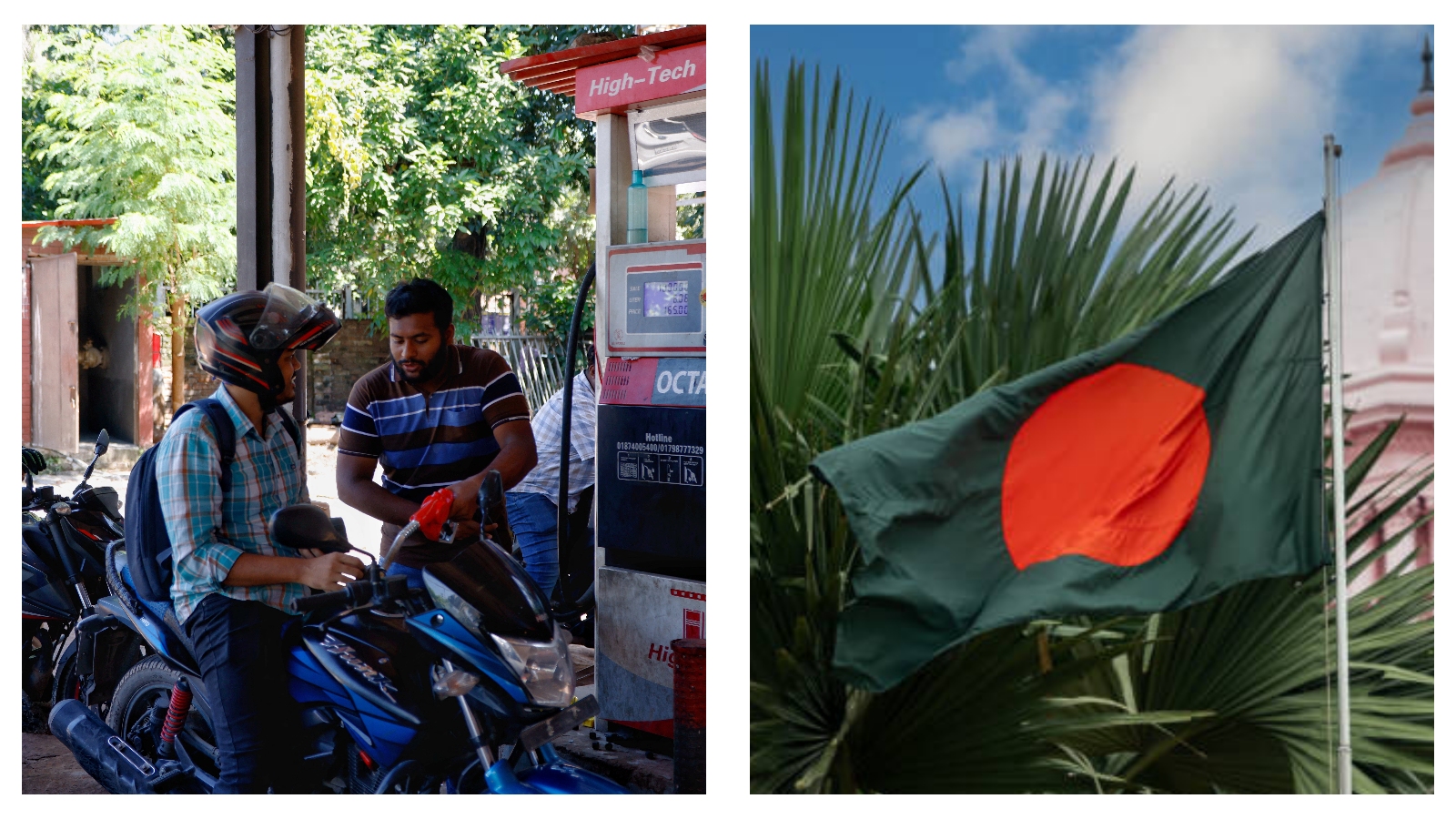
On Monday, September 21, the Bangladeshi government raised prices of four major petroleum products by a record BDT20 ($0.16) per litre, driven by the intensifying conflict in the Middle East.
This marked the third increase in the fuel-reliant South Asian country in seven months following adjustments in April and June.
Diesel rose to BDT135 ($1.09) per litre, octane to BDT165 ($1.34), petrol to BDT160 ($1.30), and kerosene to BDT155 ($1.26), according to the latest fuel price regime announced by the Ministry of Power, Energy and Mineral Resources.
Energy authorities attributed the increase to higher global fuel prices, prolonged disruptions in the Strait of Hormuz, and rising shipping costs and insurance premiums.
No other option
The government said the fuel price increase was aimed at preventing fuel smuggling, reducing losses at the state-owned Bangladesh Petroleum Corporation, and easing pressure on energy subsidies.
Dr. Zahed Ur Rahman, information and broadcasting affairs adviser to Prime Minister Tarique Rahman, acknowledged that the move would create more hardship for people already struggling with soaring costs, but insisted that it was necessary, given the volatility of the global oil market.
“Despite the upcoming local government elections, this decision was taken out of necessity, keeping the country’s economic stability in mind rather than political interests,” he told reporters at the Secretariat on Tuesday.
On Monday, State Minister for Power, Energy and Mineral Resources Anindya Islam Amit apologised to the public for yet another fuel price increase this year.
He also insisted that prices would be revised downwards once the situation normalises in the Middle East.
“Making such a decision is extremely difficult. I entered politics with the intention of easing people’s hardships,” Amit told reporters, as quoted by Dhaka Tribune.
“As a political worker, I understand the difficulties this will cause people. For that reason, I sincerely apologise to the people.”
ALSO ON NJN: Global leaders gather as 81st UNGA general debate opens
Inflationary pressure
Dr Selim Raihan, an economist and professor at the University of Dhaka, said the move would raise costs of transportation and supply of goods, and lead to inflationary pressure.
“The government’s strategy for managing this pressure remains unclear,” he said in a Facebook statement translated to English.
“Furthermore, there is a lack of discussion regarding institutional weaknesses and the excessive tax burden within the energy sector.”
The increase, according to Raihan, would widen the fiscal deficit and push up government borrowing costs.
He also warned that private investment in the country is “facing significant stagnation” that may create uncertainty over future economic growth and employment.
READ NEXT: French, Japanese air forces participate in joint exercises
 Levi Mora
  Wendellyn Mateo
  Geoffrey H. Latayan