
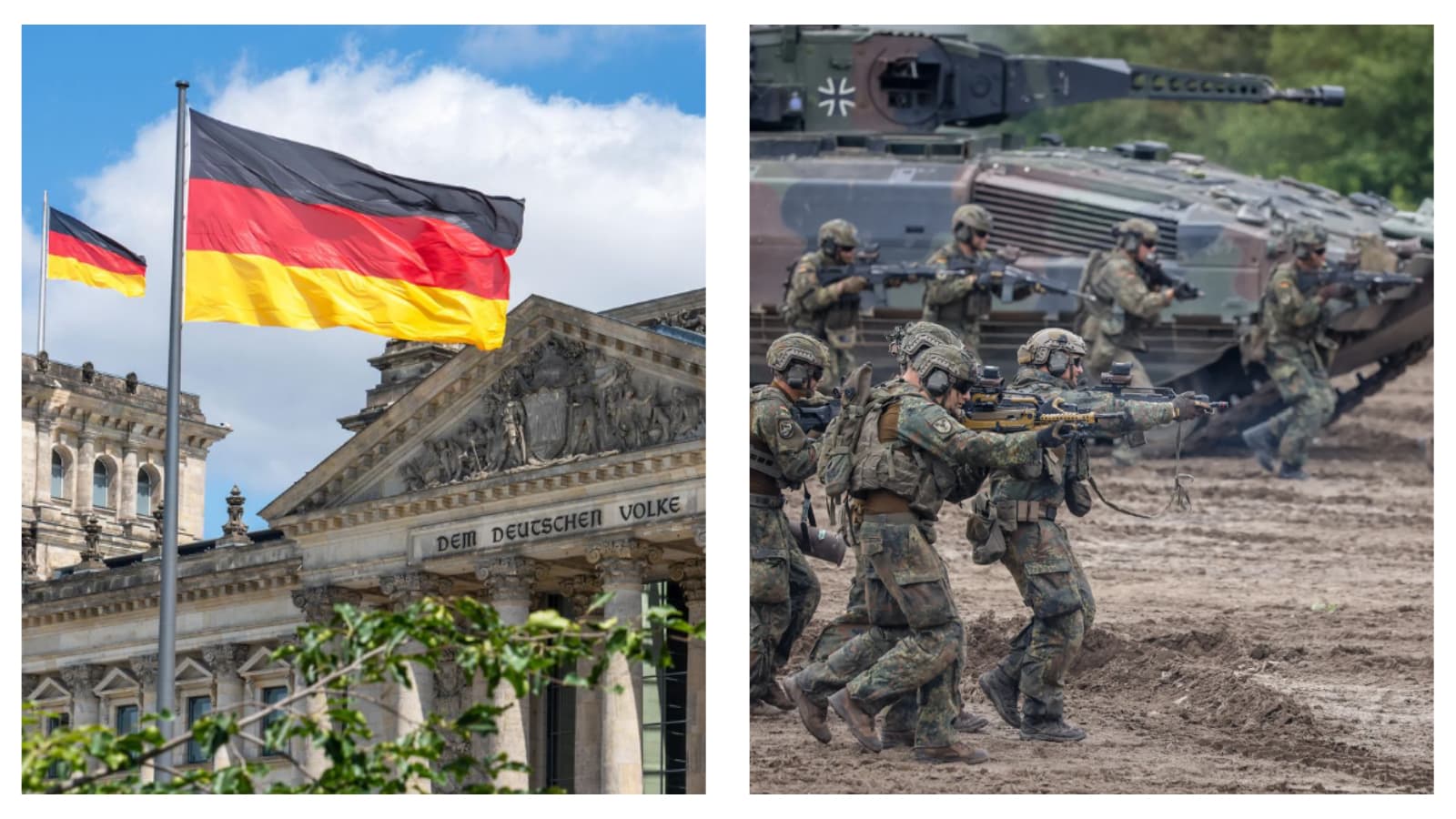
The Bundeswehr (German armed forces) has recorded unprecedented defence spending this year as Germany rises to become the fourth-largest spender on military acquisitions in the world.
With Berlin now only behind the United States, Russia and China in defence spending, the development highlights an emerging security reality in Europe amid the Ukraine-Russia conflict and scepticism of Washington’s commitment to its European allies.
Budget hike
In a report by the Stockholm International Peace Research Institute (SIPRI), Germany attained its largest military spending since 1990 by expanding its budget for military assets by 24 per cent.
The budget topped $114 billion, surpassing the 2 per cent benchmark for military spending set by NATO.
The report added that spending focused on modernising the Bundeswehr’s capabilities against ground, sea and aerial threats.
This includes the acquisition of Leopard 2A8 main battle tanks, U-212CD stealth submarines, Patriot PAC-3 air defence batteries and long-term 155mm artillery ammunition production.
These acquisitions show Berlin’s willingness to transform its military strategy from relying on a collective response with NATO member nations to increasing its armed forces’ readiness to engage threats on their own.
The investment in heavy armour, air defence systems and artillery ammunition would also theoretically allow Germany to deploy its military brigades in Eastern Europe.
READ MORE: Germany approves intel reforms to fight cyberattacks, terrorism
German rearmament
One of the strongest democratic nations in Europe, Germany is seen as an economic leader on the continent, having transformed itself into a premier financial hub after the fall of the Berlin Wall.
Berlin’s shift to a more active role in Europe’s military affairs now reflects the intention of NATO nations to signal to Russia that the alliance is ready to invest in territorial defence.
US president Donald Trump has repeatedly called on Washington’s European allies to raise their military spending to 2 per cent, which he says is an obligation that all NATO countries should abide by.
And given Germany’s robust industrial manufacturing capacity and its cutting-edge technology, the country is undoubtedly an emerging European military power.
YOU MAY ALSO LIKE: UN conducts second informal poll in search for next chief
 Kamille Q. Cabreza
  Jheruleene Anne Ramos
  Wendellyn Mateo