
As passengers from the hantavirus-affected cruise ship return to their home countries, governments are now confronting a rapidly evolving public health challenge that extends far beyond the vessel itself.
From Europe to North America and beyond, health authorities are implementing strict monitoring, quarantine protocols, and medical screening as returning travelers are assessed for potential infection.
Weeks after the first outbreak of the virus on the ship, authorities are now focusing on monitoring passengers and preventing the rapid spread of the virus in communities.
What we know so far about the virus
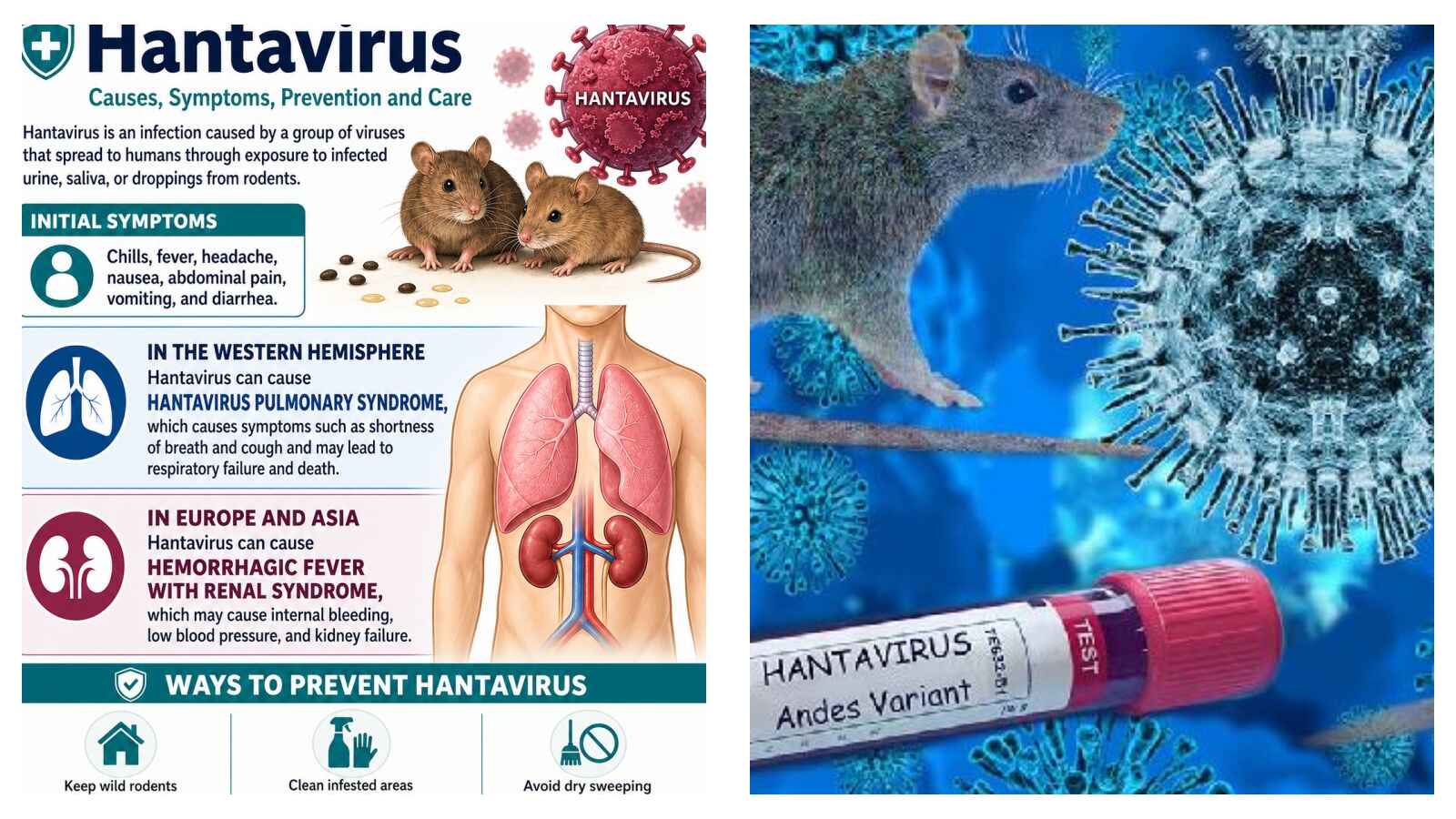
According to the US Centers for Disease Control and Prevention (CDC), hantavirus is a rare virus that is transmitted through contact with infected rodents such as rats and mice, particularly through exposure to their urine, droppings, or saliva.
The infection can also be transmitted through a rodent bite or scratch.
Symptoms of the virus include fever, muscle aches, headache, fatigue, nausea, or digestive discomfort, while more severe symptoms include shortness of breath, coughing, chest pressure, and rapid breathing.
WHO allays fears as it confirms public health risk remains low
Amid fears of a possible pandemic similar to COVID-19, the World Health Organization (WHO) said the global public health risk for hantavirus remains low.
“There is no sign that we are seeing the start of a larger outbreak,” said WHO Director-General Tedros Adhanom Ghebreyesus during a joint conference on Tuesday with Spanish Prime Minister Pedro Sánchez after overseeing the evacuation in the Canary Islands.
Despite this, Tedros said there is a possibility that the situation could change, adding that more cases of hantavirus are possible in the coming weeks.
According to the latest data, 11 hantavirus cases have been reported among people on the cruise, including three deaths.
Among the surviving patients, seven were confirmed cases, while the eighth was a probable case.
A report from Agence France-Presse said those who tested positive for the virus were from the US, the UK, France, Spain, Switzerland, and the Netherlands.
As cases of hantavirus have been confirmed across several countries, it is important to examine how different nations are responding to the outbreak.
READ MORE: Vietnamese firm exports 1.1 million LSD vaccine doses to South Korea

United Kingdom
Authorities in the UK ordered the affected passengers to remain in hospital for 72 hours for medical checks and regular testing before being allowed to return home, where they are also required to self-isolate for 42 days.
According to Public Health Minister Sharon Hodgson, no passengers are showing symptoms of the virus, but they still need to be closely monitored “as part of a precautionary isolation period.”
United States
In the United States, the Department of Health and Human Services (HHS) said returning American passengers will undergo a series of health assessments in the coming days.
Following these evaluations, each individual will be given a tailored care plan indicating whether they should isolate at home or remain in a medical facility, depending on their health status and living conditions.
According to guidance from the Centers for Disease Control and Prevention (CDC), those exposed are advised to self-isolate and monitor their health for 42 days, including taking their temperature once daily throughout the observation period, the BBC reported.
The Netherlands
Similar to the UK’s guidelines, the Netherlands also asked the affected passengers to undergo medical triage by trained healthcare professionals.
Passengers are also required to self-isolate and monitor their symptoms for six weeks.
Authorities said those in isolation will also be contacted regularly by health officials “to ensure that any symptoms are identified and appropriate care can be provided promptly.”
Spain
Meanwhile in Spain, Health Minister Mónica García said that 14 people are undergoing mandatory quarantine at a military hospital.
Of this number, one passenger has provisionally tested positive for the virus, and remains isolated, asymptomatic, and in good condition, García said.
France
France has reported its first case of hantavirus after a French national developed symptoms.
Currently, the patient is isolating in Paris, with authorities saying her condition is deteriorating.
Officials also conducted contact tracing.
Meanwhile, all five citizens who were aboard the ship have been placed in strict isolation until further notice.
Germany
Four Germans who arrived on Monday were also put in an isolation unit at Frankfurt University Hospital and have since returned to their homes in Berlin, Baden-Württemberg, Bavaria, and Schleswig-Holstein.
Health authorities said they are closely monitoring their citizens for symptoms.
Canada
Canadian passengers who have returned were also ordered to self-isolate for at least 21 days as a precaution, with a possibility of extending this to 42 days, which is the virus’ incubation period.
Switzerland
One Swiss passenger has tested positive for hantavirus and is now receiving treatment. His wife, who has shown no symptoms, is also self-isolating as a precaution.
Argentina
In Argentina, where the ship began its journey, authorities are investigating how the virus spread and whether it really originated in the country.
The WHO earlier said that the first two cases had “travelled through Argentina, Chile and Uruguay on a bird-watching trip which included visits to sites where the species of rat known to carry the virus was present.”
READ NEXT: Philippines, Paraguay move to ease travel with visa-free agreement
 Elan Castanares
  Newsjustnews writers
  Mary Mae Balasanos