
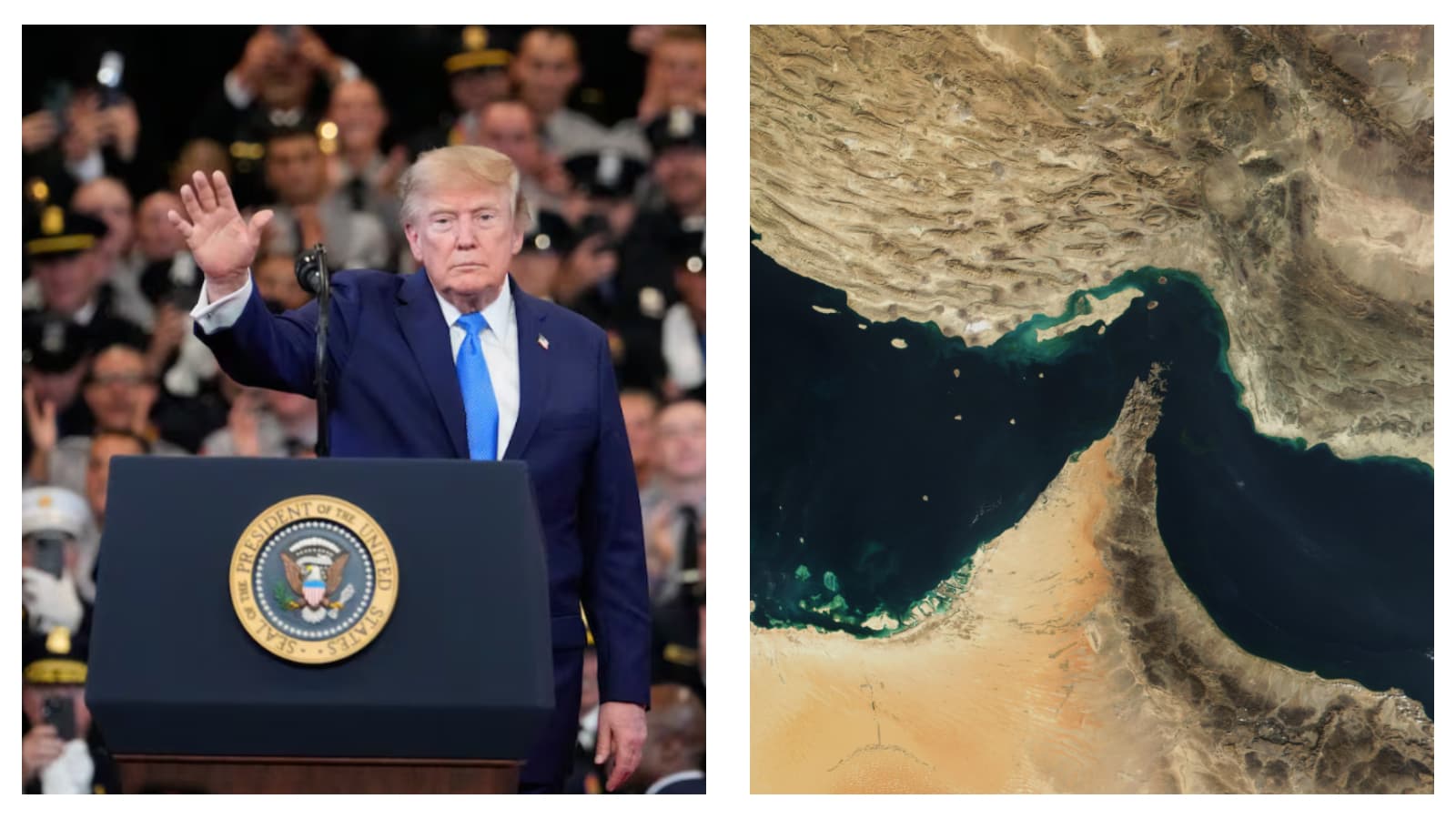
Iranian officials have rejected United States President Donald Trump’s claims over the Strait of Hormuz, asserting Tehran’s authority over the strategic waterway and warning Washington against further “miscalculation”.
Trump threatened on Friday to declare the Strait of Hormuz “a territory of the United States” during his visit to a police academy in New York, The Guardian reported.
The remarks came amid continuing tensions between Washington and Tehran over the strategic waterway, where months of conflict have severely disrupted commercial shipping.
The Strait of Hormuz is a critical route for global energy supplies, linking the Persian Gulf with the Gulf of Oman and the Arabian Sea.
Before the war, the route handled around one-fifth of global oil consumption.
Iran rejects Trump claim
In a post on X, Iranian Deputy Foreign Minister for Legal and International Affairs Kazem Gharibabadi rejected Trump’s remarks, saying the Strait of Hormuz could not be taken through military or political pressure.
“Trump has said that after Iran’s defeat, he will soon announce the Strait of Hormuz as US territory,” Gharibabadi wrote.
“The Strait of Hormuz cannot be seized through a tweet, nor with an aircraft carrier, nor by issuing an order, nor through an election speech.
“Iran is not intimidated by threats, nor will it be subdued by displays of power.”
Gharibabadi then stressed that decisions over closing or reopening the waterway would be made by Iran.
“Accept reality once and for all: you suffered strategic and heavy defeats,” he added.
“The Strait of Hormuz was, is, and will remain Iranian.
“This strait will only be closed and reopened according to Iran’s decision.
“As long as you refuse to accept the reality of defeat and abandon your delusions, Iran will continue imposing a blockade.”
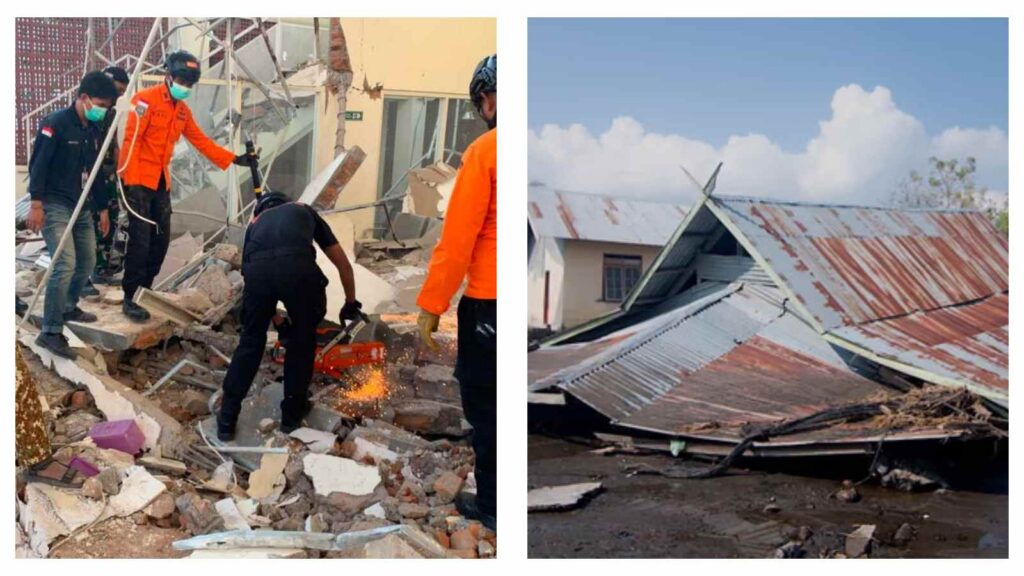
READ MORE: Indonesia island reels from earthquake aftermath, as displaced locals seek urgent help
Araghchi warns of ‘miscalculation’
Iranian Foreign Minister Seyed Abbas Araghchi separately warned Washington against what he described as intelligence failures and another major miscalculation involving the Strait of Hormuz.
“The US has long miscalculated due to intelligence failures,” Araghchi stated.
“Case in point: The war on Iran.
“Now, an even bigger miscalculation on the Strait of Hormuz.
“Worse than fake news is fake intelligence. Be careful.”
YOU MAY ALSO LIKE: Manila slams Beijing over arrest of over 100 Filipinos

Tensions deepen economic strain
The impact of the war in the Middle East has been felt far beyond the region, particularly in developing economies that rely heavily on oil shipments through the Strait of Hormuz, where shipping has been severely disrupted since the conflict broke out on February 28.
In the Philippines, drivers and commuters have felt the impact through higher fuel prices as disruptions to global oil supplies have pushed up the cost of gasoline and diesel.
According to a report from the Philippine News Agency on August 14, fuel prices are expected to rise by more than PHP4 per litre.
Bangko Sentral ng Pilipinas also warned that the Middle East conflict has worsened the country’s inflation outlook, with higher global oil prices increasing costs across the economy.
In its June 2026 Monetary Policy Report, released in July, the central bank said the inflation outlook had “deteriorated and significantly shifted upward” due to the conflict, citing higher global oil and non-oil prices and the depreciation of the peso.
READ NEXT: Lee Jae-myung revives peace push with North Korea, links talks to nuclear curbs
 Ian Trinidad
  Eugene Nicklaus S. Laqui
  Newsjustnews writers