
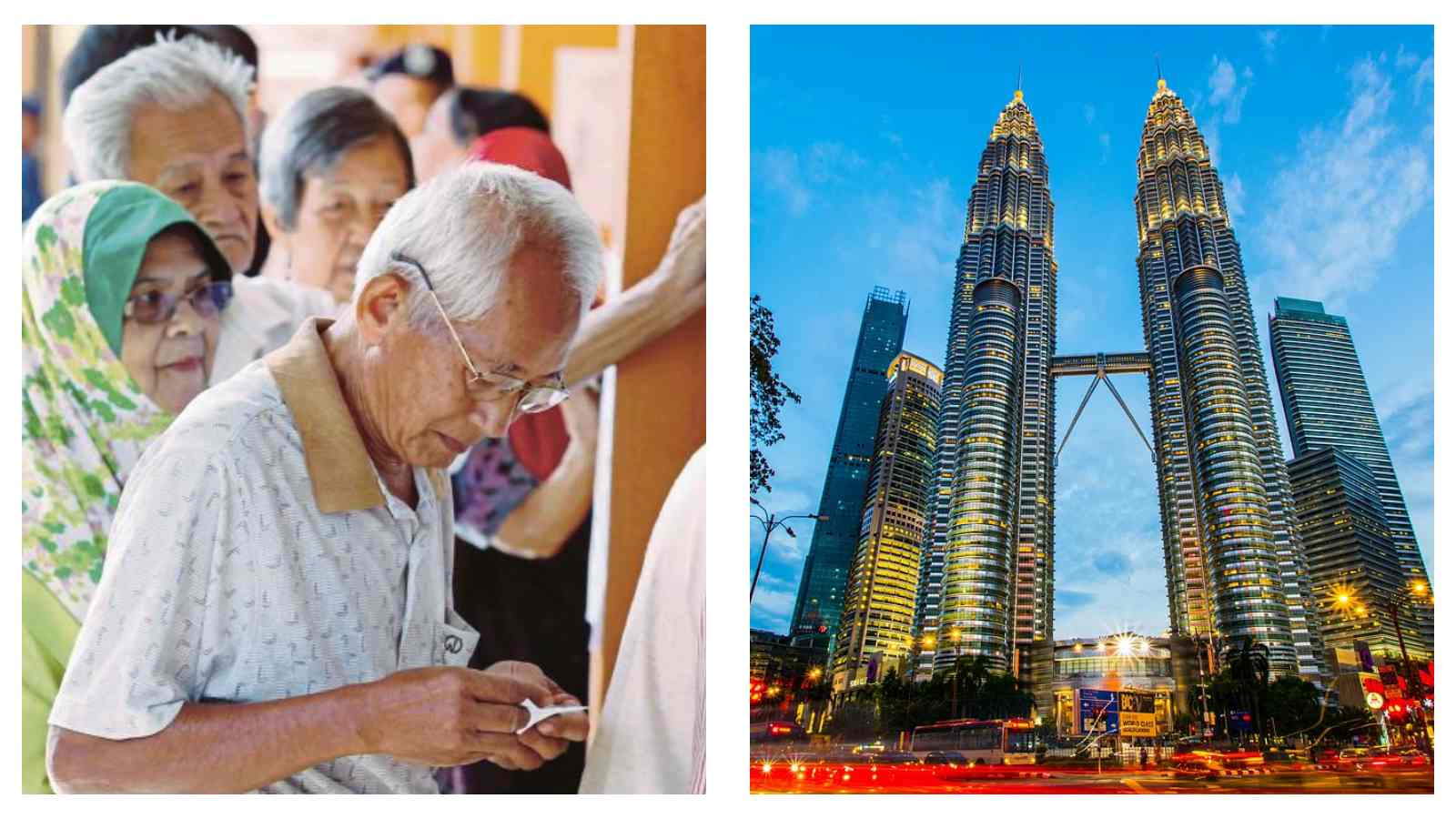
Malaysia has seen a significant increase in the number of centenarians as the population continues to age, according to the recent figures shared by the Department of Statistics Malaysia (DOSM).
DOSM chief statistician Datuk Mohd Uzir Mahidin noted that there were 4,287 citizens aged 100 and above as of June, with 2,761 of them being women and 1,526 men, signalling an increase in longevity, The Star reported.
Among the federal states, Johor recorded the highest proportion of centenarians at 14.6%, followed by Sabah at 14.4% and Selangor at 12.9%.
If this upward trend continues, Mohd Uzir believes that the population aged 80 and above is expected to reach at least 498,700 by 2030, marking a significant demographic shift.
Malaysians’ median age on the rise
Beyond the rising number of centenarians, the United Nations “World Population Prospects: The 2024 Revision” also showed that the country’s median age is projected to increase from 29.7 years in 2020 to 40.7 years in 2060.
This figure would place Malaysia among the faster-ageing countries in Southeast Asia, although it is expected to lag behind neighbouring nations such as Singapore, Vietnam and the Philippines.
Singapore is expected to witness the region’s sharpest increase in median age, surging by 21.6 years to reach 56.1 by 2060.
The increase in median age reflects the combined effects of longer life expectancy and declining birth rates. Malaysia currently has a life expectancy of 75 years at birth, while birth rates continue to fall.
READ ALSO: Malaysia PM calls for higher defence spending amid Sabah, regional concerns

Government urged to do more
Malaysian Healthy Ageing Society vice president Dr Wong Teck Wee attributed the surge in the number of centenarians to “lifestyle, social support and healthcare access” rather than genetics, reflecting the country’s alignment with the global trend of increasing longevity.
However, Wong emphasised the need for the federal government and other relevant authorities to improve elderly-friendly healthcare and infrastructure and to formulate more campaigns aimed at senior citizens, following the examples of Japan and Singapore.
Meanwhile, research officer Chai Sen Tyng from Universiti Putra Malaysia’s Malaysian Research Institute on Ageing called for a change in perceptions of ageing.
“Adding years to life is not the same as adding life to years. We need to rethink how we approach education, employment, healthcare and social protection when living long becomes the norm,” he said.
Quality of life matters
Malaysia Coalition on Ageing chairman Cheah Tuck Wing agreed with other experts that the federal government must take action not just to increase people’s lifespans, but also to improve their quality of life.
Cheah expressed optimism that this approach, coupled with practising a healthier lifestyle, such as eating healthy food and exercising regularly, would help the elderly not just live longer, but also live happily and contentedly.
“With technology and better preventive care, Malaysia’s centenarian count will keep growing, but the real measure of progress is ensuring Malaysians not only live longer, but live well,” he said.
“There is no point living long if you are bedridden or suffering from terminal illness. A healthy lifestyle from young determines future health.”
Malaysia is projected to become an “aged nation” by 2048, when the proportion of citizens aged 65 and above reaches 14 per cent of the total population.
The country officially became an ageing nation in 2021 when over seven percent of the total population was aged 65 and above, highlighting a major demographic change.
READ NEXT: Kim Jong Un’s sister shuns adjustments on US-South Korean ‘war games’
 Kamille Q. Cabreza
  Wendellyn Mateo