

Five years have passed since the Myanmar military seized power from an elected civilian government, igniting a brutal civil war that is without enough audience but with abounding victims.
Myanmar’s armed forces, collectively known as the Tatmadaw, staged a coup d’état on February 1, 2021, citing widespread voting fraud during the November 2020 general elections as justification.
The coup transpired a day before newly-elected government officials, dominated by National League for Democracy (NLD) members, were to be sworn in to Parliament.
Tatmadaw-allied Myint Swe assumed the role of Acting President, declared a state of emergency and later transferred full government authority to Senior General Min Aung Hlaing, the Commander-in-Chief of Defence Services at the time.
Succeeding actions from the military include the arrests of NLD senior officials, including President Win Myint and State Counsellor Daw Aung San Suu Kyi.
Both remain in junta custody today, facing various criminal charges, which independent analysts regarded as “politically motivated.”
The Spring Revolution
The putsch triggered a wave of resistance across the country, emerging into what today is called the Spring Revolution, largely participated in by the youth and pro-democracy activists.
As part of the nationwide movement, various ethnic armed organisations (EAOs) fighting for autonomy in their respective states and regions revoked their commitment to a 2015 National Ceasefire Agreement, and began retaking arms to fight the military.
They joined forces with other local armed groups to seize control over junta-held territories and eventually topple the military government.
Among the major forces on the battlefield is the People’s Defence Force (PDF), the armed wing of the shadow National Unity Government (NUG), the main opposition in exile, consisting of former NLD lawmakers.
There is no official data on the number of liberated areas across Myanmar as the Spring Revolution continues.
But according to an investigation by the BBC, PDF and EAOs control 42 per cent of the country’s territory as of 2024, while the Tatmadaw has 21 per cent.
With the resistance side seemingly making significant advances on the ground, the military has responded with overpowering tactics of enforcing a conscription law, targeting civilians with airstrikes, jailing protesters, censoring the press and staging a contentious election.
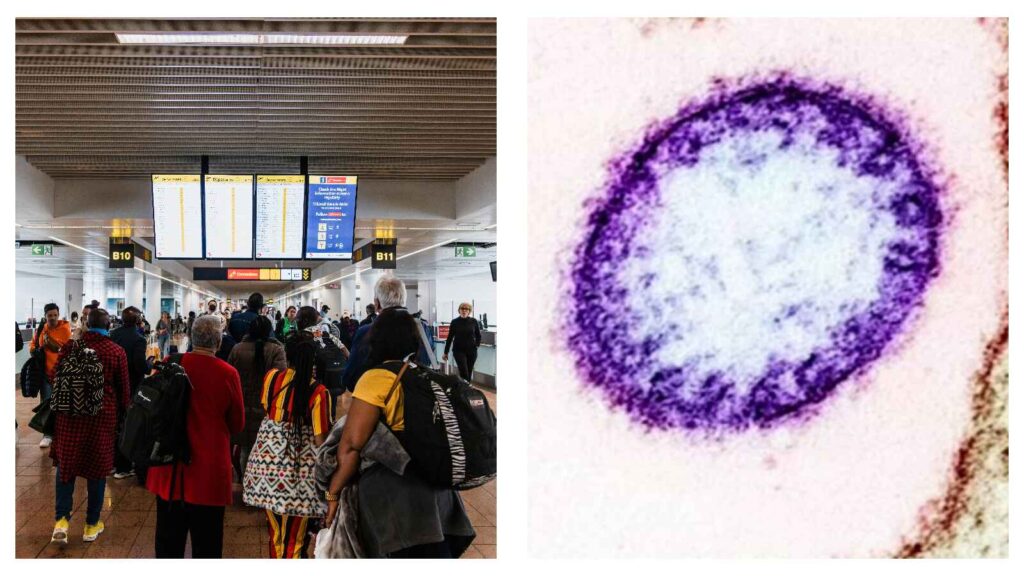
READ MORE: Asian countries tighten airport health checks amid Nipah virus threat
‘Sham’ election
With the majority of opposition figures either exiled or jailed, and amid persisting armed clashes in major parts of the country, the Tatmadaw administration orchestrated multi-party elections in three phases between December 28, 2025, and January 25, 2026.
The military-backed Union Solidarity and Development Party (USDP) claimed a landslide victory in the voting, grabbing four out of five seats in the Parliament, according to official results.
In total, the party won 339 of the 420 seats in the two houses of Parliament, according to election commission results tallied by Agence France-Presse.
Various rights groups and the international community have denounced the elections as “sham,” intended only to legitimise the military government and prolong its violent reign in Myanmar.
“The military is seeking to entrench its rule-by-violence after forcing people to the ballot box,” United Nations rights chief Volker Turk said in a statement on January 30.
“This couldn’t be further from civilian rule,” he added.
Meanwhile, the junta insists its phased month-long polls will return power to the people, with Aung Hlaing promising a swift transition of government as early as March.
YOU MAY BE INTERESTED IN: France to launch sovereign alternative to Microsoft Teams and Zoom by 2027

Rallying behind Myanmar people
As the Myanmar putsch marked its fifth year on February 1 with no change in sight, several foreign governments have reiterated their support for the people of the junta-ruled nation.
The Foreign Ministers of Canada, Australia and the United Kingdom issued separate statements on January 30 and 31.
In support of the persisting fight for democracy in Myanmar, with mentions of “severe humanitarian crises” and violence against civilians in the Southeast Asian country.
“Canada condemns the Myanmar military regime’s violations of human rights – including strikes on civilians, schools, hospitals and places of worship – which continue to escalate,” Canadian FM Anita Anand said in a statement.
“By overthrowing Aung San Suu Kyi’s democratically elected government, the will of the people was overturned and their political freedom taken away,” reads another statement from Britain’s Yvette Cooper.
Meanwhile, Australia’s Penny Wong put emphasis on the underlying impacts of the military government.
Wong said that since the 2021 coup, the Myanmar economy “has contracted significantly, and transnational and serious organised crime has flourished, threatening regional stability.”
“We will continue to judge the Myanmar military by its actions,” she stressed.
READ NEXT: Rising dark fleet activity observed off Malaysian waters: UANI
 Carmela Calling
  James Mario Ajero