
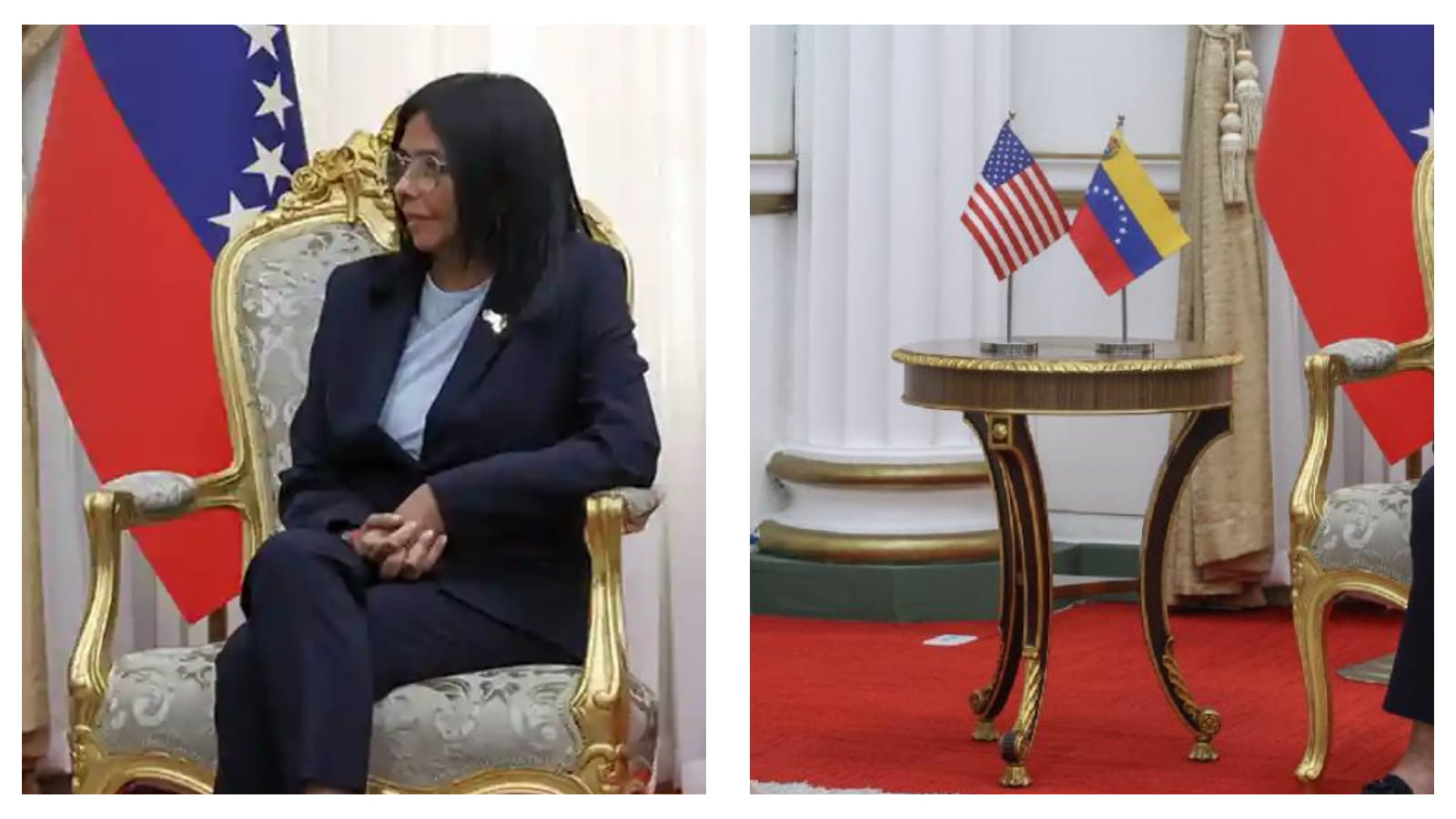
After the rise of Delcy Rodriguez as Venezuela’s interim leader, she vowed to deliver a consequential and swift transformation to her troubled nation, as part of her agreement with the United States.
Amongst the changes the former deputy of ousted President Nicolas Maduro has promised is the release of hundreds of political prisoners and the revival of the diplomatic ties between Caracas and Washington.
Rekindling US-Venezuelan relations a priority
The Venezuelan and US governments have shown mutual seriousness in bringing back their close communications and breathing life into their severed bilateral ties.
With the arrival of the latter nation’s envoy tasked with re-establishing Washington’s diplomatic office in the oil-rich nation.
US Ambassador Laura Dogu recently arrived at Maiquetia Airport in Caracas, saying that “My team and I are ready to work,” which could spell a more open dialogue between the two nations.
Venezuela and the US cut their international ties back in February 2019 after US President Donald Trump, during his first term, declared his support for the then-Venezuelan opposition leader Juan Guaido, who was gunning for an interim leadership.
Maduro then recalled all Venezuelan diplomatic officials from the US and ultimately closed its embassy, with the US doing the same as a tit-for-tat move.
With Dogu’s landing in Caracas, Internal Minister Diosdado Cabello has expressed optimism that both nations will be transparent and cooperative in dealing with the narcoterrorism allegations slapped against the abducted Maduro and his wife Cillia Flores.
READ MORE: France to launch sovereign alternative to Microsoft Teams and Zoom by 2027
Rodriguez eyes waking up Venezuela’s sleeping oil sector
The country’s interim president has signed a monumental bill that will give foreign investors further opportunities to place their bets on Venezuela’s ailing oil industry.
This came after the Trump administration pressured the country to reopen itself to international oil companies and export their oil products.
Rodriguez’s bill has upended the years-long handling of the oil sector solely by the government, which many investors claimed has been plagued by deep-rooted corruption, to which ExxonMobil chief executive officer Darren Woods described Venezuela’s oil sector as “uninvestable.”
Moreover, the bill allows legal disputes involving oil companies to be resolved outside Venezuelan courts after investors decried sluggish and biased treatment from officials who are usually linked to the Venezuelan ruling party, the United Socialist Party.
Apart from paving a way for a more privatized approach in handling the oil sector, Rodriguez has also approved setting a limit on the government’s royalty revenue from exported oil products to 30%.
YOU MAY BE INTERESTED IN: ASEAN foreign ministers set agenda
Time to heal old wounds
Another notable move Rodriguez is set to make is to sign a mass amnesty bill that finally grants freedom to the hundreds of political prisoners in Venezuela, saying that she intends to “heal the wounds left by the political confrontation fueled by violence and extremism.”
The bill seeks to liberate those who were arrested and faced lengthy sentences between 1999 and the present, according to the interim leader.
Moreover, she has also confirmed a plan to discontinue the operation of the infamous El Helicoide in Caracas, where individuals have been subjected to alleged torture and imprisonment under harsh conditions.
READ NEXT: Asian countries tighten airport health checks amid Nipah virus threat
 Carmela Calling
  James Mario Ajero