
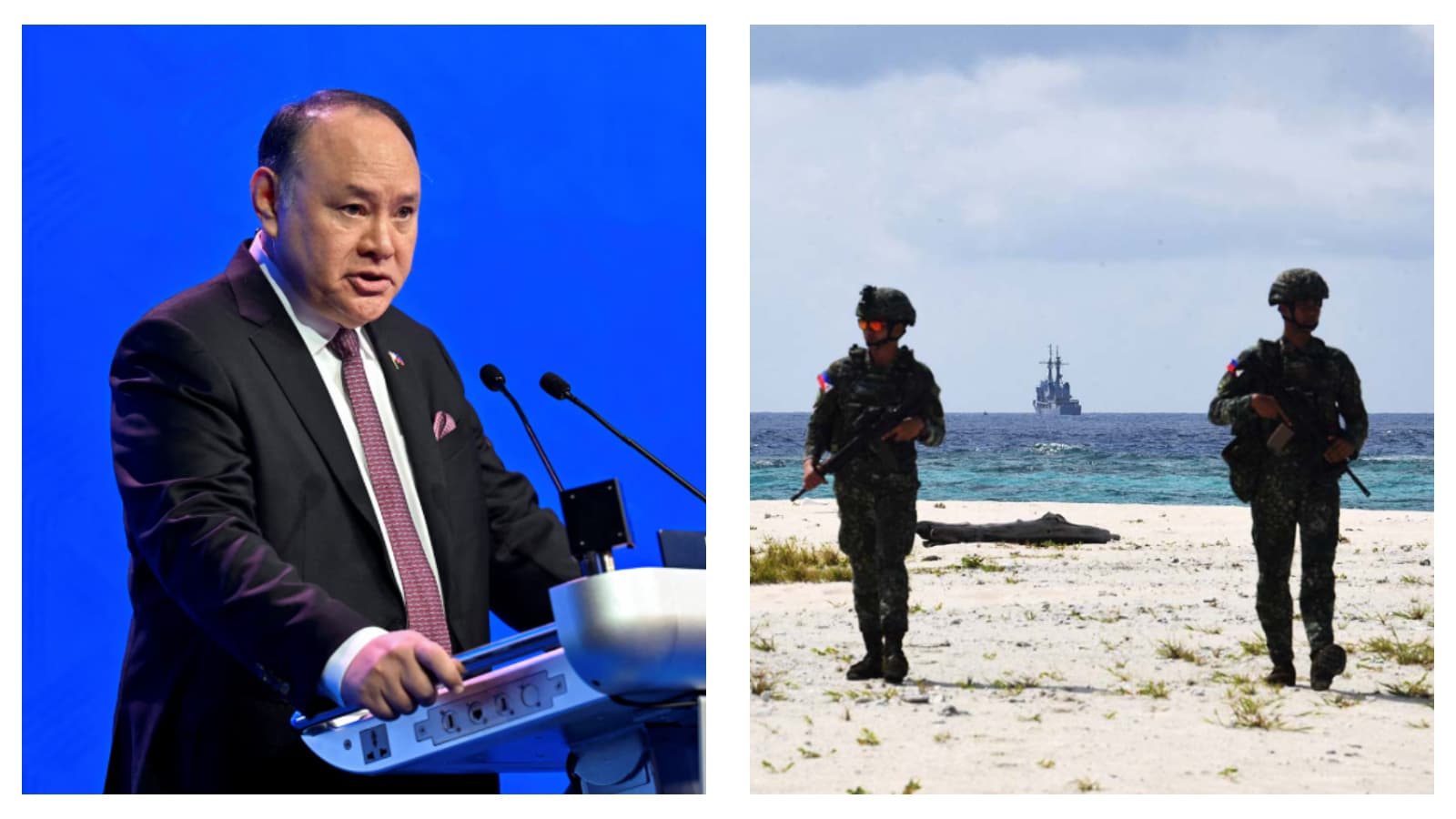
Defence secretary Gilberto Teodoro Jr has urged the Philippine government to remove limitations on how much the country can borrow to boost military modernisation efforts amid territorial disputes with China in the South China Sea.
Manila has so far earmarked about PHP2 trillion ($35 billion) to modernise the country’s armed forces and acquire a variety of weapons systems, from warships to air defence.
As the country seeks additional military systems to provide Philippine territories with a sufficient security umbrella, Teodoro says the government can ramp up its acquisition of important defensive capabilities by maximising its capacity to secure loans from foreign sources.
Loan cap
Under a 1974 presidential decree, the Philippines can only borrow a maximum of $300 million for military acquisition programmes.
Teodoro said that financial constraints have slowed down the country’s expansion in the military sector, with acquisition of major assets such as multi-role fighter jets still in limbo.
“They have total control over the financial agreement that will be made,” said Teodoro of the loan cap during a congressional hearing about the Department of National Defense’s (DND) budget this year.
Teodoro further revealed that DND has a budget of PHP40bn this year, with an additional PHP50bn on standby.
Playing catch-up
While the territorial spat with China is considered to be a major factor in the Philippine military’s shift from an insurgency-centric to a more external defence-oriented armed forces, Manila’s neighbours in Southeast Asia have also initiated their own military modernisation programmes.
Indonesia, for instance, is mulling setting up a fighter jet fleet through France, Turkey, South Korea and China.
Vietnam is likewise seeking to develop its domestic weapons production with an eye towards self-reliant defence forces.
As the arms race in the Asia-Pacific region heats up, the Philippines undoubtedly needs to reform its policies to ensure that the country can keep up with its peers.
READ MORE: Germany becomes world’s fourth-largest military spender amid European security fears
 Liam McLaughlan
  KC Maderia