
Germany is facing renewed scrutiny over its sexual assault legislation following a high-profile case involving alleged AI-generated abuse, prompting calls for urgent legal reform.
According to reporting by Deutsche Welle, the debate has intensified amid growing concern that existing laws are ill-equipped to address digital forms of sexual violence.
Celebrity case sparks national debate
The controversy was reignited after actress and presenter Collien Fernandes accused her former husband, actor Christian Ulmen, of orchestrating the distribution of explicit deepfake images depicting her.
In an interview by Der Spiegel, Fernandes described the experience as a violation akin to rape.
Ulmen has denied the allegations and is pursuing legal action over parts of the report.
Public outrage quickly followed.
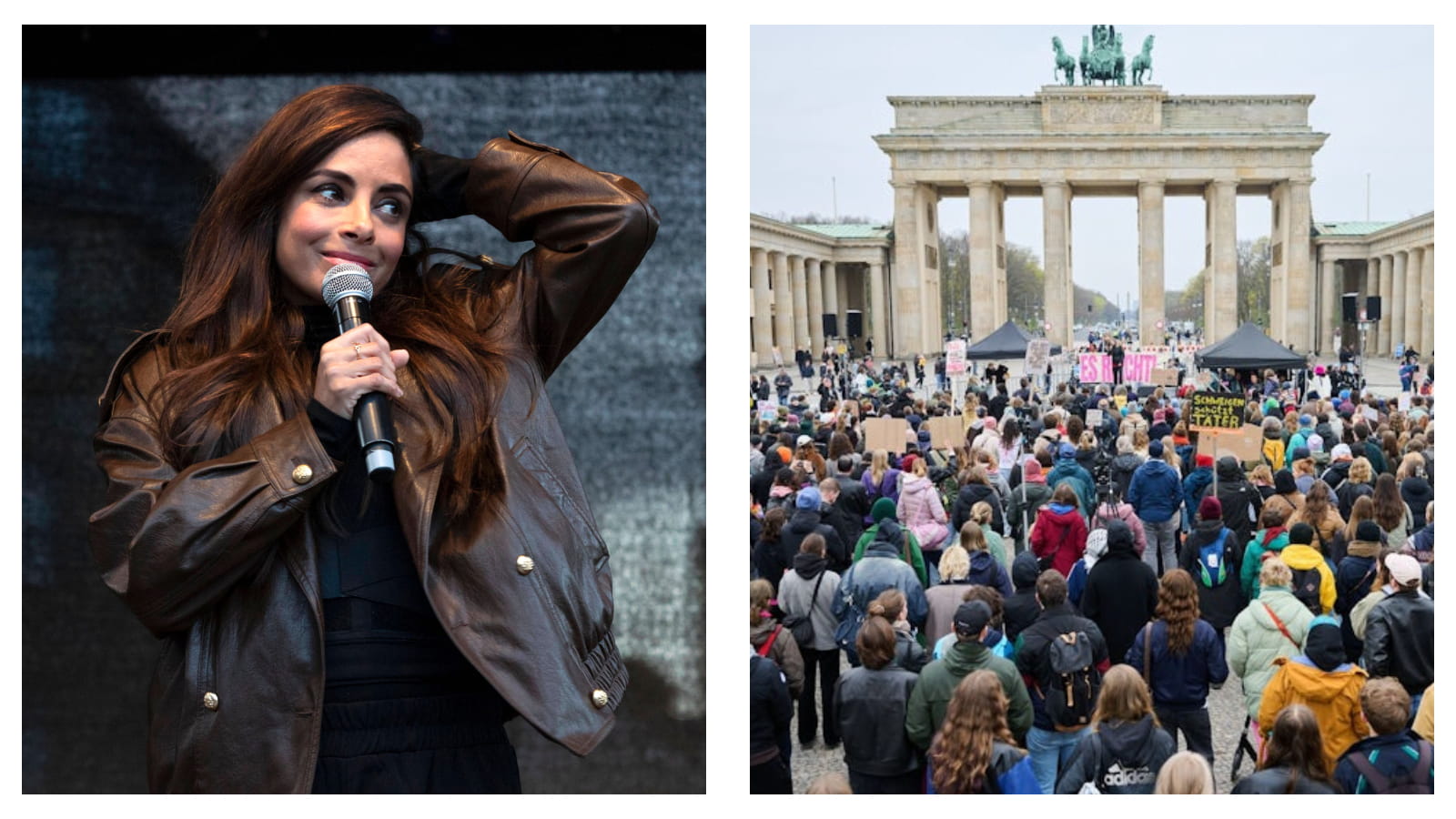
On March 22, thousands gathered at Berlin’s Brandenburg Gate to protest against sexualised violence, with organisers estimating 13,000 attendees.
Fernandes later said that Germany had become “an absolute paradise for perpetrators,” highlighting her decision to initially pursue legal action in Spain.
Legal gaps in digital abuse
German criminal law currently defines rape and sexual assault as offences requiring physical contact, leaving ambiguity around AI-generated abuse.
While provisions exist for violations involving image-based recordings, legal experts remain divided on whether these extend to deepfakes.
As Deutsche Welle reports, a newly proposed 10-point plan calls for criminalising the creation and distribution of pornographic deepfakes and banning applications designed to fabricate nude images.
Lawmaker Lena Gumnoir warned that “glaring gaps” remain in protecting sexual self-determination, underscoring the urgency for reform.
A February 2026 study by federal authorities revealed that digital harassment is vastly underreported, with only 2.4% of women affected coming forward.
READ MORE: Deepfake images: Mother of Elon Musk’s child sues xAI

Consent laws under review
Germany’s existing “no means no” framework, introduced in 2016, broadened the legal definition of rape.
However, campaigners are now advocating for a shift to the stricter “only yes means yes” standard, which requires explicit consent.
As Deutsche Welle notes, this model is already in place in several European countries and is being considered at European Union level, particularly for minors.
Critics argue that while the principle strengthens protections, evidentiary challenges remain unchanged in court proceedings.
Political tensions, proposed reforms
German Justice Minister Stefanie Hubig recently confirmed that draft legislation targeting deepfake abuse is nearing completion and could be passed soon.
The proposed law would criminalise such material and strengthen victims’ rights to seek removal and identify perpetrators online.
However, the debate has also exposed political divisions.
German Chancellor Friedrich Merz sparked backlash after linking rising violence to immigration, a claim that drew criticism during parliamentary discussions.
As reported by Deutsche Welle, the unfolding debate signals a pivotal moment for Germany as it confronts the intersection of technology, consent and criminal law in the digital age.
READ NEXT: Ukraine to United States: Germany’s 2026 foreign policy challenges
 Angelica N. Hall
  Kamille Q. Cabreza
  Geoffrey H. Latayan