
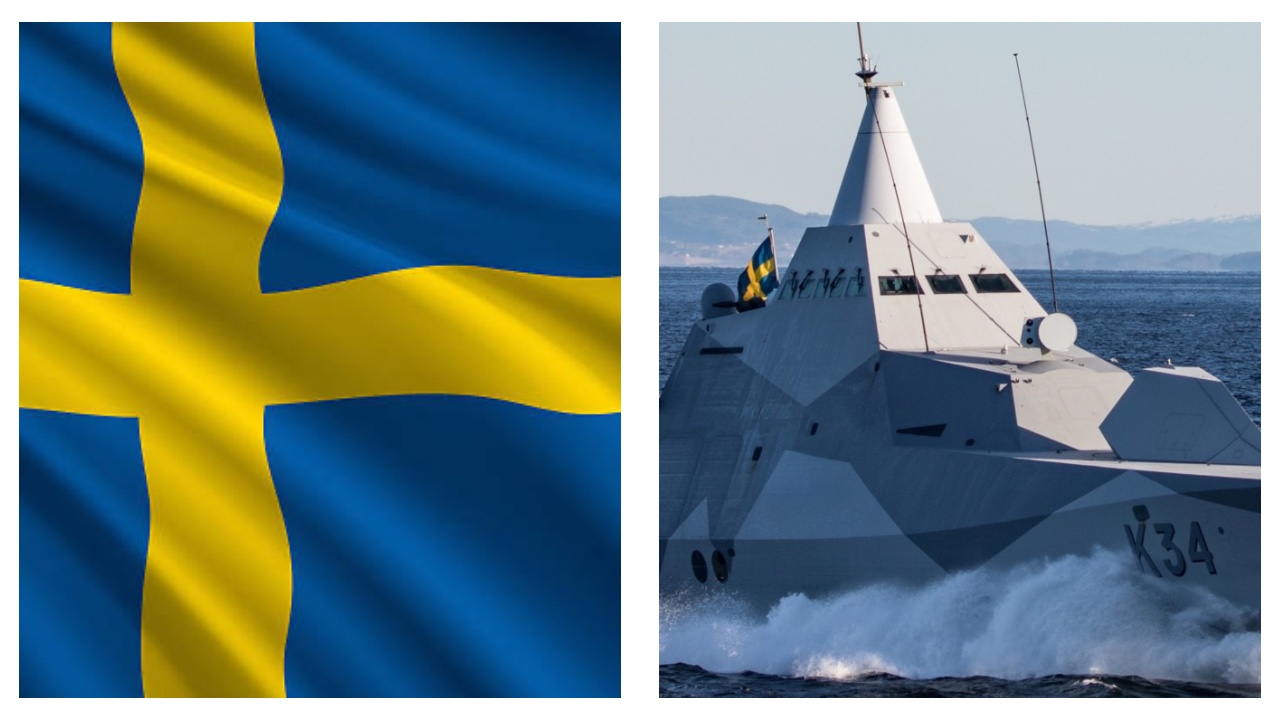
The Royal Swedish Navy’s future Luleå-class frigates will be equipped with homegrown weapons systems following a deal between Swedish defense firm Saab and French shipbuilder Naval Group.
Under the $200-million agreement, Saab will arm the French-designed hulls with weapon controls, anti-ship missiles, torpedoes, and specialised sensors from 2027 to 2034.
Efforts to acquire these frigates marked an operational shift for the Royal Swedish Navy.
Sweden has primarily relied on small, agile corvettes for coastal defence, so procuring larger, heavily armed, ocean-going warships meant that Stockholm could be planning to expand its defensive horizon.
Luleå-class frigates
Sweden and France formalised the procurement of four Luleå-class frigates in August this year with the signing ceremony conducted in the presence of Swedish Prime Minister Ulf Kristersson and French President Emmanuel Macron.
Though Stockholm has eyed naval modernization since 2021, the acquisition programme for additional warships shifted over time as the security landscape changed in Europe following Russia’s invasion of Ukraine, until Sweden selected Naval Group to build the vessels.
At 120 metres, the 4,500-tonne Luleå-class frigates will be the largest vessels of Sweden when two of the ships officially enter service in 2030.
Based largely on France’s Defence and Intervention Design, these new frigates will play a central role in providing air defence, submarine hunting, and surface strike capability for Sweden.
Crucial to the ships’ weapons integration is the combat-proven RBS15 anti-ship missile system that will serve as their main deterrent against surface threats.
MORE INTERNATIONAL NEWS: Nvidia launches probe over alleged spying after CEO reveals extramarital affair

Securing the Baltic Sea
The Baltic Sea has undoubtedly become one of the theatres of competition between Russia and the member nations of the North Atlantic Treaty Organisation.
With Sweden increasing its navy size while also bolstering its firepower, this creates a stronger deterrent from Stockholm in safeguarding important chokepoints in the Baltic Sea.
Sweden’s acquisition of warships with long-range strike capability highlights the country’s intention to strengthen patrol of territorial waters, as well as counter potential underwater threats.
READ NEXT: Europe unveils new digital fairness rules to curb deceptive online practices
 Elan Castanares
 Ciara Mina
 Jheruleene Anne Ramos